
 E-Paper



Review: The Disappearers by Marlon James
Shortlisted for the Booker Prize 2026, the novel set in Jamaica, explores the aftermath of a brutal homophobic attack

 Prefer HTon Google


Marlon James’s latest novel, The Disappearers, explores the aftermath of a brutal homophobic attack on the cast and crew adapting John Herbert’s Fortune and Men’s Eyes (1967). The play that takes its title from Shakespeare’s Sonnet 29 deals with violence, closetedness, and homosexuality in a prison. The novel, set in Kingston Jamaica in 1988, has Havelock Titus directing the play that’s, eventually, never staged. This is peculiarly metaphoric because, at the time, the AIDS epidemic was erasing queer people in “one long set of disappearing acts”. In the novel, the “Blackjacks”, a group of 13 attackers that includes three policemen and Streggeh Don, a reggae singer whose Batty Is Not Pussy ruled the imagination of every homophobe in 1980s Jamaica, left the cast incapable of performing.
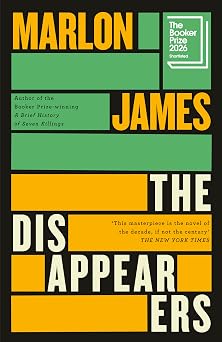
One of the performers, Jordan Brown describes the assault in numbers because that’s what people are eventually reduced to. Post-attack, Jordan needed “twelve stitches”; Titus, 26; Orrin Turner, 16; Matt Chin, 5; Clive Lim, 7; Rainford Ellis: 37 (his eyes were gouged out as well). “Omar Joseph didn’t need any stitches” because a tree branch was shoved up “Omar’s battyhole”. His murder was converted into a spectacle by the media. (Media sensationalism also ends up in a key character’s suicide later in the novel.) Jordan’s crude retelling can be attributed to the queer person’s need to create a distance from the traumatic experience by inventing an impersonal ‘good’ reporting voice that presents the 5Ws and 1 H.
But this is a novel, not a report. James writes, “A good book is the same as a good painting. A bad novel is just a colouring book.” The Dissappearers does work like a good painting, one that conceals as much as it reveals. Jordan and Edmond ‘Eddy’ Porteous, the youngest cast member, are now looking for the disappeared.
Perhaps they are suffering from survivor’s guilt. Then again, perhaps not. At the start of this 642-page novel, when Lim asks a lame question, Eddy replies: “How I survive is how I survive.” There’s nothing philosophical about this admission except the fact that a “battyman”, Jamaican patois slur for a gay person, is returning to the site of their humiliation, retracing steps, going back.
This retracing begins with Eddy’s journals that are replete with 1980s Jamaican culture. Readers can sense the music floating in the air, and discover magazines that the ‘battymen’ sometimes paid with their lives to procure.
“I drive around Kingston at night remembering that yes, you can be bored and hungry at the same time. [John] Rechy says there is a terrific, terrible excitement in getting paid by another man for sex… A feeling that this is where real sexual power lies,” Jordan tells Peta-Gaye Burke, the journalist who is recording his and Eddy’s efforts, lies, and truths under the working title ‘The Disappeared’.
What if when the risk doesn’t pay off? Well, there are “many ways we [gay people] vanish without a trace”, writes James, adding, “The only way for them to see us is for us to disappear.”
Because prison is how this novel begins, French novelist and playwright Jean Genet comes to mind. “I have died many times over,” he said to Dominique Eddé, author, The Crime of Jean Genet. “He may have shown us a different face for each of the lives he lived, death after death,” Eddé wrote.
The Disappearers uncovers many such faces — Matt Chin’s in particular — through Eddy’s and Jordan’s searches. There’s a real thrill in reading their discoveries, but the novel does lack “narrative momentum” – something that Kevin Power also complained about in his review of James’s Booker-winning A Brief History of Seven Killings. What the author excels at, however, is in creating a work that’s true. Take the chorus of attackers’ voices in The Blackjacks: June 1988, the book’s most chilling section: “The real plague is not the virus. The real plague is these people. They don’t reproduce, they recruit.” Queer people everywhere and across time are familiar with this chorus.
James’s novel, which is based on a rumoured mob attack, forces the reader to also think about a queer person’s life as a form of playacting. If the act isn’t performed, they become ghosts, as Titus notes in a letter to his ex-lover and pimp, Mark. In the end, queer people are often protagonists in a bad play. In The Dissappearers, this is a play that is never staged. What remains in the aftermath of the erasure of the players are mere whispers of their afterlives. James deserves high praise for exhuming them and making their whispers heard once more.
Saurabh Sharma (they) is a nonbinary, queer writer, essayist, and culture critic. On X: @writerly_life; Instagram: @writerlylife.


