
 E-Paper



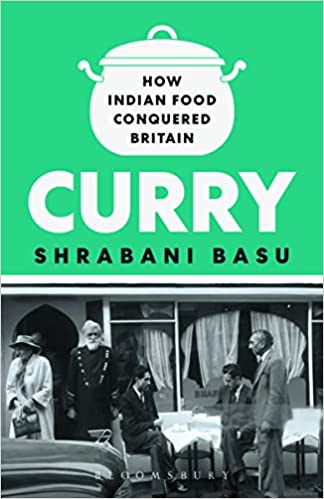
Review: Curry: How Indian Food Conquered Britain by Shrabani Basu
A look at a nation’s culinary heritage and how it was shaped by colonialism and the resulting cultural exchange

 Prefer HTon Google


In Curry: How Indian Food Conquered Britain, Shrabani Basu uses her sharp eye and ceaseless curiosity to retell the saga of one of UK’s most popular dishes, the curry. More than two million people visit 8000 curry restaurants in Britain each week. Each year, GBP 2 billion is spent in Indian restaurants, while Marks and Spencer’s sells 18 tonnes of Chicken Tikka Masala every week. How did Britain come to take curry so much to its collective heart? Where did the word ‘curry’ originate? When did the first curry restaurants come to Britain? And when were the first recipes produced for those who wanted to concoct the flavoursome dishes at home? In the second edition of this book, Basu addresses all these questions as she charts the emergence of Britain as a nation of curryholics.

Apparently, the word “curry” is a British invention and its origins date back to the days of the British Empire. A commonly-held theory, first set out in Hobson Jobson, a dictionary of Anglo-Indian phrases (published in 1886), is that the word evolved from the Tamil kari, meaning a sauce or a relish that accompanied rice. This is how Hobson Jobson described it: “The proper office of curry in native diet... consists of meat, fish, fruit or vegetables, cooked with a quantity of bruised spices and turmeric and a little of this gives a flavour to a large mess of rice.” Basu summarises by saying that irrespective of the historical details and whether we like it or not, at present, “curry” is what best describes Indian food to the West. More specifically, it has come to mean any gravy-based dish from the Indian subcontinent that’s hot and spicy. Incidentally, there’s an ongoing campaign to have the word “curryholic” included in the Oxford dictionary.

Basu explains how varied forces came together to contribute to the culinary rise of curry in England. From UK’s first family of spices, the Pathaks, to cookery experts like Madhur Jaffrey, many individuals contributed to popularising curry in a foreign land. The colonial encounter, which led to a comingling of cultures and the resultant melting pot of flavours, and the adoption of varied curries in the country’s contemporary restaurants, pubs and curry houses are all studied and presented. The author takes us through the verandahs of the Raj and into its kitchens where memsahibs and their Indian cooks experimented to create a variety of new dishes that combined east and west. “While the English were enjoying Indian food in India, thousands of miles away, curries were being cooked in English kitchens as well. Curry Clubs were formed by old India hands where they enjoyed Indian dishes and reminisced about their days in India,” Basu notes. Royal patronage also propelled the popularity of curry’s flavours: “Edward VII did not inherit Prince Albert’s taste for curry but George V was the other extreme. He ate a curry for lunch every day and cared for little else.”
Basu believes the curry will survive, thrive, adapt and prosper everywhere in Britain from “county pubs in windswept Scotland to those in the heart of London’s West End” even in the wake of changing palates and cuisines. This is a delightfully informative look at a nation’s culinary heritage.
Swati Rai is a communication skills trainer and freelance writer.


