
 E-Paper



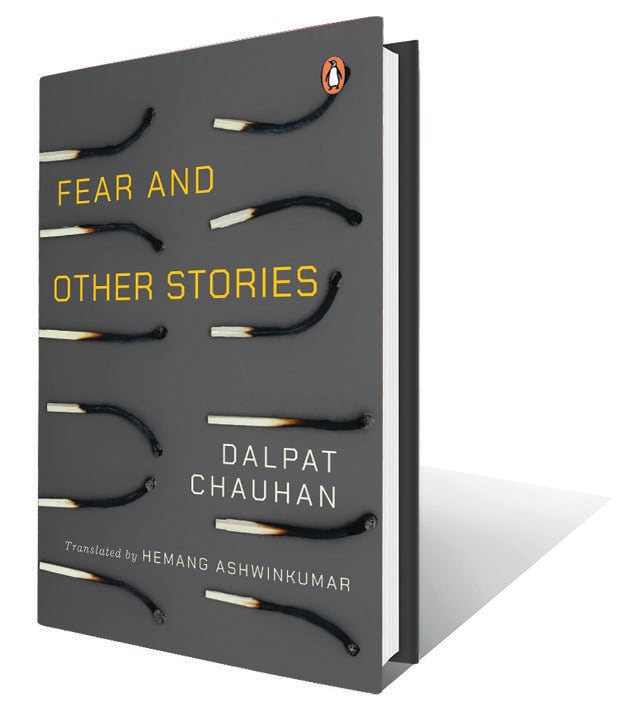
Review: Fear and Other Stories by Dalpat Chauhan
11 deeply disturbing stories by the author, who laid the foundation of the Dalit Literary Movement in Gujarat, and translated by Hemang Ashwinkumar, provide an insight into the lives of the oppressed in India

 Prefer HTon Google


Meena Kapadia, a bright Dalit student, had decided to politely let her high caste teacher know that he had got the chemistry formula wrong: “Sir, there is an error in the formula, it seems.” The mistake of pointing out the teacher’s error, altered the course of her life. The teacher suddenly remembered that Meena was Dalit and aspired to be a medical doctor: “You bloody SCs… You want to become a doctor? The whole civilization will go down the drain.” He then took it upon himself to crush Meena’s plans of becoming a doctor.
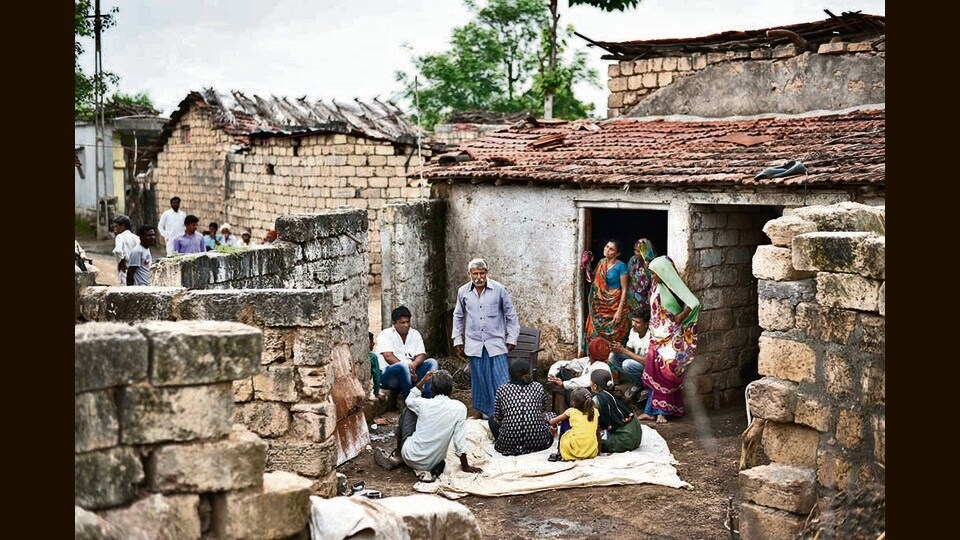
Dr Devendra Parikh, a Dalit doctor, changed his surname when he moved to the city, to escape the daily humiliation of being a member of the lowest caste. When Dr Parikh spots a high caste man from his native town battling for life following a road accident, he offers to give blood to save him. The patient’s relatives agree to accept blood from a member of the lower caste, however, when Dr Parikh offers them a glass of water – they refuse.
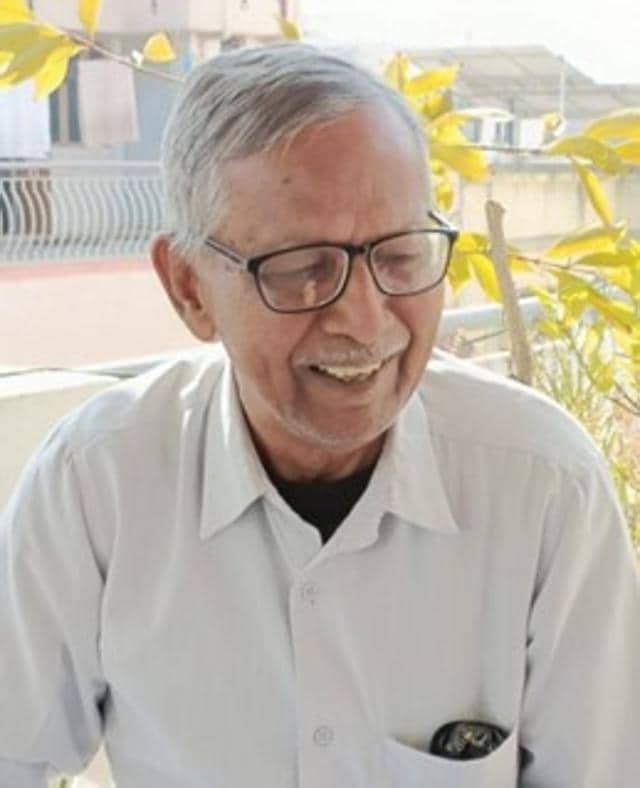
11 such deeply disturbing stories of Dalit men and women by Gujarati Dalit writer, poet and playwright Dalpat Chauhan have been translated into English by Hemang Ashwinkumar. For Chauhan, who laid the foundation of the Dalit Literary Movement in Gujarat, Dalit literature is resistance literature which “echoes Dalit grievances and the experience of humiliation, exasperation and anger”.
Ashwinkumar’s carefully selected stories offer a graphic insight into the lives of the oppressed in India. He also includes stories which highlight the internal caste hierarchy among Dalits, and the rare occasion when they decide to give it back to the upper castes. The stories are bound to make readers feel guilty for ignoring the suffering of Dalits, who are routinely humiliated and subjected to emotional and physical trauma.
Ashwinkumar, who writes in Gujarati and English, notes that the closest we have come to being othered and becoming “untouchable” was during the COVID-19 pandemic.
“In the throes of social distancing – a deplorable term that had been so unproblematically normalised as a defensive mechanism against the disease – every human body was forced to negotiate untouchability,” he writes in his brilliant introductory note which gives a macroscopic view of Dalit literature.
Unfortunately, little has changed on the ground in our post-pandemic lives. The translator points out that unlike the Coronavirus, vaccines and boosters cannot conquer the caste virus.
Caste prejudice is brought to the fore in story after story. These are the horrific tales from the periphery that are being brushed under the carpet by an otherwise vibrant Gujarat.
The denial of an education that’s portrayed in The Visiting Card becomes even more shocking when, as the story progresses, it is revealed that Meena Kapadia’s father had to suffer the same fate two decades before and was forced to drop out of an engineering college. Meena eventually does become a doctor, albeit with a specialisation in homoeopathy, and one day, whips up the courage to visit her school to meet her chemistry teacher, who is now the school headmaster. She carries her visiting card with her name “Dr Meena Kapadia” neatly inscribed on it. This is her trump card. However, as soon as she gives it to the watchman to be handed over to the headmaster, she breaks into a sweat, and quickly retreats.
Ashwinkumar informs us that, for Chauhan, education is a great leveller, and a tool for the emancipation of Dalits. But he is also deeply troubled by “how hollow and half-baked the project of secular modernity in India has remained”. The author is equally disappointed with “the educated, upwardly mobile Dalit class for donning the neo-Brahmin mask and living a life in error”.
The Dalit doctor in Cold Blood, who believes that dropping his caste surname would disconnect him from his community, is a case in point. He is taken aback at the refusal of the upper caste individuals, whom he has gone out of his way to help, to accept water from him.
Home is another haunting story. Their intention to make a pucca house in a village that resents the idea of equality, lands a Dalit family in trouble. As Kalu, the protagonist, is making plans in his head to invite everyone for a grand housewarming function, he falls asleep. He wakes up when he hears people cry out in the lane. “Wake up, Kalu! Wake Up! Fire…fire! Your house went up in flames.”
The Invasion is the only optimistic story in this collection. Natho is a spirited man with a “reputation of being a shrewd, bull-headed maverick”. Upper caste villagers cannot stand the sight of his lush green millet fields and let loose a herd of cows to destroy it hours before he is to harvest his crop. When Natho complains to the village head, the latter points out that the fields are part of government wasteland and therefore it’s okay for cows to graze there. Natho responds that the village well is also on government land. The thought of a low caste man polluting the village well fills the headman with dread.
In the eponymous story Fear, the protagonist Khodo’s mother hangs herself to save her honour and his father is burnt alive by upper caste men. The fear of upper caste men haunts Khodo, and when his heart cannot take it anymore, he too kills himself. The story captures the resistance put up by Dalit youth in Golana in 1975. But “Even in the Golana incident, though the youngsters were determined to put an end to the rampant sexual exploitation of Dalit women, the elders finally had to expiate for it by carrying in their mouths the shoes, torch and, turban of the Kshatriya man who, after being challenged, had run for his life, leaving behind these articles,” notes Ashwinkumar. He point out that the sexual exploitation of Dalit women continues, with at least four rapes being reported every day.
Buffaloed sheds light on the internal hierarchies among Dalits, and If Only This Truck Conked Out captures the complex Dalit-Muslim relationship in Gujarat in the run-up to the demolition of the Babri Masjid.
The most unusual story in the collection is The Payback, in which famished savarnas beg Dalit families for food. An old man is mercilessly beaten up by a high caste drunkard, and then his father comes to the old man begging for food. “Bha, I said I’ve got a few pieces of buffalo’s meat, we had sundried last year. Would you care for a handful…?” the old man asks the drunkard’s father.
“As you wish, bhai. I’ll be grateful for whatever you can spare, even chops from a carcass. If my Lord has ordained it, who am I to object? Anything that can keep body and soul together in these hard times is as good as ambrosia, bhai,” the savarna responds.
Ashwinkumar’s translation is clear and concise. He has rendered into English the literary works of a number of eminent Gujarati personalities such as Gulammohammed Sheikh, Himanshi Shelat, Nazir Mansuri, Mona Patrawala, and Babu Suthar, among others. This is a highly recommended read.
Lamat R Hasan is an independent journalist. She lives in New Delhi.


