
 E-Paper



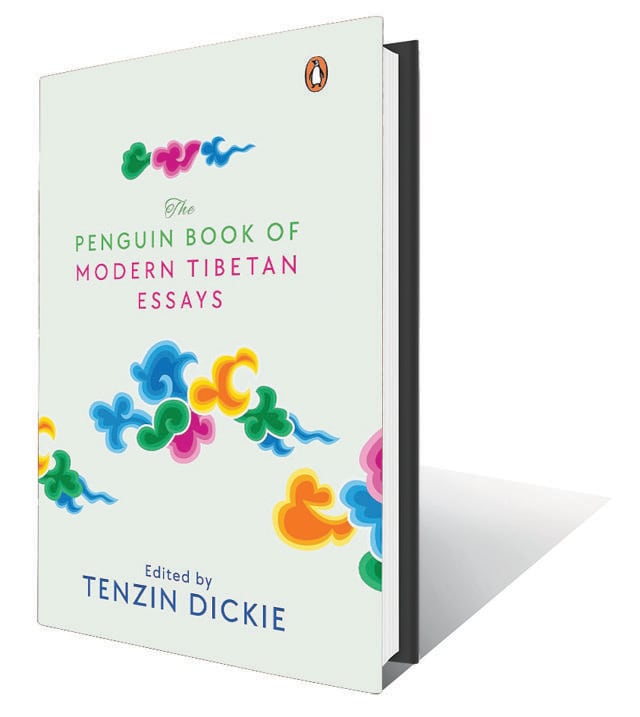
Review: The Penguin Book of Modern Tibetan Essays edited by Tenzin Dickie
Exile, scepticism over national identity, and cosmopolitanism feature in this volume, which presents how utterances on language, learning and expression take on a certain poignancy in an embattled culture

 Prefer HTon Google


“Tibetans still write in code,” Tenzin Dickie, the editor of The Penguin Book of Modern Tibetan Essays writes in her introduction. It is writing that cries out to be deciphered. “There is so much that they can’t say, so little that can be said” – the weight of suppression is so heavy, that “we need to pay close attention to subtext.” If the science of interpretation, hermeneutics, originated in the study of scriptures, to catch the elusive, puzzling words of gods and prophets, the quest for the hidden and the coded takes on a whole new and frightening dimension when words slip past the clutches of authoritarian regimes. But the other side of the cryptic is the voluble – the very lack of freedom can just as often force one to say too much, to shout and perform all the time. That is perhaps why, Dickie writes, it also feels as if “we are always trying to shout, trying to underscore our exile, our oppression.” The double bind marks a great irony: “If Tibetan writing from the inside can often feel like code, the writing from the outside can feel like caricature.” The burden is different depending on where you are located, but there is no freedom either way – “They have to conceal, and we have to perform.”
Perhaps it’s just as well, then the Tibetan word for the “essay”, Dickie reminds us, is the deceptive and ambiguous tsom, describing the genre in all its avatars, personal to scholarly. The word is grammatically shape-shifting, at once a noun and a verb, and as ambivalent as it is versatile, capable of describing lying and fabrication as much as creation and composition, hence, “to write, to create, to compose, to lie – all of which is to say, to tell the truth by lying.” That may be the goal of all art, work through the amphibian truth of equivocating speech, like the witches in Macbeth; but for writing coming out of exile and suppression, such dissembling is the very means of survival.
Some of the most poignant acts of deception in these essays are deeply personal ones. Topden Tsering’s account of one from the days of physical letter-writing stood out to me, not least because early in my career as a writer, back in school, I, too, had carved a reputation doing exactly what Tsering describes as doing – becoming the designated writer of love-letters on behalf of his love-struck classmates. Tsering, however, took a slightly easier route – simply copying the contents of the first letter for subsequent ones, just taking care to change the names of the addresser and the addressee. The ninth letter he wrote, on his own behalf to the girl who had stolen his heart, therefore, had borrowed content from his own earlier model: “the words were mine but since I had already used them for others, they were not really mine.” He knew that “at best I was a forger of my own work.” Common as this kind of collective teenage strategy was back in its day – it is impossible to miss the larger metaphor of identity this deception inevitably evokes in this community.
When a language and a culture is embattled, its utterances about language, learning, and expression take on a perilous poignancy. Pema Bhum’s essay, An Amcho’s Recitation, tells the story of the Tibetan-language teacher who told his students that the last thing they should do is to recite like an amcho, a monk who goes to people’s houses to read scriptures – for the mark of the amcho’s excellence was his speed of reading, not his audience’s ability to comprehend what is being read. A good reader, the teacher taught, should read slowly and clearly. Perhaps it’s all the more important to pay slow, close attention to this embattled language as it is entangling in a warm and imprecise way. As Tenzin Dorjee writes in his essay, Lost in Lhasa: “English is a cold language, sharp and precise. Every word has a function; words are self-sufficient and capable of travelling alone.” But it is different in Tibetan, where “words hardly ever travel alone; to go anywhere, they must go in pairs at the very least.” The languages touch lives differently too: “You can converse with someone in English for an hour and not feel any closer to them. That would be impossible in Tibetan. The minute you speak with someone in Tibetan, the structural warmth of the language and the constant need to improvise begin to melt the walls that separate you from the other.”
The irony of language lessons, for Tibetans, extends the irony of learning geography. Ann Tashi Slater, describes her experience of reading about the Teesta river, the Bay of Bengal, and the Indian Ocean in her essay Calcutta Evening, which for her evokes memories of her grandparents’ ashes scattered in the Teesta near Darjeeling, to float down to the Brahmaputra and the Ganges and then to the sea, “their primaeval, ceaseless current like the flow of the blood of the ancestors, the blood in the veins of a deity overlying this ancient landscape.” Tibetan identity overlaps those of other cultures and nations, but does that mean it can be suppressed by them? Introducing himself as “half English, half Tibetan”, Chhimi Tenduf-la, author of The Prince of Tibet, is immediately corrected by a Chinese woman: “No you’re not. You’re half English, half-Chinese.” The writer is sceptical of nationalism, deeply aware of the ravages it has caused in South Asia. His diasporic life has left him with minimal exposure to Tibetan culture. And yet, pushed to the wall, he longs for that identity: “like the title of my father’s proposed book, I am Tibetan, and I always will be.”

That interminable exile, that relentless scepticism over one’s national identity, has inspired many of the writers in this collection to embrace a cosmopolitanism impossible in chauvinistic nationalism. On being mocked “Ching chong ping pong” by young men in a Delhi Metro coach, Tenzin Tsundue speaks to the men in Tamil, and when they fail to understand, ask them, in Hindi this time, whether they don’t follow the South Indian language, setting the stage for a fierce lecture on Indian nationalism. It is easy for him to live between nations, wandering between homes, as like several other contributors to this volume, Tsundue knows that “home is not a house but the purpose that takes us places, and sometimes away from our own home.”
Saikat Majumdar’s novels include The Firebird, The Scent of God, and The Middle Finger.


