
 E-Paper



Slow Horses: the Britain nobody puts on a postcard
The TV adaptation of Mick Herron’s series of spy novels presents a portrait of Britain’s class system, frustrations, and humour

 Prefer HTon Google


“God,” said Jackson Lamb. “Is it me, or did all the fun go out of everything round about 1979?”
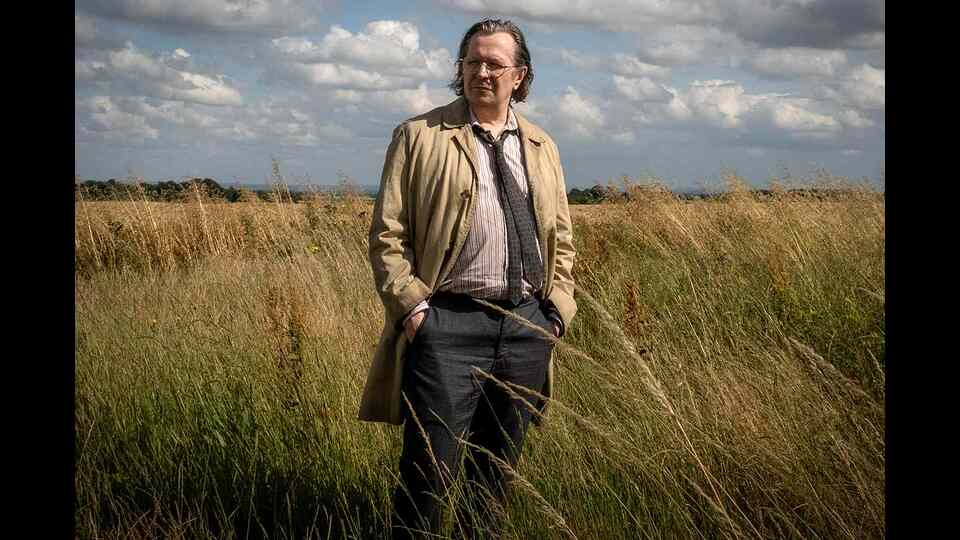
It could be a complaint about almost anything. With Jackson Lamb, it usually is. The head of Slough House smokes too much, drinks too much, and regards bathing as an activity for other people. He is rude to his staff, offensive to everyone else, and capable of using flatulence to make a point.
He’s also very good at his job.
That is the first thing to know about Slow Horses, Mick Herron’s series of spy novels, now better known through the Apple TV+ adaptation starring Gary Oldman. The books follow a group of MI5 agents who have messed up in one way or another and been sent to Slough House, a shabby outpost where careers are meant to quietly expire. These agents are not bad enough to fire; they are simply embarrassing enough to be sidelined.

River Cartwright arrives after a disastrous operation. Catherine Standish is a recovering alcoholic. Roddy Ho is a gifted computer expert who never seems to consider that he might be wrong.
“You really care about them, don’t you?” Diana Taverner, the MI5 operations chief, asks Lamb during one of their off-book meetings.
“They’re a bunch of absolute losers,” he scowls. “But they’re my losers.”
That’s the heart of Slow Horses. The series is about spies, kidnappings, assassinations, terrorist plots, and double-crosses. But much of what makes Herron’s world so recognisable has little to do with espionage. It is also about offices, class, bureaucracy, and the peculiar British skill of taking something serious and making a joke about it.
Slough House is, in other words, an excellent place from which to observe Britain.
A home for failures
The premise didn’t sound like an obvious winner, even to Herron. “A bunch of people who aren’t very good at their jobs and don’t like each other, forced to work in an office,” he told The Guardian in an earlier interview. “I mean, why would you want to read it?”
Quite.
The answer is that failure is far more interesting than success. Herron has said as much: “Failure is always more interesting to me than success.”
His characters are never simply good at their jobs as Herron isn’t interested in the clean competence of the traditional spy hero. The Slow Horses get things wrong, hold grudges, and dislike one another. Then something goes badly wrong, and they have to get on with it.
Lamb is not much help.
“You’re f#@$%*g useless,” he tells his team. “The lot of you. Working with you has been the lowest point in a disappointing career.”
This is what passes for management at Slough House. Lamb has no interest in motivational speeches, team-building exercises or making anyone feel better about themselves. When he thinks his agents are particularly hopeless, he has a more colourful assessment: “I got haemorrhoids that are more fX@#$%g use than you.”
Yet he knows what they can do.
That is what makes Lamb more than a caricature of the foul-mouthed, dishevelled boss. He understands his people, even when he appears determined to make sure they know he doesn’t. He knows when to push them, when to leave them alone and, crucially, when they are in danger.
The affection, if that’s what it is, is buried deep.
Lamb would probably object to the word.
When his agents botch a job, he can be devastatingly matter-of-fact: “Of course, you didn’t mean to kill him. If you had meant to kill him, he would still be alive.”
That is Lamb’s version of reassurance. The Slow Horses may be failures and idiots. But they are still his people, and when things turn serious, he expects them to turn up.
The anti-Bond
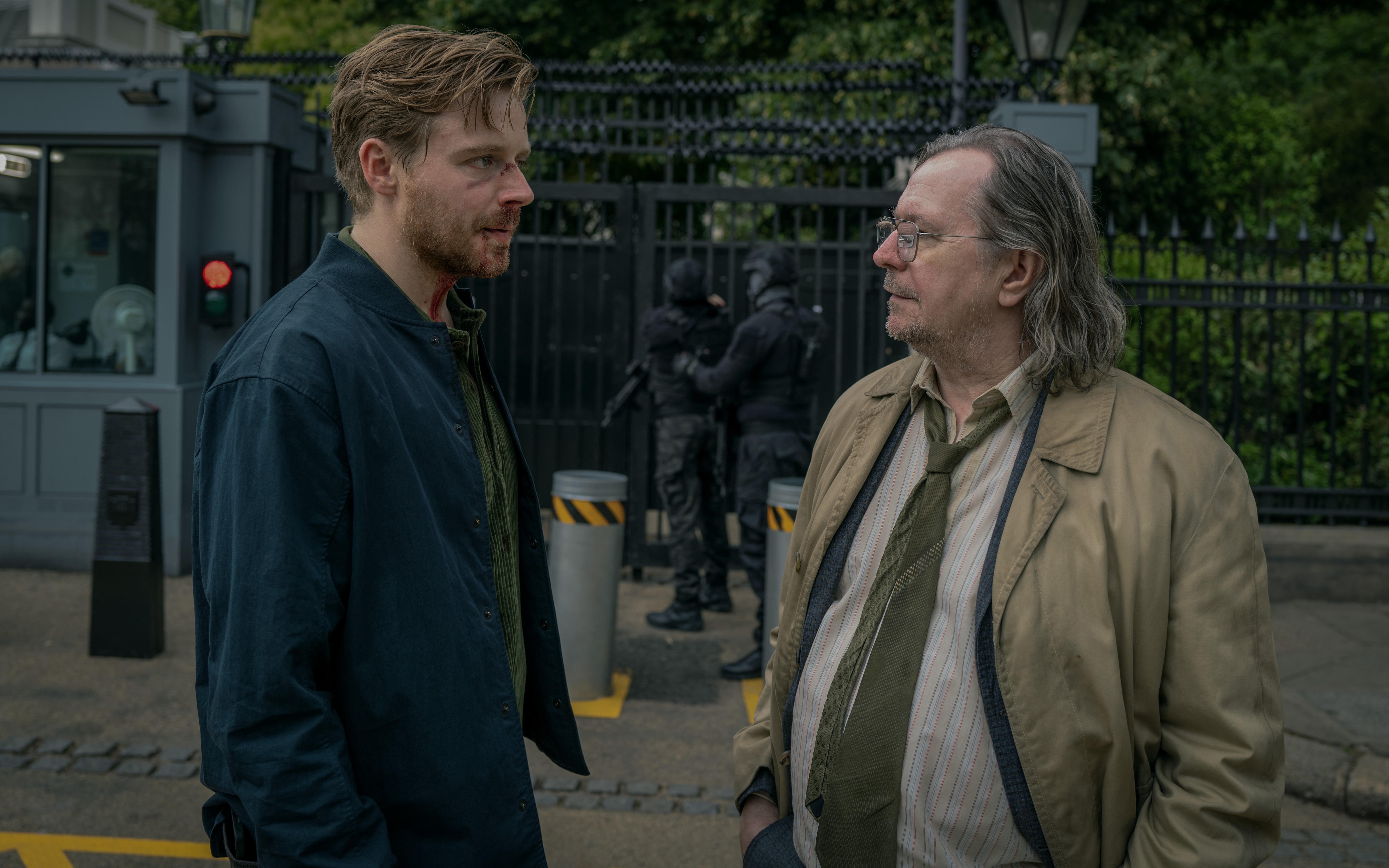
Jackson Lamb is often described as the anti-James Bond. Bill Gates also called him that in a blog post. It is hard to disagree: Bond has the tuxedo, Aston Martin, and impeccable grooming; Lamb has a stained trench coat, cigarette breath, and a talent for making everyone around him miserable.
“Oh, you people are slow. Bringing you up to speed is like trying to explain Norway to a dog,” he grumbles, in one of his less elaborate attempts to describe the futility of getting through to someone completely clueless.
Oldman has made Lamb even harder to separate from the books, shuffling through Slough House as if the place is an extension of his wardrobe: grubby, unwelcoming, and slightly dangerous. The pleasure of the character lies in never quite knowing where the performance ends. He may spend an afternoon insulting everyone in the room, only to reveal later that he understood the situation better than anyone else.
Herron has said Lamb came out of “an unfiltered love of language”. He is also the one major character whose head the author doesn’t take the reader into. Is he genuinely awful, or is some of it a performance?
Probably both.
Lamb works because Herron doesn’t tidy him up. He remains unpleasant, occasionally appalling and, when it matters, extremely effective.
A very British office
Before writing Slow Horses, Herron spent years working in offices, and it shows. At Slough House, nobody bothers pretending they are all pulling together. The agents know they have been removed from the centre of MI5 and parked somewhere unpleasant in the hope they will resign. The Park, meanwhile, is full of people protecting themselves and making sure blame lands elsewhere.
Diana Taverner, played by Kristin Scott Thomas, understands the place just as well as Lamb does, but she still has access to power. Lamb has been pushed to the edge, and feels free to ignore most of the rules.
Slow Horses is unmistakably British, though it doesn’t offer much of the Britain usually sold to the world: no country estates, glamorous embassies or postcard London. Herron’s London has backstreets, offices, pubs, traffic, and people who are late for something. Class runs through it too, not just money but accents, schools, and the confidence with which someone enters a room.
Herron’s first Slow Horses book was released in 2010, but he has identified Brexit as a turning point for the series.
His 2018 novel, London Rules, featured Peter Judd, a floppy-haired, bicycle-riding populist politician with a sense of entitlement and a flexible relationship with the truth. The similarities to Boris Johnson did not go unnoticed. Herron, who attended Oxford at the same time as Johnson, has described Judd as a public-school-educated right-wing bogeyman, self-obsessed and unconcerned with ethics. Johnson happened to fit the description, he said, and so did others.
The political figures in Slow Horses may be exaggerated, but not by much.
That feels about right for British bureaucracy: nobody is quite fired, nobody is quite told what will happen next. They are simply moved sideways and left to work it out. Yet this neglected corner of the intelligence service keeps ending up with the problems better offices couldn’t handle.
The national art of taking the mickey
Despite being a thriller, Slow Horses is very funny. The humour isn’t an extra layer added to lighten the books; it’s part of the machinery. The British have a particular relationship with authority: perfectly capable of respecting it while believing the person in charge is probably an idiot.
Lamb uses that as a weapon. Much of the comedy comes from the gap between how seriously institutions take themselves and how ridiculous they can look.
The temptation can be to make everything about Jackson Lamb. But he would be considerably less interesting without the people around him. River’s determination to prove himself, Catherine’s steadiness, Roddy’s spectacular lack of self-awareness, and the shifting cast of damaged agents give Slough House its life.
These are people who have failed within the system and been sent somewhere to be forgotten, yet they often turn out to be the ones who notice what everyone else has missed.
That may be the central joke of Slow Horses. The people at the bottom of the hierarchy are often the ones who see the system most clearly.
Slough House is filthy, dysfunctional, and held together largely by mutual irritation. The band of misfits drink too much, complain constantly, and have a worrying tendency to create as many problems as they solve. But when it matters, they turn up. They may be failures by the standards of the institution, but they are rarely willing to abandon one another.
Which brings us back to Lamb.
As Season 6 approaches, his horses are in trouble again. The new trailer has him turning up in Taverner’s garden with a question that sounds like the most Jackson Lamb way imaginable to announce another crisis: “Do you know anything about why my Slow Horses keep turning up dead?”
We know the answer will involve bad decisions, worse people, and a fair amount of blood.
But Lamb will turn up. He always does.
Teja Lele is an independent editor and writes on books, travel and lifestyle.


