
 E-Paper



Unlock Diaries: Bearing the scars of what we have been through by Sudeep Sen
Our deepest memories have an insidious way of seeping into the cracks of bones, writes Sudeep Sen


TWO MOVEMENTS — A DIPTYCH
When commissioned by the editor to write about what is the first thing I would definitely do, or the things I would never do again? Or what my fantasies, neuroses, or behavioural changes are? — I realised that in these unique moments, I always seem go to the ‘source’ texts — the spine, spleen and syntax of my creative fountainhead — the wellspring of poetry and body — its poetics and politics, its preferences and predilections.
Just as the ‘lockdown’ been an apocalyptic dystopian reality, an ‘unlockdown’ if that were to follow — would continue bearing the scars of what we have been through. It is not an ‘on-off’ switch that you shut out with flick of a finger. Our deepest memories have an insidious way of seeping into the cracks of bones. Here are two movements — a diptych — from my imagined ‘unlockdown’ diary’:
1. REVISITING GHALIB IN THE TIMES OF CRISES
“Ranj se ḳhū-gar huʾā insāñ to miṭ jātā hai ranj / mushkileñ mujh par paṛīñ itnī kih āsāñ ho gaʾīñ ||
If a person becomes accustomed to grief, then grief is erased, / so many difficulties fell upon me, that they became easy.” — Mirza Ghalib
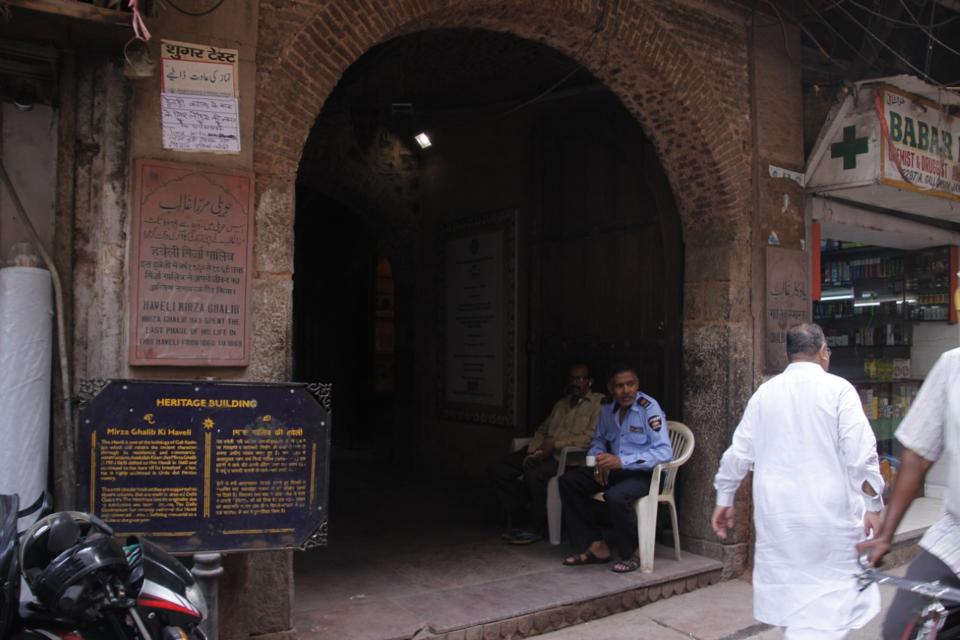
In Chandni Chowk’s narrow uneven lanes of Ballimaran, the ghost of Mirza Ghalib is real, even 300 years later. His apparition still resides in a half-restored home, propped up as museum in Old Delhi — where memory and memorabilia share its walls with a pigeonhole photocopy kiosk. Outside, the lanes are dug up — and after the rains you cannot avoid the muddy squelch.
A maze of electrical wires, cables, and telephone lines crisscross overhead linking adjacent buildings in a mesh-like parasol — their intricate weave, the structure pattern of a sher. Woven tightly, Ghalib’s ghazals remain intact, preserved and passed on as couplets and enduring songs — his wise eyes in the portraits still searching, looking into the future for peace to arrive.
A pair of perfectly scanned amatory couplet — sher/bayt — looking longingly at each other on facing pages — maintaining distance — cannot mate. In this silent formal dance of matla, radeef, qaafiyaa, makta, beher — there is balletic mirroring — mumurations of measure and metre, love and pain, reality and lie.
In the adjacent fluorescent-lit, photocopy shop, there is a constant whir and churn — as sheet after sheet passes over the machine’s glass flatbed metronomically, interspersed with blinding flashes. Photocopy’s banal replication and mindless mechanisation are apt metaphors of our times — digitise everything as world fodder, the web converting all into bit-mapped clones, a spineless misguided chorus.
Social media, judge-and-jury — Internet debris, a permanent scar. Fake news like the coronavirus replicates at an alarming level. Multiple pandemics prevail — politics of profit and power, mistrust and misuse. However, hope resides in these Seamus Heaney lines: “If we winter this one out, we can summer anywhere.”
Our life on this earth is minuscule, just one brief instant. In the cloistered safety of my study I dream and create — unformed, embryonic dreams, waiting to be shaped and crafted. Etched in stylised nastaliq loops, slanted lithe ascenders and descenders dance — now, even tarnished gold will glow anew.
اگ رہا ہے در و دیوار سے سبزہ غاؔلب
ہم بیاباں میں ہیں اور گھر میں بہار آئی ہے
Greenery is growing from walls and doors, Ghalib
I am in a desert and my house blooms as its spring
*
2. THE LEGACY OF BONES
“It’s high time the stars were re-lit.” — Guillaume Apollinaire
I buried my body in the same soil where I had learnt to crawl. I waited until my skin decomposed so that I could rescue my bones to craft new implements to write with, anew. Imagine making bone-nibs of various sizes and intricate patterns that contain your own tissue and imprint. I waited, waited until the magic of metamorphosis could take place. It didn’t matter whether it was in my own lifetime or not, clearly I still waited having performed my own burial. A fine anachronism — even Sophocles would be astonished, or the tales of Gilgamesh might have been realigned.
As I relive, piecing my first alphabets together — elongated letters form arcs and loops — creating a score, a grand opera where bone nib-tips play a crucial part in the sonics of the composition. I am still tuning them in my mind as I wait with the dead, the dead to fill in the chorus, the dead to conduct the show. Whose imprimatur shall the music bear — what shall it be called? Fibula, femur, F-sharp — fine featured whispers layer its richness. Where is the ink, the ink familiar to every bone? Blood. There is no blood left now.
But air has sufficient magic left — its slipstream modulating a script that has not been written before, notations using my DNA to code the coda. The soil says it wants to name it — I say, say it aloud. She prefers, a subtle sigh that comes with the quiet confidence of permanence. Gradually the aria begins — singing of the eternal purity of bone music. It requires music for bones to patiently heal. It requires compassion to love selflessly. The buried vatic song starts to leak, leaving the legacy of our bones. It’s high time our bones started to sing aloud. It’s high time the stars were re-lit.
*
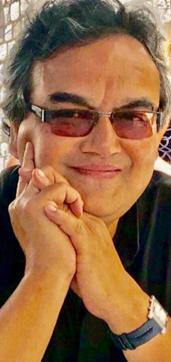
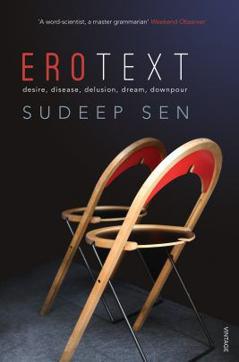
Sudeep Sen is a poet. His EroText (Vintage: Penguin Random House) is currently on the shortlist of the 2020 Rabindranath Tagore Literary Award. [www.sudeepsen.org]


