
 E-Paper



The burble of words on the water
A barge, great reads, and the feeling of being part of an enthusiastically bookish community – on browsing at an unusual London bookstore

 Prefer HTon Google


It’s a boat, it’s a barge, it’s a bookshop.
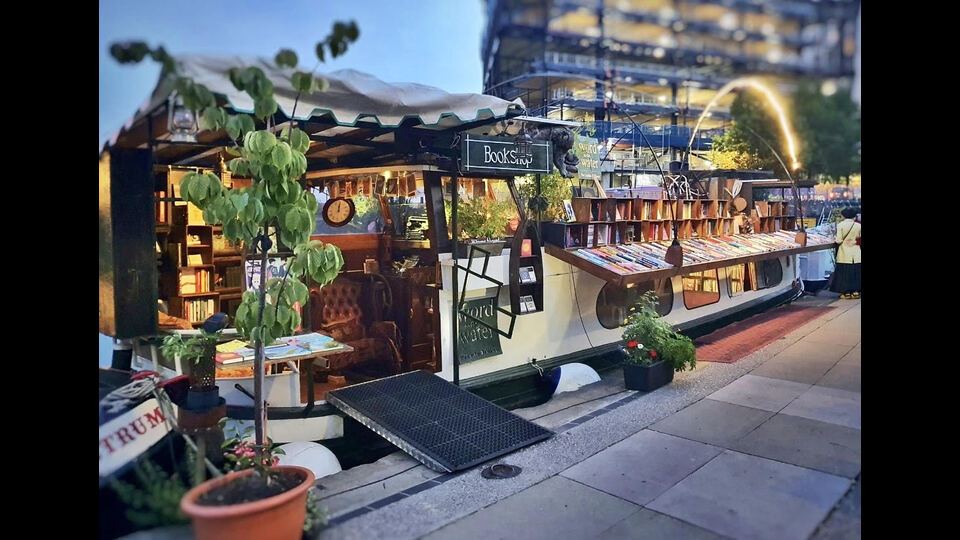
Waterstones and WH Smith may stock thousands of books on their shelves across London, but their ambience doesn’t hold a candle to Word on the Water, a 1920s Dutch barge that has been bobbing on the waters of Regent’s Canal since 2011.
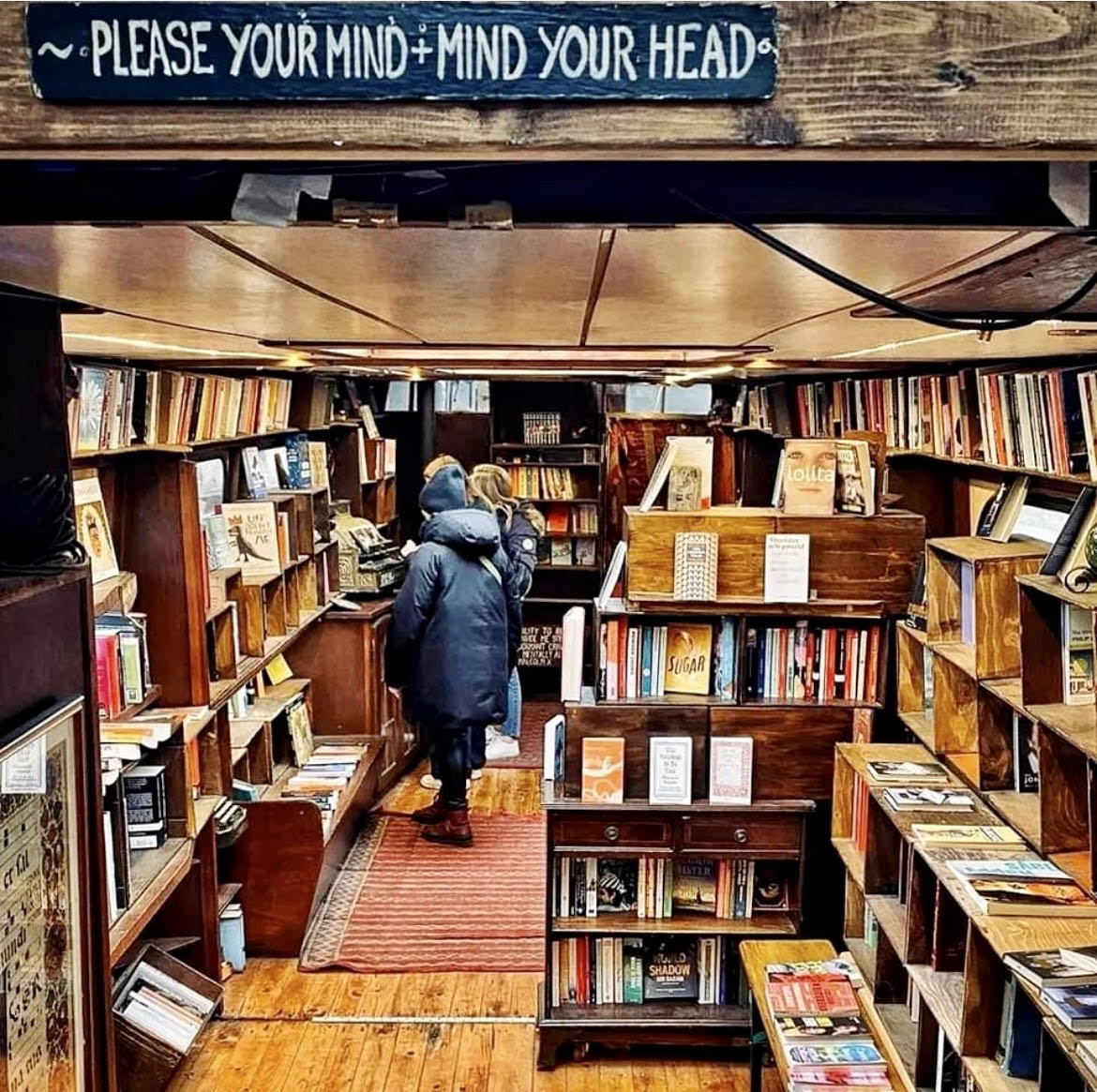
The brainchild of Paddy Screech, Jonathan Privett, and Stephane Chaudat, Word on the Water is unlike any bookshop that I have ever seen. For starters, it’s not customary to have to watch your head or your legs as you make your way into one. But it’s mandatory here. The sign in the cabin says it all: “Please your mind. Mind your head.”
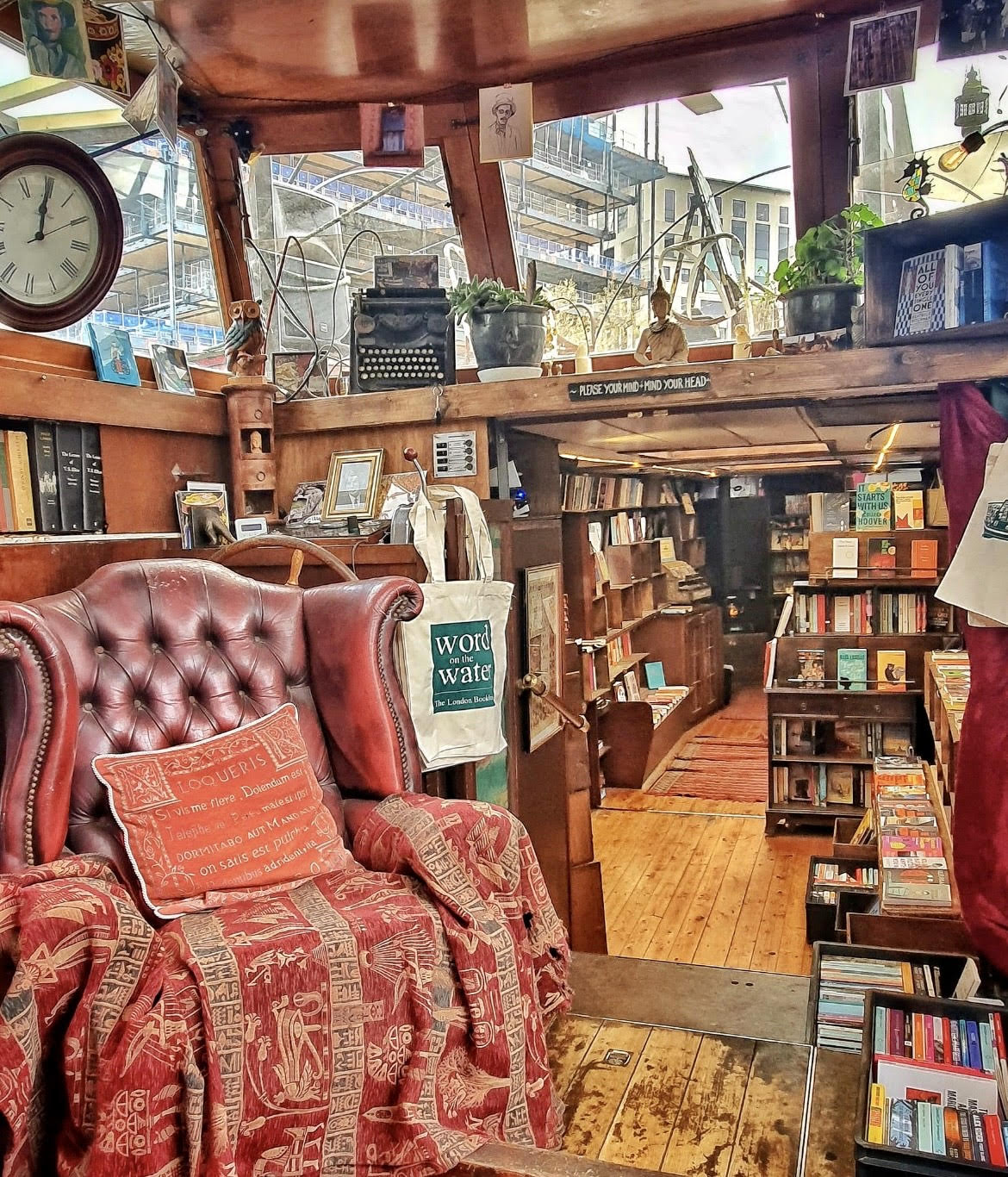
The barge is bursting with books, with every nook and cranny outfitted to hold rows upon rows of new and preloved paperbacks and hardcovers – classics, cult, contemporary fiction, and children’s titles. Interspersed among the books are curios, trinkets, small plants, and numerous vintage postcards. An old typewriter takes pride of place and an overstuffed leather sofa, complete with a comfy cushion, invites me to settle down for a longish read. Elsewhere, there’s a small, inviting children’s nook, and a bench that offers you a chance to perch while you browse. An old Victorian clock is just the right touch – who hasn’t lost track of time in a place made for lingering and looking for literary treasures?
Could there possibly be a better place to reread Pride and Prejudice, my favourite Jane Austen? The resident friendly dog Star and talking parrot Jazz seem to agree.
I’m not the only one enthralled by this unusual enterprise. Word on the Water has become a landmark (or should that be watermark?), one that’s visited often by locals and tourists keen to savour an unusual experience. On a sunny summer day, it’s common to see bibliophiles perched by the towpath, a book in hand. On winter days, true-blue fans make themselves comfortable on the armchair by the crackling stove fire.
Oxford-educated Screech and Privett, both boat lovers, came up with the idea of a floating bookstore when they were walking along the canal. Privett had been arrested for selling books on the street without a licence, and a bookstore seemed the best way forward when, in 2009, French aritst Chaudat, who is a friend, offered the barge in exchange for a position as a partner.
The trio made over the houseboat, retaining the wood burning stove and putting up simple bookshelves made from wine boxes and scaffolding. Their idea was to create a space where art, music, books, and people could coexist.
However, a problem soon floated their way.
While offline book retailers typically face issues such as rising online sales and dwindling public interest, the book barge had to navigate an unusual challenge: changing locations.
Canal regulations meant it had to move every couple of weeks, stopping wherever the owners could get a spot. After six years of floating through London’s canals, Word on the Water dropped anchor next to Paddington station. The owners refused to budge, despite numerous fines and eviction notices from the Canal and River Trust.
Booklovers had their back and more than 6,000 people signed a petition to save Word on the Water. The Canal and River Trust caved in and offered them a permanent mooring at Granary Square, behind King’s Cross.
Since then, things have been going swimmingly for Word on the Water, which has become one of the most popular community hubs in the area.
The books are sourced from distributors, charity shops, and direct donations. I spot many interesting pre-loved volumes and a range of literature titles from the 18th and 19th centuries. Choices, choices. I strike up a conversation with Emma Morling, a university student dropping off a box full of pre-loved books. She tells me she often visits the barge, eschewing other offline retailers as she enjoys hunting down unusual works. “I can always buy books online… the vibe here is like none other,” she says.
Like every business, the book barge was impacted when the pandemic upended the world and locked everyone in at home. The owners then decided to take Word on the Water’s services online. To retain the personal touch, they offered only two choices: customers could either “request a book” or purchase a box with eight to 10 pre-loved titles handpicked by the duo. The services grew popular, and book boxes were soon shipped across the UK and to a few other European countries, including Italy.
Books remain the main attraction, but the barge offers much more these days. It schedules talks on politics, art, feminism, and technology, open mic sessions by musicians and performers, book launches and readings, and poetry slams. It even hosts a monthly jazz and poetry show. The barge’s roof stage and solar sound system is the perfect place for small events that are open to all.
Screech calls Word On The Water an experience. “It is friendly, and on a human scale; it’s not like anything you’ve seen before. We play a selection of albums and often host live performers. A crackling fire in the winter and a human to recommend a book for you rather than an algorithm. Everything doesn’t have to be the same as everything else. I think people particularly like that,” he says.
Around me, I spot people perusing the many titles or stopping by for a chat. It’s clear that Word on the Water has succeeded in doing what it set out to do – bring people together over a shared love of literature, music, and more.
The owners are now keen to buy a second barge and use it solely as a space for readings and literary events. Also in the offing is a “Word on the Water stage that could go round festivals”.
As for me, I am content to potter around the barge, browsing through the books on display inside and outside. Is that an old Beatrix Potter? I make it part of my to-be-taken pile. Next, I lay my hands on an ancient book on Victorian poetry, a copy of Walter Scott’s Waverley, and some old British comic annuals. Payment done, I carefully put my treasures into a Word on the Water tote bag and hurry out. Those books aren’t going to read themselves!
Teja Lele is an independent editor and writes on books, travel and lifestyle.


