E-Paper



CEA lists lockdown dividend, PM-JAY in highlights of survey
He was referring to the sharp contraction of Indian economy by 23.9% in the quarter ended June 30, followed by recovery in contraction to 7.5% in the September quarter.

 Prefer HTon Google


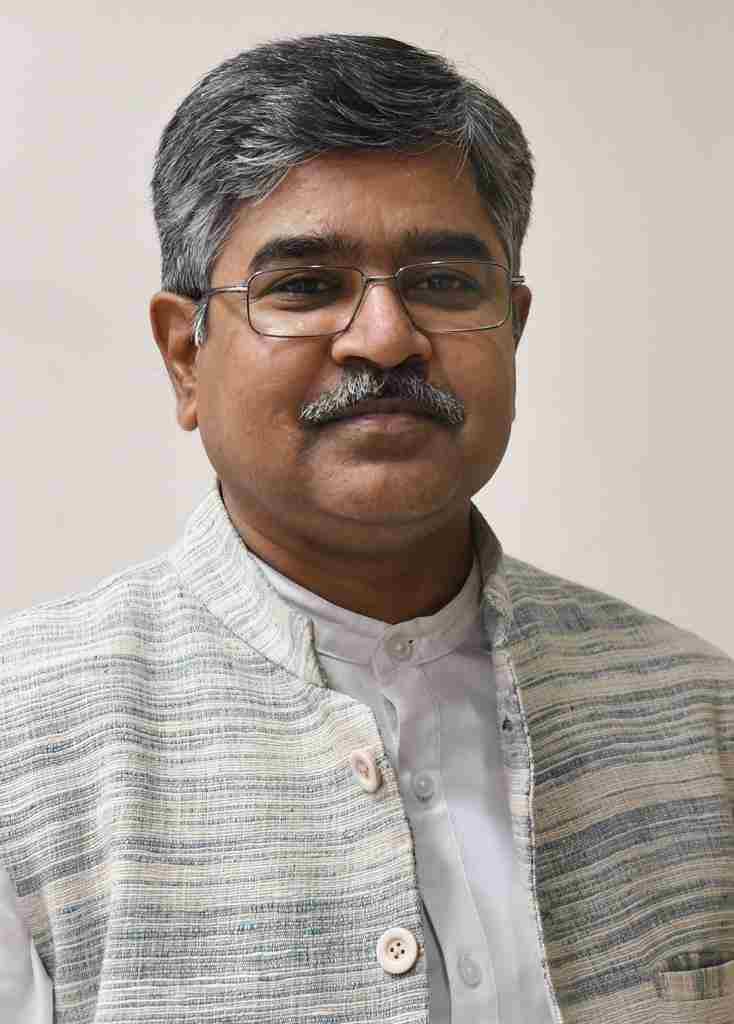
Chief economic advisor (CEA) Krishnamurthy V Subramanian, the architect of the Economic Survey 2020-21, on Friday said that India is witnessing a V-shaped recovery, which is a testimony to the “resilience and intrinsic strength” of India’s economy. He was referring to the sharp contraction of Indian economy by 23.9% in the quarter ended June 30, followed by recovery in contraction to 7.5% in the September quarter. Addressing a press conference he highlighted some key points of the survey:

Dividend of stringent lockdown
Subramanian said the analysis shows that early and more stringent lockdowns have been effective in controlling the spread of the pandemic – both across countries and across states in India. The V-shaped economic recovery also strongly correlates with the stringency of the lockdown. This alleviates concerns that the inference about the impact of the lockdown is due to any confounding factors peculiar to India such as higher level of immunity. As such India-specific factors are common to all states, they cannot be accounting for this correlation. Thus, survey infer that the lockdown had a causal impact on saving lives and the economic recovery. India thus benefited from successfully pushing the peak of the pandemic curve to September, 2020 through the lockdown. After this peak, India has been unique in experiencing declining daily cases despite increasing mobility.
Correlation of inequality and growth
Economic growth has a far greater impact on poverty alleviation than inequality. Therefore, given India’s stage of development, India must continue to focus on economic growth to lift the poor out of poverty by expanding the overall pie. Note that this policy focus does not imply that redistributive objectives are unimportant, but that redistribution is only feasible in a developing economy if the size of the economic pie grows. Given India’s stage of development, India should continue to focus on economic growth to lift the poor out of poverty.
Over-regulation leads to more discretion
International comparisons show that the problems of India’s administrative processes derive less from lack of compliance to processes or regulatory standards, but from over-regulation. This issue is illustrated through a study of time and procedures taken for a company to undergo voluntary liquidation in India. Even when there is no dispute or litigation and all paperwork is complete, it takes 1,570 days to be stuck off from the records. The evidence shows that over-regulation, not simpler regulation, leads to opaque decision making. The optimal solution is to have simple regulations combined with transparent decision-making process.
Regulatory forbearance
The current regulatory forbearance on bank loans has been necessitated by the Covid pandemic. Regulatory forbearance for banks involved relaxing the norms for restructuring assets, where restructured assets were no longer required to be classified as Non-Performing Assets (NPAs), and therefore did not require the levels of provisioning that NPAs attract. The first lesson for policymakers is to treat emergency measures as such and not to extend them even after recovery: when an emergency medicine becomes a staple diet, it can be counterproductive.
PM Jan Arogya Yojana
PM-JAY enhanced health insurance coverage. Across all the states, the proportion of households with health insurance increased by 54% for the states that implemented PM-JAY while falling by 10% in states that did not. Similarly, the proportion of households that had health insurance increased in Bihar, Assam and Sikkim from 2015-16 to 2019-20 by 89% while it decreased by 12% over the same period in West Bengal (the state did not implement the scheme). From 2015-16 to 2019-20, infant mortality rates declined by 12% for states that did not adopt PM-JAY and by 20% for states that adopted it.