
 E-Paper



From fiscal deficit to plan expenditure: Budget terms simplified
The Union Budget is a document that provides an estimation of the revenue and expenses of a country during the financial year and draws up a financial plan for the country, thereby deciding and allocating a specific sum for various government schemes and departments.


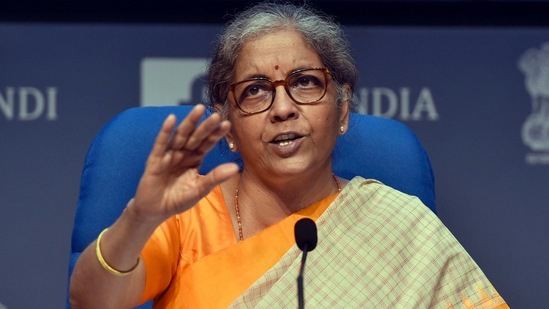
As the Budget session of Parliament began on Friday, all eyes are set on the budget which will be presented on February 1. The Union Budget 2021 will be the third one for Nirmala Sitharaman as the finance minister of India under the National Democratic Alliance (NDA) government led by Prime Minister Narendra Modi. The Union Budget is a document that provides an estimation of the revenue and expenses of a country during the financial year and draws up a financial plan for the country, thereby deciding and allocating a specific sum for various government schemes and departments.
Here are the terms of the Budget simplified:
Annual Financial Statement
The Annual Financial Statement is a document presented by the government every year in Parliament showing the estimated receipts and expenditures for the upcoming financial year in relation with the estimates from the previous ones.
Banking Cash Transaction Tax
It is a direct tax levied on cash transactions exceeding a specific amount from the bank by a customer which helps to check the flow of black money.
Budget estimates
It includes the estimate of government spending on different sectors throughout the year and the expected revenue from tax receipts together with the estimated fiscal deficit and revenue deficit for the year.
Capital receipt/expenditure
Capital receipt is a receipt that results in either reduction in assets or increases the liability of the government and includes market loans, small savings, provident fund and depreciation and reserve funds in various government departments. Capital expenditure is the expenditure which increases government assets or reduces liabilities and includes loan payment, loan disbursal and expenditure on infrastructure or developmental works.
Cess
Cess is an additional tax levied for a specific purpose, which is kept in the Consolidated Fund of India, and the amount raised by the tax is kept by the central government. For example, education cess, secondary and higher education Cess, Krishi Kalyan cess, Swacch Bharat cess.
Contingency fund
It is the fund that is set up specifically to meet unforeseen challenges.
Direct tax
It is the tax directly paid to the government by the taxpayers. It is imposed directly by the Centre and cannot be transferred to any other entity for payment. Real property tax, personal property tax, income tax or taxes on assets come under this.
Disinvestment
Disinvestment is the process by which the Union government either sells its stakes in a PSU–fully or partially–or lists it on the stock market.
Excise duty
Excise duty refers to the taxes levied on the manufacture of goods within the country, as opposed to custom duty that is levied on goods coming from outside the country.
Fiscal deficit
The difference between total revenue and total expenditure of the government is termed as fiscal deficit. It is an indication of the total borrowings needed by the government.
GST
Goods and Services Tax (GST) is an indirect tax levied on most of the goods and services in the country.
Indirect tax
Indirect tax is not directly levied on the taxpayers but is often levied on goods and services which results in their higher prices. This tax is basically levied on the seller of goods or the provider of service but in most cases, it gets passed on to the end consumer, and therefore, it is generally the consumer paying the tax, indirectly. Examples include service tax, central excise and customs duty, value-added tax (VAT) and most importantly GST.
Inflation
Inflation is the rate at which the general prices of goods and services in the country are rising. It is usually expressed in percentage points and when inflation increases, the purchasing power of citizens goes down. When purchasing power decreases, it affects the general cost of living of citizens and ultimately leads to the deceleration of the country's economy.
Plan and non-plan expenditure
Plan expenditure is the component of government expenses that helps increase the productive capacity in the economy and includes outlays for sectors such as rural development and education. It is a part of budget estimates which is determined after discussions with the ministries and stakeholders. Non-plan revenue expenditure is accounted for by interest payments, subsidies, wage and salary payments to government employees, grants to states and Union territories governments, pensions, police, economic services in various sectors, other general services such as tax collection, social services and grants to foreign governments.
Primary deficit
Primary deficit is the difference between the fiscal deficit and interest payment on loans from the previous year. Primary deficit shows the borrowing requirement excluding interest payment.
Revenue budget
A revenue budget consists of the government’s revenue receipts and expenditure they cover through these receipts.
Revenue deficit
A revenue deficit is when the actual net income is less than the expected or projected income.
Service tax
Service tax is an indirect tax that one is liable to pay to the government once you consume the taxable services offered by different service providers such as restaurants, cab services, hotels, travel agents, cable providers etc.
Surcharge
A surcharge is an additional fee, charge, or tax that is added to the cost of a good or service beyond the marked price.


