
 E-Paper



Households turn cautious, tighten purse strings in Q1
Firstly, households would have been forced to save more, being unable to consume up to their normal levels and secondly, they may have raised their precautionary savings due to uncertainty about their future incomes.


India’s household financial savings climbed to 21.4% of gross domestic product in the June quarter from 7.9% in the year earlier, data released by the Reserve Bank of India on Wednesday showed.
The sharp increase in household savings may be attributed to the pandemic-led reduction in discretionary spending and the surge in precautionary saving despite stagnant or reduced income in the central bank’s November bulletin.
The central banks said that while the key determinants of household financial savings—in particular, income and interest rate—deteriorated significantly during the June quarter, there were also changes in the consumption pattern of non-essential items. What the extra savings does is gives people enough room to spend once economic conditions, and more importantly the sentiment, revive.
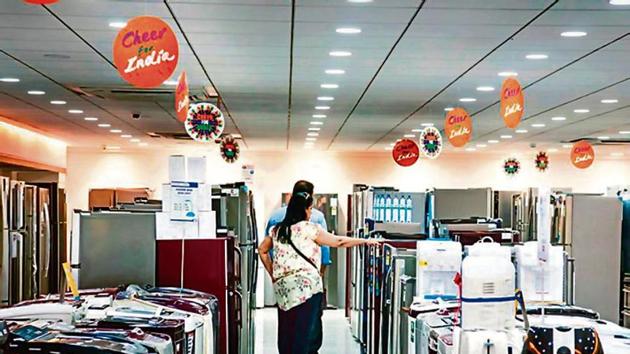
“We are upbeat on consumer demand with a positive start to this festive season with a 30% growth across air conditioner, refrigerator, washing machine and microwave categories over last year,” said Suguru Takamatsu, divisional head CSD, CE, Panasonic India.
“It is possible that additional household savings and need for convenience when working from home has encouraged consumers to spend more on appliances that make life easier for them in the current environment,” he said.
According to the report, the propensity of households to save may have risen significantly during the pandemic on two counts.
Firstly, the households would have been forced to save more, being unable to consume up to their normal levels and secondly, they may have raised their precautionary savings due to uncertainty about their future incomes.
This is also reflected in the continued inflow of bank deposits despite lenders cutting interest rate on these instruments. In India, bank deposits and bank loans constitute dominant shares of around 56% and 80% of household financial assets and liabilities, respectively. To be sure, bank deposits have been growing at a much faster pace than credit owing to lack of demand for new loans as Covid-19 has crimped people’s abilities to even service existing debt. However, the increased flows to mutual funds, it said, seem to have been driven by low returns on bank deposits and the stock markets touching new peaks after initial volatility in March 2020 following Covid-19.
“The trend of higher than usual household financial savings can persist for some time till the pandemic recedes and consumption levels get normalised,” the bulletin said.
Meanwhile, the economy is expected to have contracted by 8.6% in the September quarter, lower than what was initially estimated, the RBI said on Wednesday.
“The index nowcasts GDP growth at -8.6% in Q2 of 2020-21, implying that India is likely to have entered a technical recession in the first half of 2020-21 for the first time in its history with two successive quarters of GDP contraction,” it said. Nowcasting is the prediction of the present or the very near future of the state of the economy.


