E-Paper



Record sales for Maruti Suzuki, Hyundai India sales on first day of GST 2.0
The beginning of Navratri and GST 2.0 has resulted in record car sales for Maruti Suzuki and Hyundai in India. Here’s a look at the numbers.

 Prefer HTon Google


The historical No.1 and No.2 carmakers in India had their best single-day sales in years, as the rollout of GST 2.0 on the first day of Navratri brought buyers to showrooms by the droves.
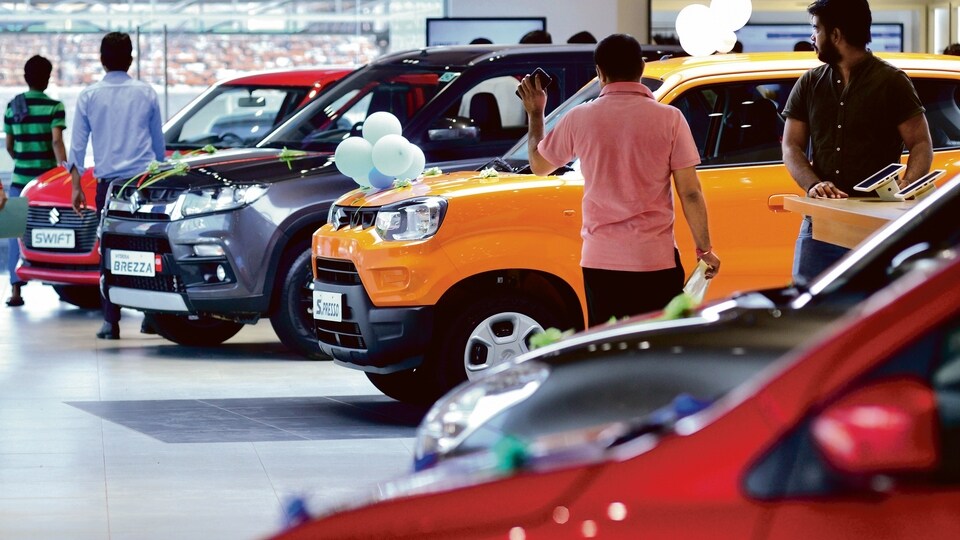
Maruti Suzuki India Ltd. clocked 80,000 inquiries and 30,000 deliveries of its cars on Monday, the highest in the last 35 years. Since new car prices were announced on 18 September, the country’s largest carmaker has clocked 15,000 bookings every day—50% higher than usual.
“Compared to last year (festive season), the overall response has been exceptionally strong,” Partho Banerjee, senior executive officer (marketing and sales) at the Alto K10 maker, said in a statement on Monday. “Demand for small cars has been especially strong, with bookings growing by nearly 50%.”
“Inquiries are very high, and we may even run out of stock for certain variants.”
At the same time, on the same day, Hyundai Motor India Ltd. clocked 11,000 dealer billings— the highest in five years—in “a clear testament of robust festive sentiment and customer confidence”, Chief Operating Officer Tarun Garg said.
“We anticipate sustained demand in the days and weeks to come, and remain committed to delivering value and excitement to our customers.”
On 4 September 2025, the government cut GST rates on hundreds of items—from soaps to small cars—as part of a rationalisation move that saw the number of tax slabs reduced to two (5% and 18%) from four (5%, 12%, 18% and 28%). While most essential items are in the 5% bracket, discretionary items attract an 18% GST. A new tax slab of 40% has been introduced for so-called sin goods, but the compensation cess has been done away with altogether.
ALSO READ | Maruti Suzuki Car Prices After GST Rate Cut — Full Model-Wise List
Essentially, small cars—less than 4 m length with up to 1,200 cc petrol or 1,500 cc diesel engines—are now taxed at 18% from 28% earlier. Anything larger is taxed at 40%, but that’s still less than the 28% and compensation cess charged in the previous regime, which took the total tax incidence to as high as 50% in some cases.