
 E-Paper



Chandigarh is quake prone, still no disaster directorate
For all its modern trappings and image of a well-planned city, Chandigarh comes up severely short on disaster management, and does not even have a basic directorate for the purpose. This directorate — required to be formed as per the Union government’s report filed about five years ago — has not been formed for non-sanction of a relatively small amount of Rs 2 crore.


For all its modern trappings and image of a well-planned city, Chandigarh comes up severely short on disaster management, and does not even have a basic directorate for the purpose. This directorate — required to be formed as per the Union government’s report filed about five years ago — has not been formed for non-sanction of a relatively small amount of Rs 2 crore.
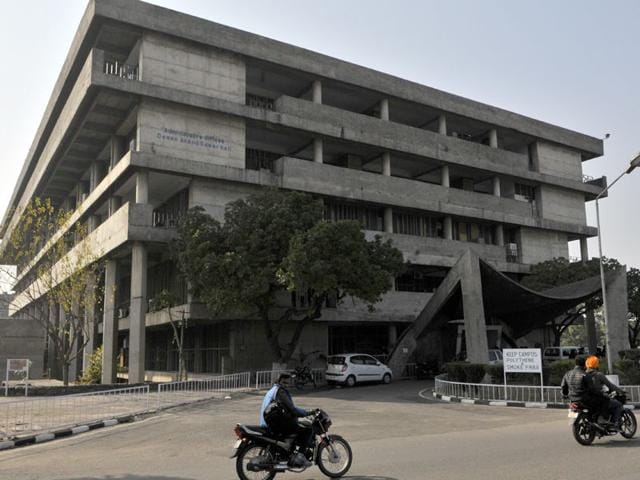
In its official communication to the Union ministry of home affairs, sent most recently two months ago, the administration points out failures in recent incidents, and admits that “it is clear that the UT Chandigarh not geared up to face large-scale disasters”. “At present, the disaster management machinery is highly disorganised in Chandigarh”, it admits, underlining recent occurrence of earthquakes and even terrorist attacks.
This gains significance in view of the Nepal earthquake, and the fact that Chandigarh is in seismic ‘zone 4’ on a quake vulnerability scale of 0-5, the latter point also noted in the letter. As of now, Chandigarh has state and district disaster management authorities that are bureaucratic bodies. On the ground, a civil defence wing manned by three inspectors is all that exists. Police and Home Guards are requisitioned when required; but lack the training for such exigencies.
The letter by the sub-divisional magistrate (SDM), central, who heads the district authority in his official capacity, pointedly says that the administration “faced multiple difficulties while dealing with small-scale disasters [such as last year’s collapse of NIELIT (National Institute of Electronics and Information Technology) building in Sector 17, a fire in Haryana secretariat, roof collapse in Colony No. 4…” The letter, a copy of which is with HT, even cites the 2006 roof collapse at the grain market in Sector 26.
The most prominent issues listed are “non-availability of Quick Response Team and trained manpower in making immediate response and result-oriented action”.
The letter refers to the ‘178th Report on Disaster Management in the Country’ forwarded by the MHA to it in early 2012, and subsequent reminders, the last in April 2014. The MHA communication mandates establishment of a separate disaster directorate having various wings along with an emergency operation centre (EOC). The draft proposal has been approved by the UT adviser.
SDM (C) Prince Dhawan said equipment for disaster management at present is limited to an ambulance and a van, and everything else would have to be requisitioned in case of emergency. “There need to be mapping for disasters, such as earthquakes, and preventive measures taken accordingly,” he said, adding that, for instance, police were primarily trained for law and order. He opined that private buildings in particular needed to be studied.


