
 E-Paper



Punjab professionals are back to the soil, organically
New-age farmers, compost kit makers and teachers are using social media, participating in pop-up organic farmers’ markets and organising day-long farm tours to ensure those wanting pesticide-free food grains don’t have to look too far.


Highly qualified professionals are increasingly quitting their lucrative jobs and returning to Punjab to try their hand at organic farming.
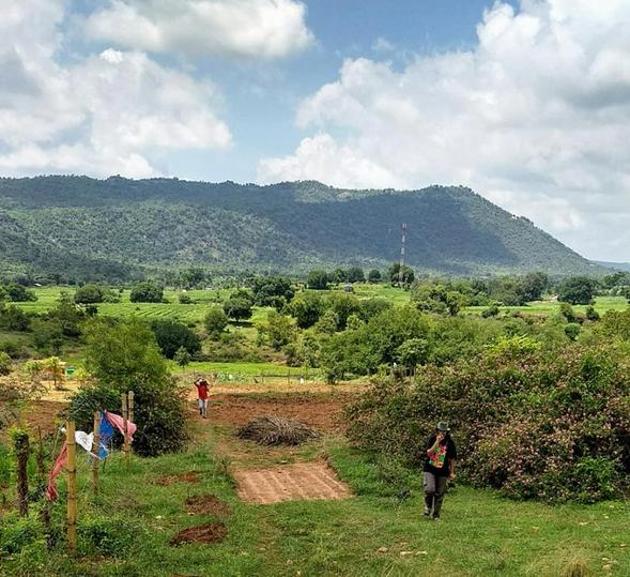
These new-age farmers, compost kit makers and teachers are using social media, participating in pop-up organic farmers’ markets and organising day-long farm tours to ensure those wanting pesticide-free food grains don’t have to look too far.
‘ASCERTAIN ECONOMIC BENEFITS FOR FARMERS’
Rahul Sharma, a former top executive in a leading IT company, now grows cereal grains, pulses, oil seeds, turmeric and garlic at his five-acre farm in Kapurthala
“If the government is serious about providing nutritional security, then it must ascertain that farmers get economic benefits so they can go in for sustainable agriculture,” he says.
Sharma does not regret switching his job. He regularly lectures and interacts with school and college students.
He has decided to streamline the production and ordering process. “I have now a set rotation of crops, which provide nutrition to the soil, as well as work well in the consumer market,” he says.
‘GREATER AWARENESS AMONG CONSUMERS’
Shivraj Bhullar, who has a four-acre farm in Manimajra, left his cushy banker job in Canada to start organic farming in 2014. “The organic farming convention that was held in the region in 2015 brought a lot of people together. Since then, the movement has been growing and there is greater awareness among consumers,” he says.
He plans to improve his farm by installing a drip irrigation system and rain water harvesting.
Coordinator of the Chandigarh Farmers’ Market, Seema Jolly, owns a five-acre farm in village Karoran in Punjab. Seema wants her farm to be a school for organic/natural farming, yoga and Ayurveda in the near future. One of the directors of the Baikunth Resorts Pvt Ltd, Jolly started organic farming in 2011 and there has been no looking back.
‘GOVT’S POLICY OF 100% WHEAT PROCUREMENT MUST CHANGE’.
Former national-level hockey player Mohanjit Dhaliwal, has two farms , one in Ropar and another in Fathegrah Sahib, the latter being part of perma-culture food forest in ‘Sanjhi Mitti Food Forest Community’, has been involved in organic farmer for 10 years now. On roadblocks, he feels, that the government’s policy of 100% wheat paddy procurement has to change.
“Farmers, who used to be entrepreneurs and solutions finders, are now behaving like robots. Nothing is going to change unless policy makers get out of process.”
Chandigarh-based Jyoti Arora, who supplies odour-free composters in Punjab, Himachal Pradesh, Uttarakhand and Chandigarh to houses, hotels, institutions, municipalities, and engages with Swachh Bharat teams of different municipalities, says, “I also do a lot of lecture demonstrations to encourage people to go green.”
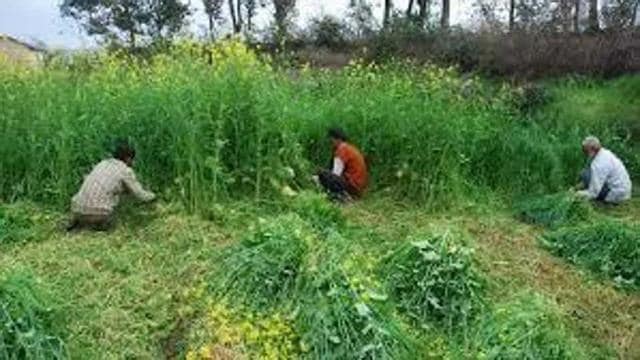
ORGANIC WAY OF LIFE
Everything changed for Diksha Suri, a former corporate communications head with a major hospital chain when she spent time at Auroville in 2004. “Being there and learning from experts started a journey of a more conscious approach towards the living greens and browns. I attended formal workshops and started experimenting with an organic way of living,” says Suri, who, along with a friend set up Chandigarh’s first Nature Club in 2012.
Chandigarh-based Rishi Miranshah, who has made the nine-part docu-series ‘The Story of Food - A No Fresh Carbon Footprint’ says, “Considering what chemicals have been doing to our food and the need to switch to organic, it was important for me to make this documentary which is an investigation, tracing the trail of devastations bringing us to the point where we are today.”


