
 E-Paper



Villagers in Haldwani turn to goddess for respite from jumbo attacks
Worried over attacks by elephants, more than 500 families in Golapar area of Haldwani district have not knocked the doors of the forest department, but started seeking blessings of a goddess to safeguard them.


Worried over attacks by elephants, more than 500 families in Golapar area of Haldwani district have not knocked the doors of the forest department, but started seeking blessings of a goddess to safeguard them.
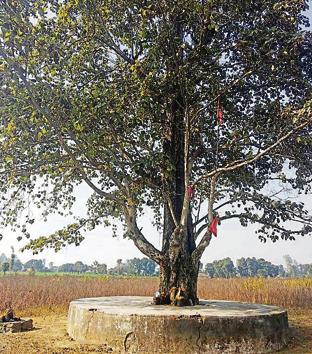
In the past six months, elephants killed one villager and injured two besides damaging standing crops and property in the area. Dehradun, Haridwar, US Nagar, Nainital and Champawat districts of Uttarakhand also face man-elephant conflicts.
Families residing in three villages in Golapar area believe that an ancient Kalika Than temple, located below a deciduous Haldu tree (Haldina cordifolia), had brought them relief from wild animals for decades. People stopped praying the goddess in the last three years when the area stopped reporting conflicts.
“It’s our fault that we did not please the goddess in the last three years due to which we are facing extreme conflicts (elephant raids) this winter season,” said Harendra Singh Bisht, head of Kunwarpur village.
The villagers organised a bhandara (feast) to please the deity and have plans to hold such a programme every week. “The forest staff are patrolling the region, but that won’t stop the animals (from attacking people and damaging crops). Children and women are scared to come out,” said Prakash Martoliya, a villager.
Sharing folklore, Amita Bisht, a 70-year-old villager, said the practice of pleasing the goddess in March -- before crops are harvested – had been going on for ages. The new generation stopped the practice, and they are facing trouble because of this, she said.
“The young generation should believe in old traditions. The goddess is upset and has to be pleased now,” she said.
Villagers said the rotational farming practice has attracted animals to the area. People have been growing sugarcane, maize and these days wheat; elephants come to the villages to eat the crops.
Elephant conflicts have become a routine in Terai belt and Haridwar division owing to sugarcane farming. Missarwala, Jaggitpur and other villages adjoining Haridwar belt are reeling under the problem.
Presence of elephants has stopped traffic on the Dehradun-Rishikesh highway many times. On January 21, an elephant killed a woman in Kotdwar; a tusker killed two people and injured three in Haridwar forest division in last one week.
CS Sanwal, divisional forest officer (DFO), Haldwani, said, “Staff are monitoring the area through intensive combing and patrolling.”
Forest officials said 100 people have been killed by elephants since Uttarakhand was carved out of Uttar Pradesh. The state reported 1346 elephants in 2012, which increased to 1839, as per Synchronisation Population Estimation 2017.
“Choked corridors, degradation of forest land and development are main reasons behind elephant conflicts in the state,” said AK Singh, team leader od Terai Arch Landscape in World Wide Fund for Nature.


