
 E-Paper



Bengaluru's Silk Board junction sees 50% drop in traffic congestion, thanks to double-decker flyover: Report
The flyover built was at the cost of ₹449 crore, and it stretches 5.12 km from Ragigudda to Central Silk Board in Bengaluru.

 Prefer HTon Google


One of Bengaluru's most congested areas, Silk Board Junction, has recorded at least a 50 per cent reduction in traffic snarls after the opening of much awaited double-decker flyover in July, The Indian Express reported.
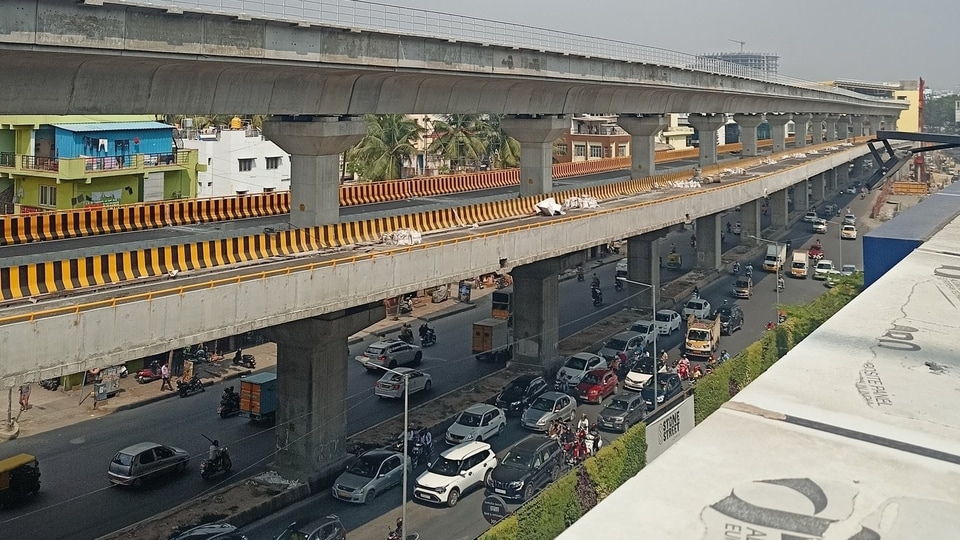
According to the report, data from Deputy Commissioner of Police (Traffic-East), Kuldeep Kumar Jain, indicates a reduction in average daily traffic jams during morning and peak hours at Silk Board Junction, thanks to the newly opened double-decker flyover.
What's changed after the double-decker flyover?
Before the flyover was inaugurated, congestion trends at Silk Board Junction showed an average of 24 daily congestion alerts, which dropped to 15 within a month. During the same period, the average length of traffic queues decreased from 19 km to 10 km, The Indian Express reported.
Jain told The Indian Express that a month after the flyover's opening, morning peak congestion at Silk Board Junction, between 8 am and 12 pm, has reduced by 42 per cent. He added that evening peak congestion, from 4 pm to 11 pm, has seen a 45 per cent reduction.
(Also Read: South India's first double-decker flyover to be launched in Bengaluru today. 5 things to know)
Double-decker flyover: What you need to know
The flyover was built at the cost of ₹449 crore, and it stretches 5.12 km from Ragigudda to Central Silk Board. This is a road and metro flyover, which will have five different ramps. The work for three ramps has been finished, and two are under construction. This is the first such double-decker flyover in South India. The yellow line metro that passes along with the flyover is yet to get operational, but according to Bangalore Metro Rail Corporation Limited (BMRCL), it is expected to begin by December this year.
This flyover was built to reduce traffic jams on the Outer Ring Road, which frequently experiences heavy congestion. It is expected to save 30-40 minutes for commuters traveling to areas like Hosur Road, BTM Layout, HSR Layout, and Ragigudda from various parts of the city by bypassing the Silk Board Junction.
(Also Read: Future metro lines to follow double-decker flyover design, says Karnataka DCM DK Shivakumar)


