
 E-Paper



City matters: Need significant change in way we plan Bengaluru
Bengaluru ranked the best Indian city on the Ease of Living index in its population category. The problem with being ranked the best is that the only way is down since there are no underlying structural measures that can ensure repeat winning performances


Recently, Bengaluru jumped over fifty places to be ranked the best Indian city on the Ease of Living index in its population category. This ranking by the Ministry of Housing and Urban Affairs was accompanied by its sibling, the Municipal Performance (MP) Index in which the city did not make it to any of the top spots. While the latter was both understandable and explainable, the most liveable city tag, while a welcome surprise, was a tad difficult to reason away akin to the umpire’s call. Bengalureans were understandably skeptical and the chief minister (B S Yediyurappa) chose to skip its mention while presenting the budget. Self-proclaimed urban experts like this writer were scrambling around to make sense of the ranking.
While there are many parameters underlying the index, the primary reasons for the high ranking possibly stems from the Citizen Perception Survey (30%) and Economic Ability (15%). While the latter has always been a city’s strength, it is clear that the one silver lining from the pandemic year was citizens feeling better about a city that they experienced less! Given the technological nature of the city’s workforce, it was a natural fit for the shift to the Work from Home (WFH) paradigm. Many companies had progressive schemes to facilitate WFH – employees had laptops sent to their homes and broadband connection enabled. This coupled with less need for travel saw reduced traffic, Bengaluru’s notorious bugbear, and less visible garbage too, another regular dampener. The multiple excavation sites too were mainly out of sight. All in all, less distress led to relative happiness. Bengaluru saw a steady middle order performance in the other two parameters of Quality of Life (35%) and Sustainability (20%).
Also Read | HT Editorial: Shaping India’s urban future
The problem with being ranked the best is that the only way is down since there are no underlying structural measures that can ensure repeat winning performances. The Municipal Performance index says it all. Bengaluru has chosen to disregard the multiple committee (disclosure – this writer was a member of one of them) recommendations to reform its city governance and administration. There is a need to do a mix of deep decentralization at the ward level and centralization to coordinate across multiple agencies at the city level. It has not happened and neither does there seem to be political will nor administrative appetite to do what is required.
More important than the structural reforms, we need a transformative vision for the city. If there is one takeaway from the 2020 pandemic, it is the idea of a ‘bubble’ and the need for compact cities. We need to think in terms of a 5 km city radius where the bulk of ‘live and work’ happens for most Bengalureans. We had the code, but we chose to junk it. The public sector townships like ITI, BEL, HAL, HMT were planned in this manner where the workplace, educational, social infrastructure were all provided for in the neighbourhood. Somewhere in the growth process, we chose to crisscross the city and lost the plot. It is possible to reimagine the city drawing from this relatively ‘ancient’ way of life!
Also Read | ‘Choice between smart city and decay’: Minister on Ease of Living Index report
Bengaluru no longer has one city centre. Just going overground on the Metro on MG Road sort of killed it. There are multiple city centres around Whitefield, Jayanagar, Malleswaram, etc. The 5 km city has to work for strata of citizens. Our house helps, business workers, street side vendors need to be able to live with dignity within these ‘enclaves’. For that to happen, it is imperative we think in terms of social rental housing, a much-neglected area. We need plan permission policies that enable rental housing for the underprivileged on scale – instruments like Transit Oriented Development, Transferable Development Rights and local retrofit initiatives need to be reoriented to address this need.
We need a significant change in the way we plan our city if we need it to be a truly liveable one for decades to come. The current Comprehensive Master Plan route has failed us comprehensively. We ought not to be in denial and be ready to embark on new imaginations of what is desirable and possible. This will require enlightened political leadership and Bengaluru has the civil society eco-system that is happy to partner. Together we can make the change happen.
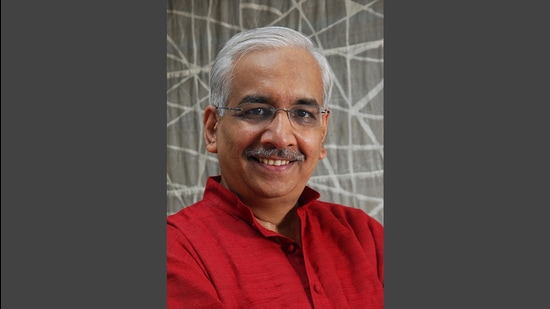
(V. Ravichandar, Civic evangelist, chooses to defer celebrating the most liveable city award.)
Stay updated Bengaluru Weather Live and with all the Breaking News and Latest News from Bengaluru. Click here for comprehensive coverage of top cities including Delhi, Mumbai, Hyderabad, and more across India . Stay informed on the latest happenings in World News.


