
 E-Paper



Forensic hair test confirm drug use by actors
This forensic technique was used in the investigation of the drug case involving two Kannada actors, Ragini Dwivedi and Sanjjana Galrani.


In a first, Bengaluru police have used forensic analysis of human hair to confirm consumption of narcotic substances by two Kannada actors whose blood and urine sample tests to find drug traces were inconclusive, police officials said.
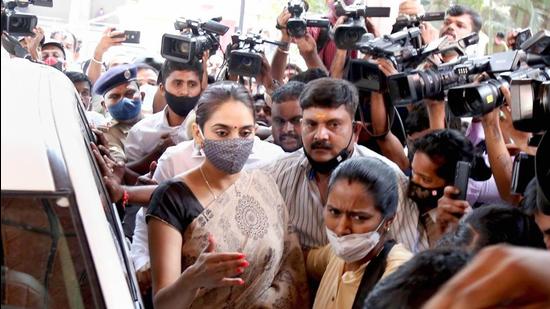
This forensic technique was used in the investigation of the drug case involving two Kannada actors, Ragini Dwivedi and Sanjjana Galrani.
In a statement released on Tuesday, Bengaluru police said that as the tests of urine and blood samples were not conclusive in this case, the Central Crime Branch (CCB) collected hair follicles from the actors and sent them to the Central Forensic Science Laboratory in Hyderabad in October 2020.
“Generally, only blood or urine samples are sent to labs for tests. But these samples could only confirm whether drugs were consumed in the past 24 hours. So, we decided to send the hair samples to Hyderabad forensic lab,” said a senior CCB official.
According to the police, the hair samples were sent along with those of nails and urine. “The hair samples were sent for the first time in a drugs case in the state,” said Sandeep Patil, joint commissioner of police (crime).
The test is known as the hair follicle test or hair drug test. The lab had rejected the samples of hair of the actresses for the first time, so the samples were sent again, read a statement from the CCB.
Following the Narcotics Control Bureau’s seizure of drugs in August 2020, Kannada film director Indrajit Lankesh claimed to have information on several film personalities who frequently used drugs at parties.
On August 31 last year, the Central Crime Branch police questioned him for almost five hours and asked him to share whatever details he could to support the police in its fight against the drug menace. Lankesh claimed he had shared 15 names from the industry and some supporting documents.
Based on these inputs, the Central Crime Branch of Bengaluru police and the NCB had arrested Dwivedi on September 14, 2020, and Sanjjanaa two days later. The actors had been arrested following an FIR registered in the Cottonpet police station under sections of Narcotic Drugs and Psychotropic Substances (NDPS) Act dealing with illegal drug possession, consumption, and dealing. They were released on bail in January 2021. After interrogating more than 180 witnesses, the CCB filed a 2,400-page charge sheet against 25 persons, including Ragini and Sanjjanaa, in March this year.
Patil said that since the accused in the case had evaded arrest, it was difficult to collect urine and other routine blood tests within 48 hours. “Hair samples will retain the traces of drugs for up to one year. The new method has helped the police to trace the drug consumption of the accused in NDPS cases,” Patil said.
Apart from the two actresses, the reports have also confirmed that other accused in the case -- Viren Khanna, Rahul Tonse -- were using drugs. After the lab sent the reports, the investigation officer in the case has submitted them to the 33rd CCH court in Bengaluru. The reports will be added to the charge sheet against the actresses and others, the statement added.
Talking to local media, Sanjjanaa Galrani has responded that she does not know about the CFSL report. She said she will answer only after obtaining the details of the CFSL report. Ragini and the other accused were not available for comments.

Stay updated Bengaluru Weather Live and with all the Breaking News and Latest News from Bengaluru. Click here for comprehensive coverage of top cities including Delhi, Mumbai, Hyderabad, and more across India . Stay informed on the latest happenings in World News.


