
 E-Paper



Govt faces flak over proposed tunnel project
The Karnataka government is facing criticism over its decision to use parts of Lalbagh Botanical Garden for its ambitious Bengaluru Tunnel Road project.

 Prefer HTon Google


The Siddaramaiah-led Congress government is facing mounting criticism over its decision to use parts of the Lalbagh Botanical Garden for the ambitious Bengaluru Tunnel Road project. The plan has triggered widespread anger from environmentalists, opposition leaders, and civic groups who say the project could permanently damage one of the city’s most cherished green spaces.
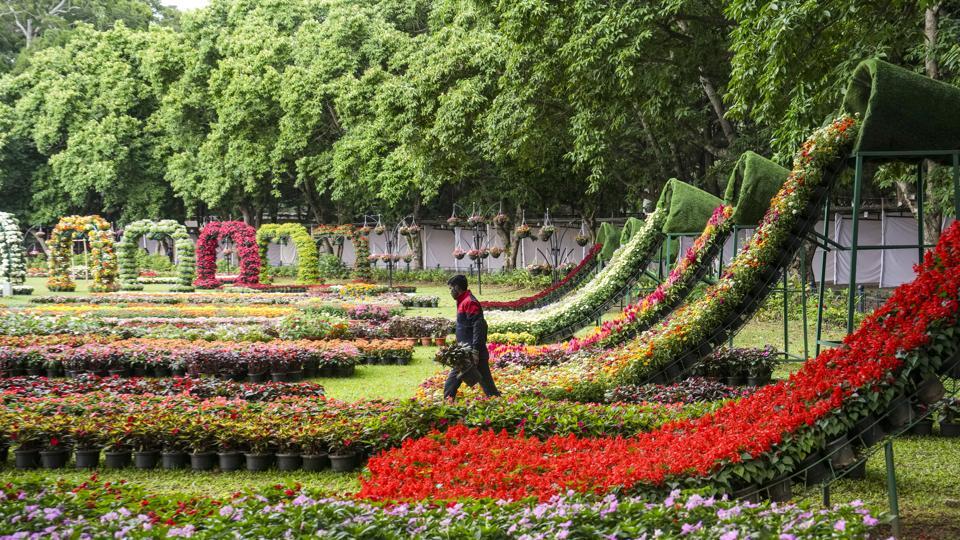
Initially, the officials described the use of Lalbagh as “temporary”, saying the area would be used only to store construction materials. Deputy chief minister DK Shivakumar maintained that the land would be restored once the work was completed. However, new disclosures that the proposed 16.5-kilometer tunnel would run beneath the park have sparked protests across Bengaluru, with critics warning that the project threatens the 3,000-million-year-old Peninsular Gneiss — also known as Lalbagh Rock — a site protected as national geo-heritage.
Bangalore South MP Tejasvi Surya has led the political opposition, accusing the Congress government of “endangering the city’s ecological and geological legacy.” In a letter to Union mines minister Kishan Reddy, Surya urged the Geological Survey of India to conduct a detailed impact assessment.
“I have requested Union minister Kishan Reddy to initiate a comprehensive study on the potential geological, seismic, and hydrological impact of the project,” Surya wrote.
“Before disturbing even an inch of Lalbagh, a full scientific and environmental study is essential. This is not just about rock and soil — it’s about Bengaluru’s legacy,” he further mentioned.
Surya warned that the tunnel’s alignment passes dangerously close to Lalbagh Rock, risking structural damage to the formation and disrupting the park’s fragile ecosystem. He also criticised the government for prioritising car-centric infrastructure instead of investing in public transport. “What Bengaluru needs is a robust, affordable, and reliable public transport system, not a billion-rupee tunnel that destroys our heritage,” he posted on X.
According to the Detailed Project Report (DPR), the tunnel will feature 10 lanes — comparable to an expressway — running 50 to 100 feet below Lalbagh. Two entry ramps will pass near the Lalbagh lake before merging into the six-lane main tunnel, while another two-lane ramp will stretch 1.1 kilometers directly under the ancient rock before emerging near Marigowda Junction.
The project will require approximately 2.56 lakh square feet of land -- slightly over six acres. It also includes a plan to build a vertical shaft next to the rock to lower a tunnel boring machine, which will cut 700 metres through soil beneath the park.
But critics remain unconvinced. Environmental campaigner Leo Saldanha of the Environment Support Group (ESG) called the move a violation of Lalbagh’s historical sanctity. “Repurposing any part of Lalbagh for construction or infrastructure projects contradicts its original vision and the environmental principles it embodies,” he said.
Adding to the government’s troubles, a review panel appointed by the Karnataka urban development department has criticised the project’s DPR for serious technical shortcomings. The expert committee, chaired by Siddanagouda Hegaraddi of the Bangalore Metro Rail Corporation Limited (BMRCL), said the report was “prepared in a hurry,” with only four soil test points used to design the 16.5-kilometre tunnel.
The committee said that positioning one of the tunnel shafts inside Lalbagh “needs to be re-examined” due to the park’s ecological sensitivity. It also raised concerns that the DPR failed to adequately justify the project, especially since it runs almost parallel to a proposed Namma Metro line serving the same north-south corridor.
“The general apprehension of stakeholders is that the road tunnel project will become redundant as it is running almost parallel with the proposed metro line,” the report said. “This apprehension could not be addressed in the absence of breakup of peak-hour traffic data with modal share and projected peak-hour traffic data.”
The committee found that the DPR relied heavily on assumptions and reconnaissance surveys rather than primary data. No field studies were conducted to determine current traffic volumes, public transport usage, or future demand. Without accurate traffic data, the panel said, projections for lane requirements, toll revenues, and congestion reduction were impossible to verify.
The committee also noted inconsistencies in the project’s traffic modelling. The DPR projected a “horizon year” of 2041 — only a decade after the tunnel’s expected completion — instead of the standard 25-year design benchmark. Based on existing data, the report said a 2+2 lane configuration would be sufficient for 2041 traffic levels, yet the DPR proposed a 3+3 lane design intended for far higher demand.
Environmentalists argue that the Tunnel Road represents a regressive approach to mobility in a city already struggling with air pollution, urban heat, and traffic congestion. They say large-scale road projects encourage more private vehicle use instead of strengthening public transit.
“Bengaluru should focus on environmentally sound planning instead of carving tunnels under its central park,” Saldanha said. “Cities that rely on road expansion to fix traffic repeatedly fail. Once Lalbagh is disrupted, the damage cannot be undone.”
The expert committee has recommended that the government re-evaluate the tunnel’s alignment, reconsider the shaft inside Lalbagh, and reassess the project’s traffic projections with comprehensive field studies. It also urged authorities to explore whether the Namma Metro expansion could make the road tunnel unnecessary.
A senior official with Bangalore Smart Infrastructure Ltd (B-SMILE), the agency implementing the project, claimed the impact would be minimal. “Most of the land will be rehabilitated and returned to its original state. The proposed shaft is located on unused land within the garden, posing no risk to the rock formation,” the official said.


