
 E-Paper



Govt to take over all borewells in Bengaluru to deal with water crisis
Deputy chief minister and Bengaluru development minister, DK Shivakumar, has issued a directive to the Bengaluru Water Supply and Sewerage Board (BWSSB) to take charge of all irrigation and commercial borewells

 Prefer HTon Google


Deputy chief minister and Bengaluru development minister, DK Shivakumar, has issued a directive to the Bengaluru Water Supply and Sewerage Board (BWSSB) to take charge of all irrigation and commercial borewells.
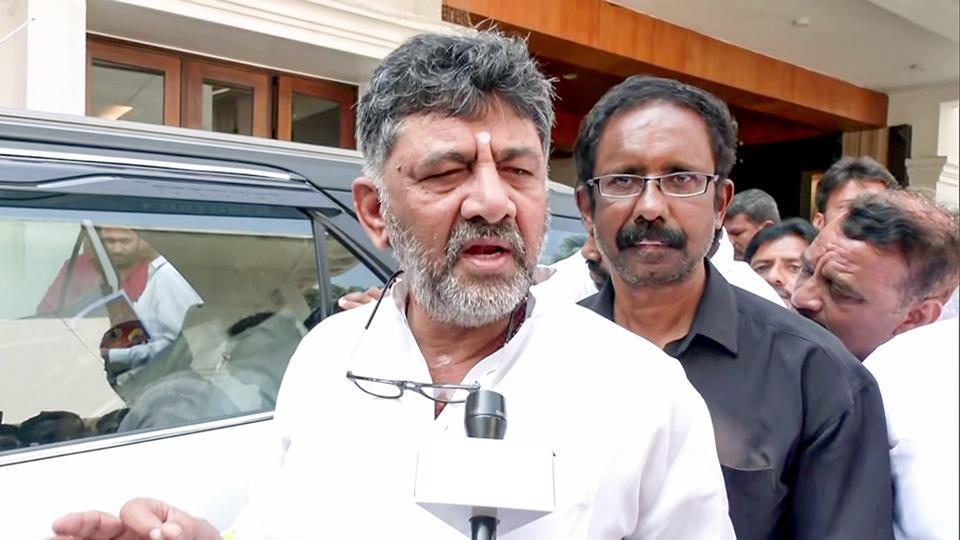
The decision comes after the mounting concerns over the looming water crisis in the city’s urban and rural areas.
Addressing the media after a meeting on the drinking water crisis, Shivakumar said they have come up with a solution for drinking water.
“Water does not belong to any individual and it belongs to the government. That is the law of the country. The state has the right to take over the same in the time of water crisis. The law pertaining to water also allows the state to take over borewells to ease the crisis. Half of the existing borewells have dried up and we have decided to take over irrigation as well as commercial borewells in Bengaluru city and rural areas,” the deputy CM said.
Bengaluru has been facing a water crisis for the past week or so due to less than normal rainfall in two monsoon seasons — southwest and northeast monsoon. The India Meteorological Department (IMD) had said that there was 34% less rainfall during the northeast monsoon that brings rains to the southern peninsular India further aggravating water crisis due to deficiency of 25% during southwest monsoon (summer rains).
The city needs 3,100 million litres every day (MLD). Half of it comes from the Cauvery river, whose catchment area has received very less rainfall since August 2023, leading to most reservoirs having lowest water levels in the past 10 years.
The official said the silicon city gets around 1,680 MLD from 14,781 borewells in and around the city and 6,997 of them are also running dry, leading to the fear of a major water crisis as temperature is rising in southern parts of India. “The crisis may worsen as already close to 50% of borewells have dried up and if there is no good rain in coming days,” a senior government official said.
Shivakumar said he has directed BWSSB and district panchayats to take over the irrigation borewells used for farming and commercial sale of water. “The government would be providing drinking water through tankers now,” he said.
Shivakumar explained that the decision to take over the water sources has been made to ensure that everyone can get water tankers in a fair and rational manner. “It will also put an end to the tanker mafia operating in many parts of the city,” he said.
To regulate water distribution more effectively, the government has mandated the registration of private water tankers. The minister said they have been given time till March 7 to register with BBMP. “Not even 10% of the tankers have been registered yet. It is mandatory for the tankers to register and the vehicles which are not registered will be seized,” he said.
“BBMP will also start a dedicated call centre for the registration purpose. The call centre will also be there to requisition tankers,” he added.
In wake of the water crisis, a water tanker (having about 5,000 litres) is coming at a price of ₹2,000 to ₹3,000. Shivakumar said the government will soon fix the price of water tankers based on distance from the source to the households. “Steps have been taken to address drilling needs and contractor disputes. There are some issues between our contractors and Tamil Nadu drillers. We will solve that issue,” he said.
Shivakumar expressed confidence that the state government will overcome the water crisis saying additional water is expected to be received from Cauvery by end of May. “Entire team of civic body officials will dedicate all resources to fight the water crisis and we will ensure nobody will face problems due to water scarcity,” he said.
The minister also informed that a grant of ₹10 crore has been given to all 28 MLAs of Bengaluru so that they can help in resolving the water crisis. “The BBMP has given ₹148 crores and BWSSB has given ₹128 crores to solve the drinking water problem,” he added.


