
 E-Paper



Hubballi clash a reminder of DJ Halli case
In both, Hubbali violence case and DJ Halli case, social media and instant messaging apps were used to mobilise the crowd and an instigation claiming police didn’t act against the perpetrators who made the derogatory posts


The violence that unfolded in Hubbali on Sunday has eerie similarities to the riots that unfolded in Bengaluru’s DJ Halli in August 2020.
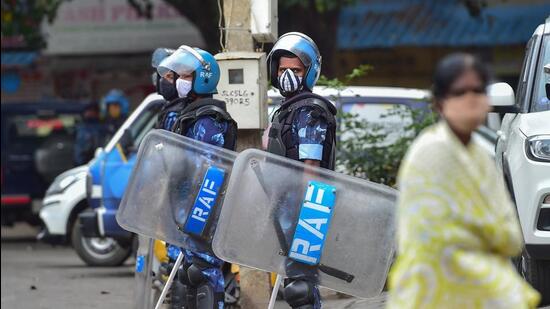
In both cases, riots were triggered by a derogatory post against a community. Social media and instant messaging apps were used to mobilise the crowd and an instigation claiming police didn’t act against the perpetrators who made the derogatory posts. Police opened fire in both cases. While in Hubbali, police fired 13 rounds in the air, four people were killed in the police firing in the DJ Halli case.
The riots in DJ Halli were triggered by a Facebook post by Naveen P, nephew of Congress MLA from Pulakeshinagar R Akhanda Srinivas Murthy. On August 11 2020, a mob gathered in DJ Halli and KG Halli areas creating unrest after police sought time to take action over a complaint filed against the post, according to the police complaint filed on August 11.
Pasha, an accused in the case, had approached the DJ Halli police station with a complaint against Naveen at 7.45 pm on August 11. The attacks began at 9.30 pm and ended in the early hours of August 12 after MLAs, and other senior leaders gathered at the spot, according to the FIR. Four people were killed in the riots, according to police.
In the Hubbali case, the violence on Sunday was the fallout of an alleged social media post, which others took objection to and lodged a police complaint.
The post allegedly showed a digitally altered image of a saffron flag flying over a masjid, Hubbali-Dharwad police commissioner Labhu Ram said.
Subsequently, the person who made the post – later identified as Abhishek Hiremath, a resident of Hubbali town–was arrested after a case was registered based on a complaint by residents at the Udupi town police station.
However, not satisfied with the action, a few people gathered around the police station. They were persuaded and later dispersed from the spot, Ram said.
Later around midnight, a group of people gathered around the police station and summoned police officials to apprise them about the action taken so far. The mob, however, refused to listen to them and went on a rampage, damaging police vehicles, Ram said. They also resorted to stone pelting, he added.
Karnataka home minister Araga Jnanendra also said a mob surrounded the police station and attacked the cops in the early hours of Sunday. A police inspector was believed to have suffered critical injuries. At least 10 people were admitted to the hospital with minor injuries.
“In both cases, the initial mobilisation of the crowd was organic. It was the outrage over the social media posts that led to the crowd gathering outside the police station. But then, there was a conspiracy that followed to make the incident a communal incident,” said an additional director general of police rank officer on the condition of the anonymity, adding that the investigations have revealed that members of several organisations were arrested in the connection with the cases for triggering the violence.
The human rights activists said that the mass arrests in both cases exposed the prejudices in the police department. There were complaints of innocent people being arrested in the cases without evidence. In the DJ Halli case, police arrested at least 400 people, including several from a building in the area.
Tabrez Hussain, a 35-year-old executive in a multinational company, was picked up from his apartment by police a day after the violence. According to Hussain, he was playing carrom in the parking lot of his apartment with three others when police barged in. He said three Muslim men, including him, were picked up while the Hindu watchman was left behind.
“I asked them what was going on, but we did not get an answer. They took us to the main road and made us kneel. Soon, a government bus came, and we were all loaded in it,” Hussain told HT.
For two months after his arrest, he remained in dark about the charges slapped against him by police. He was booked under charges of rioting, among others. On June 19, The Karnataka high court granted default bail to 115 people arrested in the case, including Hussain.
“People were picked up randomly in the DJ Halli case. People who were not in the area during the riots and those who have evidence to prove they were not at the scene were arrested. In the Hubbali case, too, there have been more than 100 arrests. We are not saying people should not be arrested, but the DJ Halli incident has shown how innocent minorities are harassed,” Aslam Pasha, one of the lawyers who appeared on behalf of the arrested people, said.
A Bengaluru based social activist also pointed out that both DJ Halli violence and the incident in Hubbali can’t be seen in isolation. “Before the DJ Halli riots, during the lockdown, there were several incidents of Muslims being targeted like Tablighi Jamaat controversy and subsequent attacks on minorities in the state. If you look at the Hubbali case, there was a hijab controversy, a halal meat ban and many other anti-Muslim policies in recent times. So, a derogatory social media post was the perfect trigger for igniting emotions. While there are some factions (organisations) within the community that instigated the community members when such cases arise, and the Hindutva forces use these to target Muslims. It is a vicious cycle of sorts,” said a researcher studying the DJ Halli violence.
DJ Halli was the first riot case in Karnataka in which the UAPA (Unlawful Activities (Prevention) Act) was imposed.
Between 2015 and 2020, Karnataka reported 971 cases of riots, either communal or political, according to the National Crime Records Bureau. This includes the protests against the Citizenship (Amendment) Act (CAA) in Mangaluru (in December 2019), which saw unprecedented violence – including the death of two persons. However, it was only in the DJ Halli riots case that the Bengaluru police invoked the stringent UAPA, according to police records accessed by HT. In the Hubballi case as well, demands to invoke the UAPA have been raked up by BJP leader Shobha Karandlaje.

Stay updated Bengaluru Weather Live and with all the Breaking News and Latest News from Bengaluru. Click here for comprehensive coverage of top cities including Delhi, Mumbai, Hyderabad, and more across India . Stay informed on the latest happenings in World News.


