
 E-Paper



Karnataka farmers forced to buy tanker water for crops due to delayed monsoon
The delay in the arrival of the monsoon by 15 days has posed a significant challenge for farmers in Belagavi taluk who primarily cultivate paddy.

 Prefer HTon Google


The delay in the arrival of the monsoon by 15 days has posed a significant challenge for farmers in Belagavi taluk who primarily cultivate paddy. To protect their crops, farmers are resorting to purchase water from private suppliers to irrigate their paddy saplings.
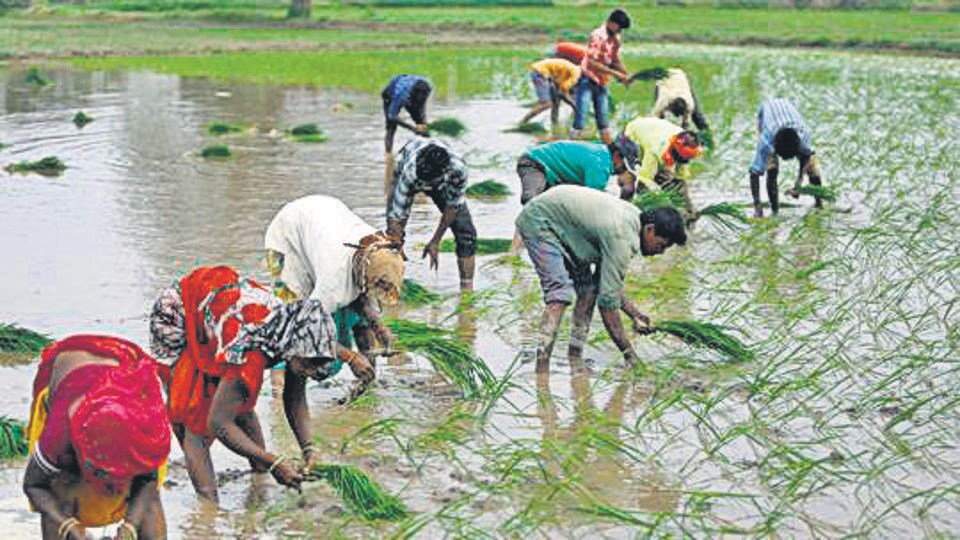
The cost of buying water has added to the already increased expenses for seeds and fertilisers. As the underground water level continues to drop, private water vendors have raised their prices, now charging farmers double the amount compared to the previous month. Earlier, farmers paid ₹500 for a tanker containing 2,000 litres of water, but now they are shelling out ₹1,000 for the same quantity.
In the southern part of Belagavi taluk, paddy cultivation is predominant, while the other three regions focus on growing vegetables. Farmers in Angol, Vadagavi, Sulaga, Yellur, Damane, Majagavi, and neighbouring villages cultivate varieties such as Basmati, Sairam, Shubhangi, Sonamasuri, among others. Sonamasuri rice is considered a commercial crop, while Sonamasuri itself is suitable for regular consumption.
Mahadev Balekundri, a farmer from Damane village, owns four acres of land and sowed paddy seeds four days ago. The saplings have now reached a critical stage and require water to avoid drying up. To protect his crop, Balekundri purchased a tanker with approximately 2,500 liters of water for ₹1,000, whereas it used to cost ₹600 earlier. “One tanker of water is sufficient for an acre of land. At this stage, paddy saplings require water, and the same quantity must be provided every four days until they reach a height of about two feet, or else we risk losing the crop,” he explained.
Balekundri’s relative, who was assisting him with watering the plants, expressed disappointment over the delay in the monsoon. The meteorology department had initially predicted the monsoon’s arrival in the first week of June, but now it is expected to begin in the last week of the month. Despite this setback, paddy farmers prepared their fields and started cultivation, hoping for timely rains.
Around 4,000 acres of land are dedicated to standard paddy cultivation, which commands a good demand in the open market and is used for daily consumption. Basmati rice is favoured in many high-end hotels and households during special occasions, especially for non-vegetarian biryani preparation, according to Balekundri.
The cost of production has risen due to the use of tanker water, and it will further increase if the rain continues to be delayed. Farmers will have to purchase more water until the paddy crop reaches a certain stage. Balekundri explained that paddy requires more water than other crops, and during the middle stage, the water must be available for about 15 to 20 days. “We are hopeful for early rains, and we are back in the field cultivating the crop. Let’s see what happens. Farmers never lose hope,” he said.
In defence of the increased water rates, Shekhar, a water vendor who supplies through tankers, cited the declining underground water level. He attributed it to the lack of rain and the increasing number of borewells in the area. Shekhar, who has been selling water from his borewell on Bauxite Road in Hanuman Nagar for about a decade, mentioned that it now takes about two hours to fill a 2,000-liter tanker, whereas it used to take only 30 to 40 minutes. “We had to raise the price to cover the electricity and fuel charges,” he justified.
The in-charge deputy director of the Agriculture Department, Kongwad, stated that Belagavi district has witnessed only 30% of the expected cultivation. Those farmers who have their own water sources have managed to cultivate their crops and are now selling water to neighbouring farmers. Due to the drying up of all the rivers in North Karnataka, the region has only seen 25% of the cultivation compared to last year’s 70%.
The standing crops face the risk of drying up if they are not regularly watered. Meanwhile, the Koyana reservoir, the largest in Maharashtra with a capacity of about 105tmcf, currently holds only 11.54tmcf of water as of Monday. In April and May, Maharashtra released 4tmcf of water in two instalments to Karnataka, and in return, Karnataka released 2tmcf of water from the Narayanpur reservoir to Maharashtra.


