
 E-Paper



Karnataka minister holds village meetings on awareness against cow slaughter
After the implementation of the Cow Slaughter Act in the state, the killing of cows has come to a halt. However, he said that the authorities should join hands to save the progeny of cows by being vigilant in detecting illegal slaughterhouses in some parts and closing them permanently.


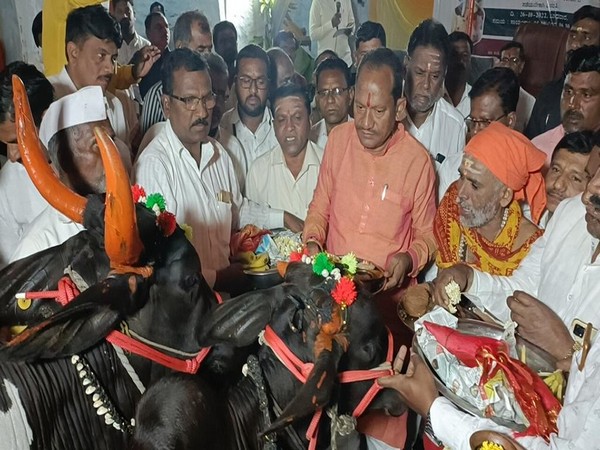
Karnataka Animal Husbandry Minister Prabhu B. Chavan organised village meetings under his jurisdiction and made the public aware of the Prohibition of Cow Slaughter Act, as per an official statement.
Chavan questioned the district deputy directors, but there was no adequate response from anyone after the minister slammed the officials.
Speaking at a progress review meeting with the district-level officials in the auditorium of Pasupalana Bhawan in Hebbala, Bengaluru, he said, "the officials should organise village meetings and create awareness among the people to implement the Prohibition of Cow Slaughter Act."
Prabhu Chavan questioned why the programme to make the police officers and staff aware of the ban on cow slaughter and cattle rearing rules has not been done yet.
READ | Karnataka: Cows worshipped in all veterinary institutions on Balipadyami
After the implementation of the Prohibition of Cow Slaughter Act in the state, the killing of cows has come to a halt. However, he said that the authorities should join hands to save the progeny of cows by being vigilant in detecting illegal slaughterhouses in some parts and closing them permanently.
Karnataka Land Revenue Rules 1966 Rule 97(1) states that 12 hectares for every 100 cattle should be reserved for cattle grazing in each village as per the government order, the respective District Collectors and Taluk Tehsildars should meet and take action in this regard.
Prabhu Chavan said that officials should involve themselves in the protection of cows by using these cows for government cowsheds.
"In cattle suffering from skin disease, the death rate is increasing as the infection enters the lungs to prevent this, farmers should be made aware to contact the doctor as soon as the cattle are infected," he said.
The minister suggested that local administrative bodies (gram panchayat, town panchayat, and revenue department in coordination) should spray fogging medicine and create awareness about sanitation to control the blood-sucking flies and mosquitoes that cause the spread of this disease.
Chief Minister Basavaraj Bommai has taken interest in controlling skin-knot disease in the state and has given grants for treatment and compensation of dead cattle. In order to prevent this grant from being misused, the Minister instructed that the officials should personally visit the owners of the dead cattle and inspect the treatment of the infected cattle.
"Complaints are being received that some veterinary officers are not available even in animal hospitals for vaccination and treatment to the cattle. District-level officials should visit the place and gather information about this instead of sitting in the office and bringing reports to check the performance of veterinary officers and staff in the protection and health care of cattle," said Prabhu B Chavan.
Chavan warned that vaccination and awareness programmes should be organised and an inspection should be conducted to create awareness.
He asserted that awareness should be created about the control of ringworm and foot and mouth disease. Efforts should be made to inform the farmers that the cows should be shown to the doctor and given appropriate treatment.
The minister told the owners of the cattle that precautionary measures should be taken to prevent the spread of the disease.
Government Secretary Dr Salma K. Faheem, Commissioner S. Ashwathy, director Dr Manjunath Palegar and other officials were present.


