
 E-Paper



Savarkar textbook row: Bulbul reference just a 'metaphor', says author's wife
Following the controversy over a paragraph from class 8 Kannada textbook on V D Savarkar, which had gone viral on social media, for apparent "glorification" of the freedom fighter, the wife of the author has released a statement saying that the bulbul imagery in it is "nothing but a metaphor."

 Prefer HTon Google


Following the controversy over a paragraph from class 8 Kannada second language textbook on V D Savarkar, which had gone viral on social media, for apparent "glorification" of the freedom fighter, the wife of the author has released a statement saying that the bulbul imagery in it is "nothing but a metaphor."
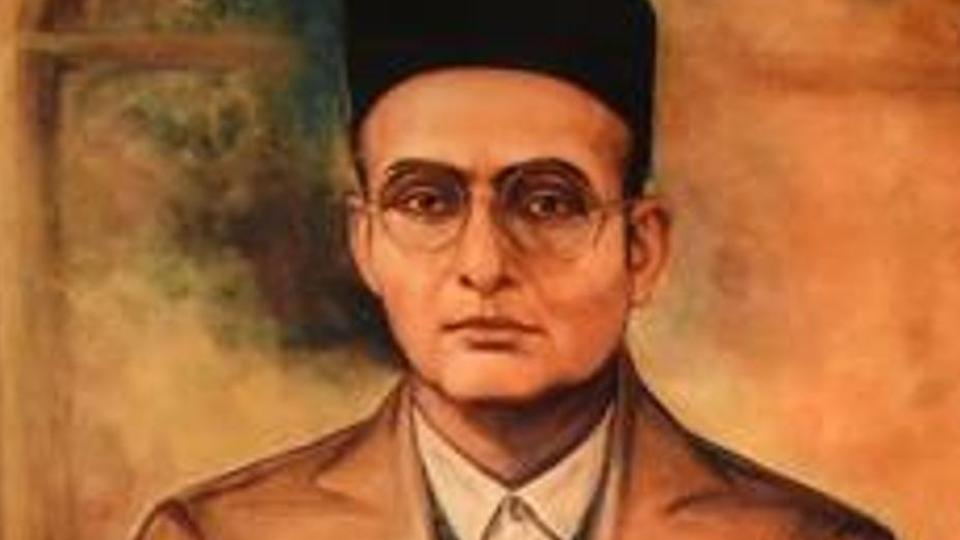
The lesson, "Kalavannu Geddavaru" is a travelogue written by author K T Gatti, narrating his experience about a visit to the Andaman cellular jail, where the Hindutva leader was imprisoned.
The author while describing about the prison cell in which Savarakar was lodged says, "there is not even a keyhole in Savarkar's cell, but still somehow bulbul birds used to come flying inside the cell and sitting on their wings Savarkar used to visit his motherland everyday and return."
This paragraph in the chapter had drawn flak from some social media users and others, who mocked the travelogue writer and the Karnataka government. Gatti's wife Yashoda Ammembala in a statement said, being "indisposed", her husband is not in a position to clarify, and that she cannot speak on his behalf, but can share some relevant details.
She said, "...regarding the controversy over the bulbul imagery, it is self-evident that it is nothing but a metaphor. Much of the confusion appears to have been caused by the absence of context/ reference in the passage, which may be due to author's oversight or an editorial error."
As per informed sources, bulbuls were plentiful in the region and were an integral part of Andaman prison life, she said and pointed out that Savarkar's association with bulbuls is part of local folklore, a fact that finds mention in Savarkar's autobiography and a few other sources.
"We don't know if the metaphor of Savarkar riding over bulbul was the author's creation or if it is a story he had picked up from any book or local source, but we can say for certain that the bulbul image per se did not spring from the author’s imagination," she said adding that many well-wishers of her husband have reached out asking for clarification and the family was not aware of the inclusion of Gatti's work in the textbook until this controversy broke out."
Though, some social media users had said the reference on bulbul seems to be a poetic expression or a metaphor used by the writer, as part of his narration, and should not be taken in a literal sense.
A few had tried to make fun of what has been said in the paragraph, by tweeting pictures of caricatures resembling Savarkar sitting on a bird, while a section even called it a "worst form of political propaganda" and "destroying of education system."
Highlighting that the essay included in the 8th standard Kannada non-detailed textbook is a chapter from Gatti’s travelogue, "Nisargakanye Andaman", published in 1996, Ammembala said, "it has been introduced in the Kannada textbook as an example of "Pravasa Sahitya (travel literature)."
"Note that it is part of the language curriculum, not history curriculum. Being a travelogue, it is not meant to be considered a source for historic facts," she said. Further noting that Gatti's account of Savarkar in the book includes nothing more than experiences of his Andaman jail experiences, and there is no mention of the nature of his role in the freedom struggle, or any detail about his ideology, Ammembala said, in fact, there is no mention of Savarkar in any of the author's writings to suggest he had any information about Savarkar besides what is presented in the book.
"Around 30 per cent of the chapter contains quotes from the book, 'Swatantrya Veera Savarkar' (Mathoor Krishnamurthy, 1966). Savarkar's autobiography is also among the sources listed in the bibliography," she said.
"Those familiar with K T Gatti's literature are unlikely to assume that the metaphor was meant to glorify Savarkar by an admirer of his ideology, and may not need any clarification regarding this," she said, as she suggested reading some of his works to those unfamiliar with his worldviews and are interested in knowing more.


