E-Paper



Ban on Kanwar yatra in Ujjain, only 50 devotees allowed inside Mahakaal Temple
However, the state government led by chief minister Shivraj Chouhan is yet to take a decision about the continuance of Kanwar Yatra. Last year, the state government had banned the yatra in view of Covid.

 Prefer HTon Google


Ujjain district in Madhya Pradesh imposed a ban on Kanwar Yatra on Wednesday following similar bans on the pilgrimage imposed in UP, Uttarakhand and Delhi to prevent a fresh surge of Covid 19 cases, said a top district official.
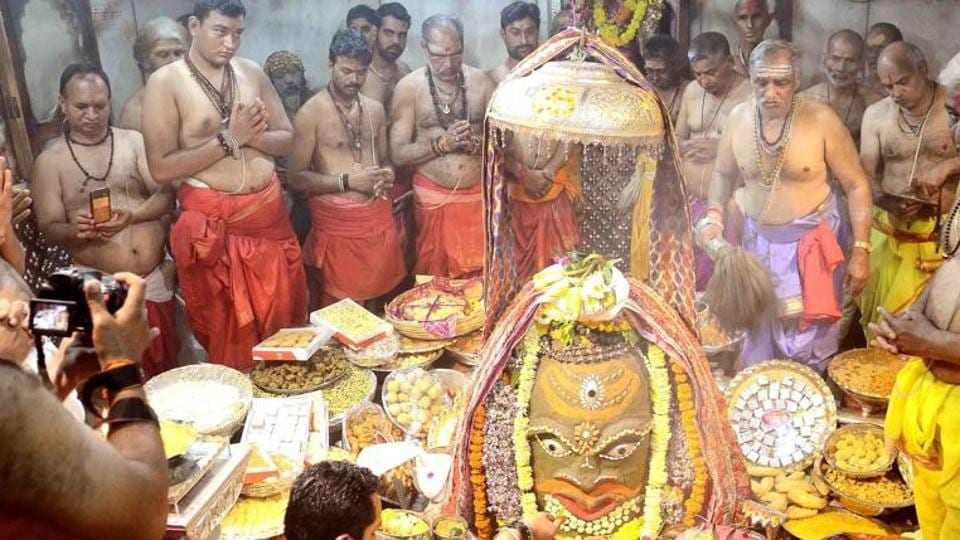
Every year, more than two million devotees visit Mahakal Temple in Ujjain during the auspicious month of Sawan and at least one million of these are Kanwars. The district administration announced that this year it won’t allow more than 50 devotes inside the temple premises at any given point of time to ensure social distancing.
“Amid the possibility of the third wave of Covid 19, we can’t allow Kanwar Yatra in Ujjain. Only 50 people will be allowed in the temple at one time,” said Ujjain in-charge collector Narendra Suryawanshi.
However, the state government led by chief minister Shivraj Chouhan is yet to take a decision in this regard. Last year, the state government had banned Kanwar yatra.
In MP, as many as 15 people tested positive on Wednesday and the number of active cases reduced to 185. The state government relaxed Covid 19 restriction after the positivity rate in the state decreased to 0.01 % and announced reopening of schools for class 11 and 12 students from July 26 and August 15 for classes 1 to 10. The cinema halls have also been allowed to reopen with maximum 50% capacity.
As of now, the state government has continued the ban on conducting, social, religious and political programmes.