E-Paper



Madhya Pradesh assembly polls to be held in single phase on Nov 17; results on Dec 3
The ruling Bharatiya Janata Party is seeking a fifth victory in the state, while the Congress aims to come back to power after a gap of 20 years

 Prefer HTon Google


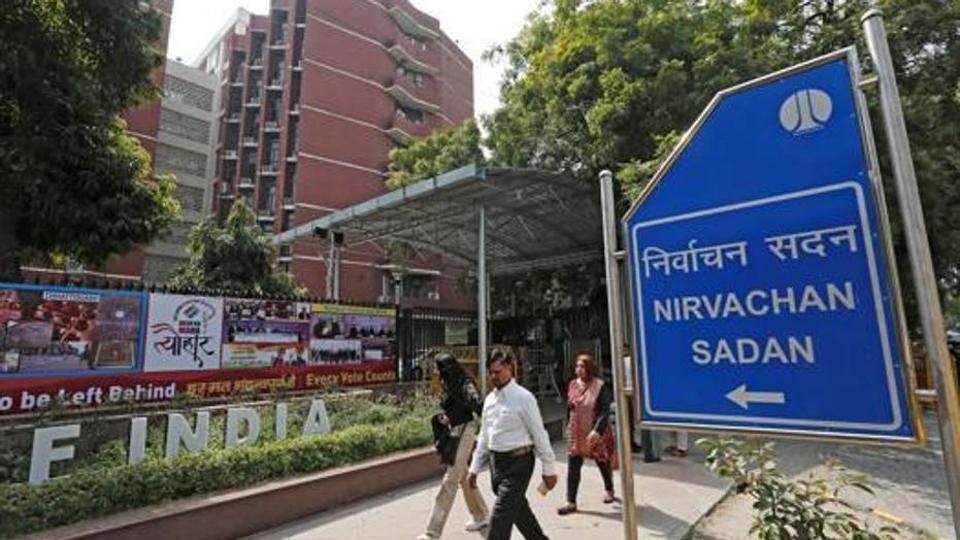
The Election Commission of India on Monday announced that the Madhya Pradesh assembly elections will be held on November 17 in a single phase, while the counting of votes will take place on December 3.
The ruling Bharatiya Janata Party (BJP) is seeking a fifth victory in the state, while the Congress aims to come back to power after a gap of 20 years.
In 2018, the assembly election ended with a hung assembly after the Congress won 114 seats, two less than the majority mark in the 230-seat member assembly, while the BJP won 109 seats. The Congress formed the government in December 2018 with the support of two Bahujan Samajwadi Party MLAs, one Samajwadi Party and four independent MLAs.
However, after 15 months on March 21, as many as 22 sitting Congress MLAs resigned under the leadership of Jyotiraditya Scindia and joined the BJP, bringing down the Kamal Nath-led Congress government. On March 23, Shivraj Singh Chouhan took oath as chief minister and formed the BJP government.
In the 2020 bypolls held in 28 constituencies, the BJP won 19, while the Congress managed to secure only 9. The BJP currently has 127 MLAs, while the Congress has 96 lawmakers.
This year, Union home minister Amit Shah, who has held at least half a dozen closed-door meetings with state BJP leaders, is in charge of the state to counter any anti-incumbency sentiment. BJP has categorised assembly seats as A, B, C and D as part of the party’s strategy to win in 150 constituencies, a party leader said.
The BJP announced its first list of candidates under category D, where Congress has a stronghold, about two months before announcement of election dates. In the second list of 39 candidates, the BJP fielded three Union ministers – agriculture minister and four-time MP Narendra Singh Tomar from Dimani, Jal Shakti minister and eight-time MP Prahlad Patel from Narsinghpur and steel minister Faggan Singh Kulaste from Niwas, along with four other MPs.
Political experts said BJP is not leaving any stone unturned to win the election, and has fielded seven Members of Parliament to take central initiatives to the citizens of the state.
However, this is the first time the BJP has built suspense over the chief ministerial candidate by making several popular leaders contest the polls. This year, the BJP has made populist schemes of central and state governments the primary agenda.
With one eye on the 2024 Lok Sabha elections, BJP leaders have targetted the Congress-led I.N.D.I.A bloc for allying with the DMK in Tamil Nadu, whose leader Udhayanidhi Stalin called ‘Sanatan Dharma’ dengue and malaria which must be eradicated.
Meanwhile, the Congress, who is yet to announce any list, is working on micromanagement and strengthening the organisation while showing inclination towards Hindutava. Corruption, with 50% commission jibe, and unemployment are the matters the Congress is focusing on.
The Congress has laid out five guarantees, with a promise of a caste census exercise if voted to power. The guarantees are implementation of old pension scheme, LPG cylinder for ₹500, ₹1,500 per month for women, free electricity up to 100 units and half bill up to 200 units, and resumption of the farm loan waiver scheme announced in 2018.
The farm loan waiver scheme was one of the most important factors that led to the Congress’ victory in 2018.
The BJP had registered a landslide victory by winning 165 seats in 2013 riding on Chouhan’s popularity as a tolerant, down to earth leader and his schemes for women such as ‘Ladli Lakshmi’, and agricultural growth. The Congress had won only 57 seats back then.