E-Paper



Row over soybean seeds ‘shortage’ in MP, farmers allege black marketing
Agriculture department claimed there was no shortage as 1.3 million tonnes of seeds was procured by MP for distribution among farmers compared to 1 million tonnes last year.

 Prefer HTon Google


Several soybean farmers in Madhya Pradesh have alleged that the sowing of the Kharif crop has not even begun in 60% area even two months after the beginning of the season due to shortage of certified seeds, provided by the government. However, the state claimed to have more seeds than last year and blamed the shortage on additional demand by farmers who have not been able to grow their own seed due to crop failure.
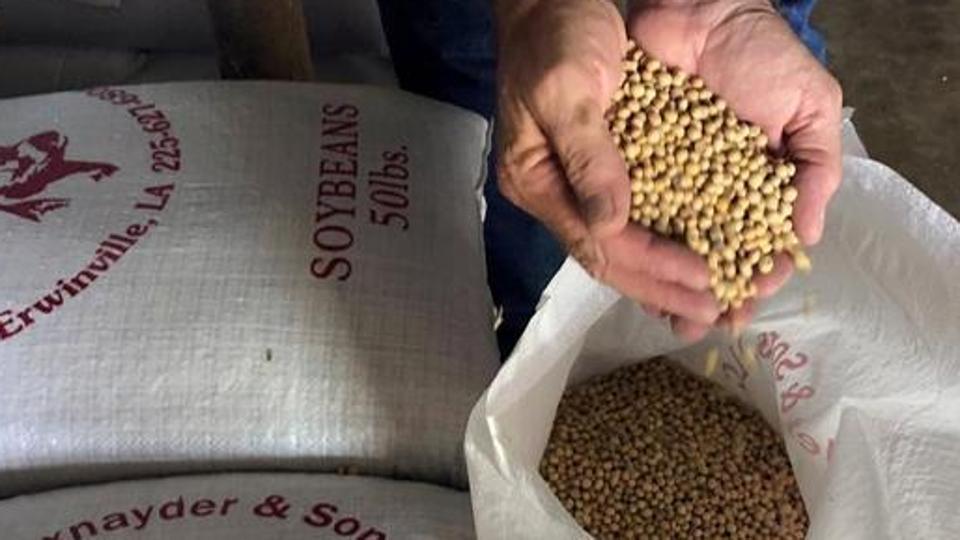
Soybean was sowed in 5,854 million hectares of land last year but farmers said 60% of the area remained uncultivated this year due to unavailability of certified seeds at cooperative societies and seed centres. They also accused the government of turning a blind eye to black marketing of seeds, which is available at double the government rate in the open market.
“I used to sow soybean in 20 acres of land till last year but this year I don’t have seeds. In the market, the seeds are available at ₹9,000 to ₹12,000 per tonne, which we can’t afford,” Bhem Singh Meena, a farmer from Rajgarh, said.
The government sells the soybean seeds for ₹4,000 per tonne at state-run seed centres and cooperative societies.
Meena said it was also upsetting that instead of supplying them with enough quality seeds, the agriculture minister had advised farmers to opt for some other crop for better profitability.
MP farmers body’s president Anil Yadav claimed the state government was in truck with private businessmen, who were “minting money by selling substandard seeds at much higher rates.”
“The state government is asking [farmers] to opt [for] some other crops. But in reality, the state government is shedding its responsibility,” Yadav alleged.
Agriculture minister Kamal Patel said it was his responsibility to offer correct advice to farmers. “I have suggested growing some other crops not to run away from my responsibility but to help them earn more money. Due to the decrease of export, poor weather, diseases in plants, the soybean yield has decreased a lot in the past three years.”
Soybean Processors Association of India chairman Davish Jain said: “Instead of de-motivating farmers, the state government should encourage them by providing quality seeds. Soybean is a crop which has multiple uses and has important nutrients to fight against malnutrition and protein deficiency among people.”
However, the agriculture department claimed there was no shortage as 1.3 million tonnes of seeds was procured by MP for distribution among farmers compared to 1 million tonnes last year.
“Those farmers, who used to sow their own seed until last year, don’t have seeds for this season as the crop failed due to incessant rainfall. Every year, only 40% farmers used to purchase certified seeds from the government, and this year too, we have seeds for 40% farmers, said an officer of agriculture department, who didn’t wish to be named.
Agriculture department data shows that MP had procured 1 million tonne seeds last year and that figure increased to 1.3m tonne this year. 340,000 tonnes of these are available at cooperatives and government’s seed centres while the remaining 930,000 tonnes was available at government’s certified private shops.
“The prices in the private market are not regulated by the government, so we are helpless,’’ said another government officer on condition of anonymity. Another senior officer of the agriculture department said that the government had realised that the demand may increase this year and therefore banned the sale of soybean seeds to other states in April but it had to be lifted on Centre’s intervention.
“Citing problems to farmers, we have [again] requested the Centre to ban the sale of seeds to other states but it is yet to take any decision,” he said.
Minister Patel said efforts were on to make seeds available for the left out farmers.