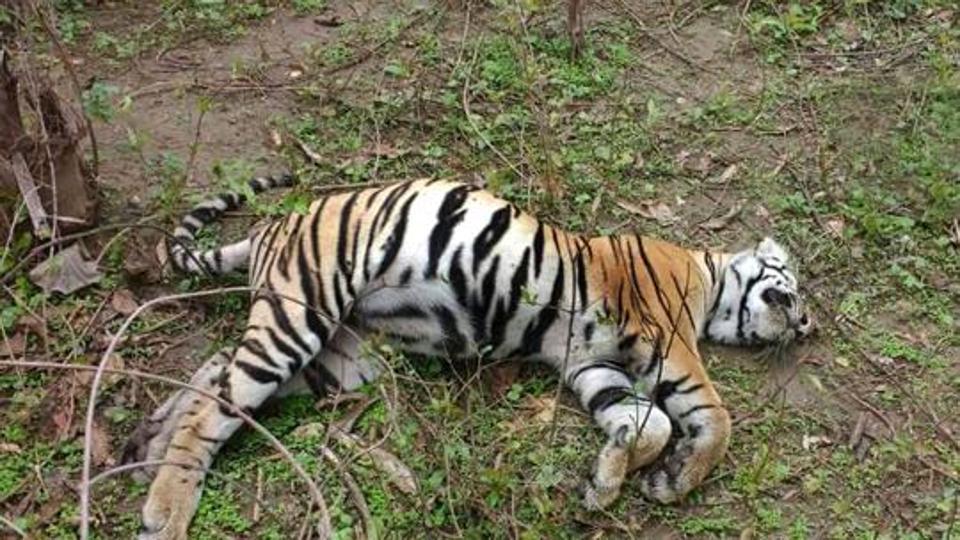
Sixth tiger dies of suspected CDV in two months at Kanha Reserve
Forest officials said measures have been put in place to contain the spread of the infection within the reserve.
Kanha Tiger Reserve has lost another tiger to suspected Canine Distemper Virus (CDV), taking the number of tiger deaths linked to the disease to six in the past two months and raising fresh concerns about the spread of the infection within the reserve.

With the latest death reported on Tuesday, the reserve has recorded eight tiger deaths over the past three months, six of them allegedly due to CDV.
“In the Kisli range, abnormal behavior was noticed in a tiger during a safari on June 4. The forest team saw him running frantically and he appeared weak.
“Following this, park authorities closed the area to tourists and stepped up monitoring. The tiger was rescued and shifted to the Mukki Quarantine Centre for treatment, but it succumbed after 20 days,” a forest official said.
Earlier, between April 21 and April 29, tigress T-41 of Amahai and her four cubs died after contracting the virus. On May 19, a tiger named Mahavir also succumbed to the disease.
Forest officials said measures have been put in place to contain the spread of the infection within the tiger reserve.

ABOUT THE AUTHORShruti TomarI have spent over a decade chronicling Madhya Pradesh’s political and social landscape, covering politics, investigative journalism, crime, human interest, and government policy, blending sharp insight with ground‑level depth. I have closely tracked three assembly elections, three Lok Sabha elections, leadership transitions in MP while exposing governance lapses, tender irregularities, and flawed policy rollouts. My reports have revealed gaps in the Cheetah project, irregularities in medical education, rigging in recruitment exams, and loopholes in policy implementation. In crime reporting, I have moved beyond FIRs to map systemic patterns — from organised crime networks and gender‑based violence to custodial accountability — balancing urgency with sensitivity. My journalism is defined by a commitment to human interest. I have profiled the marginalised Bancchda community, documented atrocities against tribal groups, and highlighted efforts to preserve their culture through heritage liquor and revival of spiritual practices. I have reported on farmers struggling with failed MSP promises, giving voice to those often reduced to statistics in policy files. Passionate about field reporting, I have reported on rampant sand mining in Chambal and Narmada, pharmaceutical companies supplying medicines under altered names, the dire condition of schools and colleges, the plight of commercial sex workers, and skewed sex ratios in specific districts. Beyond deadlines, and as HT’s state correspondent and assistant editor in Madhya Pradesh, I engage with ministers, farmers, students, and activists, believing the best policy stories begin with a single human voice. A postgraduate in Journalism and Mass Communication, I also hold a diploma in sports journalism.Read More

E-Paper