E-Paper



Wheat procurement and sale touches new low in MP
The data showed that as compared to last year, the sale of wheat in 175-grain markets in MP in 2024 was five lakh tonnes less

 Prefer HTon Google


Bhopal: Madhya Pradesh saw a 33% dip in the procurement of wheat in 2024 as compared to 2023, the highest for any state in the country, according to government data. There was also a 10% decline in the sale of wheat in 175 open markets in the state.
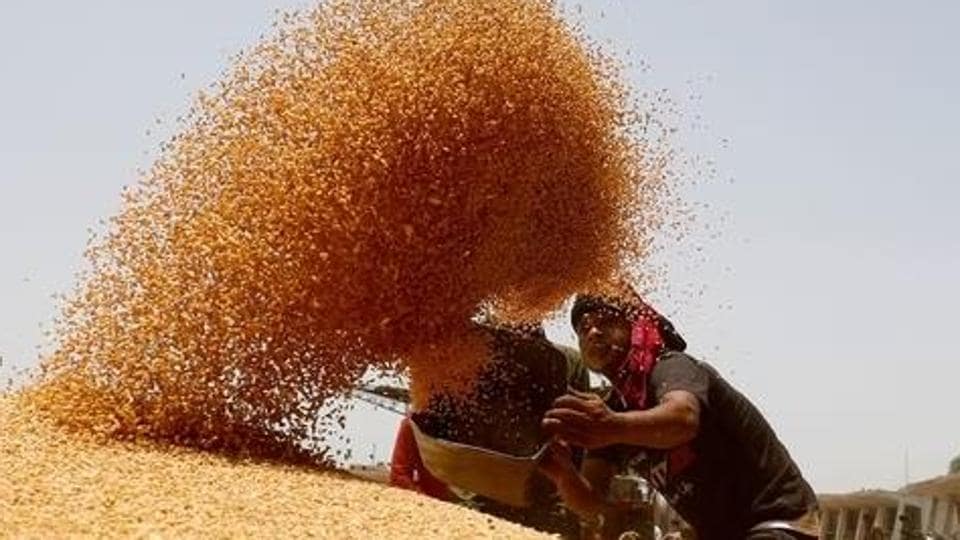
MP is the only state in the country where procurement decreased from 7.1 million tonnes (MT) in 2023 to 4.8 MT in 2024, even as the production fell from 22.41 MT in 2023 to 21.21 MT in 2024, according to initial data provided by the state agricultural department.
The data showed that as compared to last year, the sale of wheat in 175-grain markets in MP in 2024 was five lakh tonnes less. In 2023, from March till June 30, 6.4 MT of wheat had been sold, while this year, it was 5.9 MT, the data provided by the Mandi Board, which manages all grain markets in the state, showed.
The farmers are getting Rs.2,800 to Rs.3,100 per quintal for the best quality wheat – Sharbati and Lokman – while the state government was also giving them a bonus of Rs.125 per quintal on MSP of Rs.2,275 per quintal, according to government data. But, the farmers are expecting further increases in price.
Speaking to the media, Paramjeet Singh, a farm activist, said the reason behind the decline in the sale of wheat is because of its high price in the private market, which is due to the ongoing Ukraine-Russia war. The fall in production is another reason behind the decline in sales.
Moreover, the entire country, including Madhya Pradesh, saw the hottest February and March, which is the ripening season of wheat, and untimely rainfall and hailstorms, affecting the production and quality, Singh said.
“The farmers didn’t come to procurement centres and markets because of the high price of wheat…Though there was a decline in production, especially in the Malwa region, it was not more than 5%,” said M Silvendran, secretary, MP farm welfare and agriculture department.
Experts estimate that more than 50% of the wheat in the state has either been hoarded by farmers or sold directly to businessmen.
“Marginal and small farmers can’t afford to hoard the wheat for a long time as they need money to fulfil their needs. Last year too the price was high, but more than 65% of wheat was sold to Mandis and at procurement centres till the first week of July, but this time, only 40% of wheat has been sold, which clearly shows a high dip in production due to poor weather,” said GS Chundawat, an agricultural expert.
According to the State Level Bankers’ Committee, medium and large farmers in the state are just 30%, while 70% of farmers are marginal, small and semi-medium.