
 E-Paper



2020 FIR: HC stays trial court proceedings against CM Mann, Aman Arora
The high court bench of justice Raj Mohan Singh acted on a plea by the CM and Arora seeking quashing of the FIR and has sought response from Chandigarh Police by May 19, further ordering that proceedings be deferred beyond the next date of hearing fixed by the high court


Chandigarh
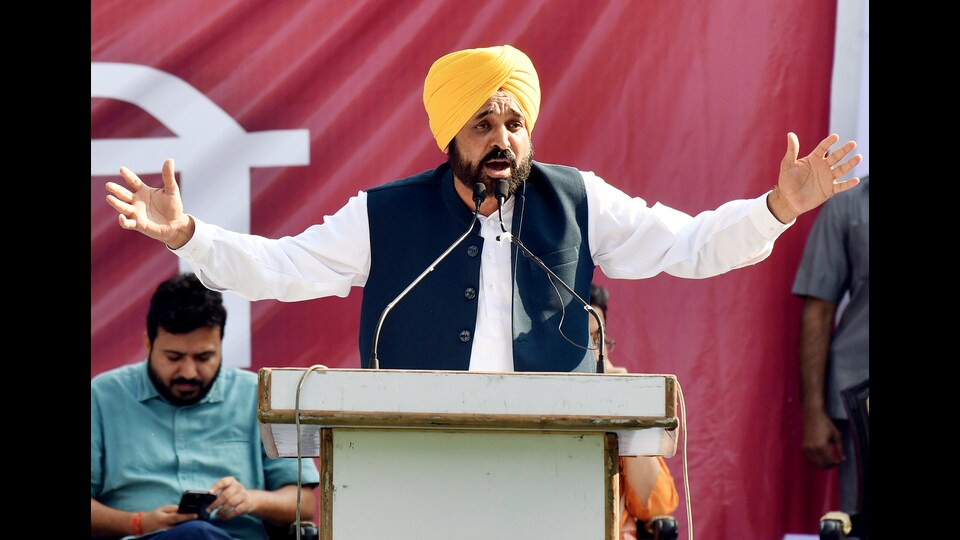
The Punjab and Haryana high court on Wednesday stayed proceedings in a criminal case pending before a Chandigarh court against Punjab chief minister Bhagwant Mann and his cabinet colleague Aman Arora.
The high court bench of justice Raj Mohan Singh acted on a plea by the CM and Arora seeking quashing of the FIR and has sought response from Chandigarh Police by May 19, further ordering that proceedings be deferred beyond the next date of hearing fixed by the high court.
The criminal case was registered on January 10, 2020, against Mann, among others on allegations of assault or criminal force to deter a public servant from discharge of his duty and other offences.
The case was registered on the complaint of woman constable Manpreet Kaur, who was posted at the Sector 3 police station. AAP took out a rally to gherao the then chief minister’s house despite there being prohibitory orders against assembly of five or more persons. The police had tried to stop them, but the scuffle ensured and police had to use water canon to stop the protesters.
In July 2021, the police filed challan under Sections 147, 149, 332, 353 of the IPC. The provisions of prohibitory orders invoked in the FIR were dropped in the challan.
The plea argued that the protest was carried out in exercise of the fundamental rights of the petitioners. It also argued that the challan presented does not establish criminal culpability of the petitioners. The prosecution has not made out a case that the present petitioners had a common object to commit any offence, it further argued.


