
 E-Paper



A diverse platter andfood for thought
This was a favourite childhood riddle. Who knew the answer, ‘food’, would take on such enormous importance and varied forms in our lives


Single line, double line, double ‘o’ d, put it in a plate and give it to me.
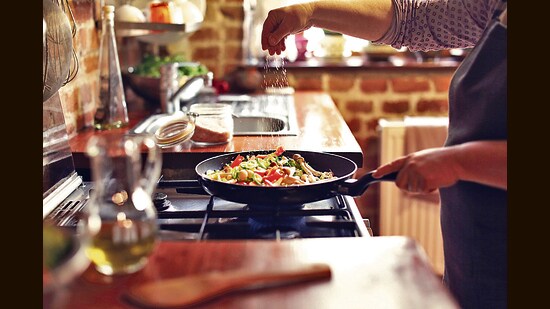
This was a favourite childhood riddle. Who knew the answer, ‘food’, would take on such enormous importance and varied forms in our lives.
There has been so much unravelling with regard to food that this basic need has become a conversation starter and sometimes even a subject of intense discussion in gatherings. It has moved out of the kitchen to TV studios in the form of dedicated shows and competitions across continents. It has spawned many a celebrity careers, with some even gaining recognition as Michelin-starred chefs.
Information explosion on health and the role of food has catapulted this item to centre stage. While previously we were happy to classify food into vegetarian or non-vegetarian, now we have a plethora of categories: plant-based, eggetarian, vegan, gluten-free or hard core non-vegetarian. If we go into diets, we have Mediterranean, Atkins, Paleo, Keto and many more. Going a step further would be a Detox diet at a fancy health and wellness spa resort.
Some years ago, food was one of the blocks of the triad --Roti, Kapda, Makaan. To most people, food was rice, chapati, dal, subzi, dahi and occasionally some sweetmeat to round it off. There was hardly any calorie counting. The few who were aware would go by the Ayurvedic concept of not mixing certain kinds of food. Dietary advice was given as per the body constitution of Vata, Pita and Kapha, which would loosely translate to ecto, meso and endomorphic body types. Another way to go was satvik, rajsik, and tamsik diet, which would determine the temperament of an individual.
Medical knowledge has added to the numerous food restrictions in addition to calorie check. The latest trend is of intermittent fasting, whereby one is required to undertake a prolonged overnight fast ranging from 12-16 hours to reap benefits of cleaner intestines and overall health and well-being. Another interesting trend that I came across was that of OMAD - one meal a day, which means one complete meal per day supplemented by some amount of uncooked food like fruits and salad.
So, there is a complete spectrum on the horizon from “two-minute” maggi to smoky flavoured slow-cooked dishes.
Adding to the confusion is newer research and trends that mostly come from the West. Earlier, the belief was that you must have breakfast like a king, lunch like a prince and dinner like a pauper. Now it seems you are better off if you skip breakfast altogether as part of intermittent fasting. Previously the dictum was fats are bad and responsible for expanding waistlines and consequent ailments. Now desi ghee has gained acceptance in Western diet as clarified butter and is considered beneficial in limited amount.
Contrary to the well-known adage- ‘East is east, West is west, the twain shall never meet’ -they have embraced each other well on the food front as fusion food which is gaining popularity.
To cut the clutter and summarise: Have everything, but in moderation unless specifically forbidden on health grounds. Indigenous, local, home-grown fruits and vegetables are always better than exotic ones. Let outside food be an occasional experience. Go for mindful, conscious and joyful eating. Consume food with gratitude and thankfulness to all who made it possible to bring that plate to your table, and occasionally share your food with the less fortunate.
The writer is the former head of the department of ophthalmology, Government Multi Specialty Hospital, Sector 16


