
 E-Paper



Chandigarh: Lavish parties take center stage in student elections
Such events cost up to ₹3 lakh, exceeding the ₹5,000 expenditure limit recommended by the Lyngdoh Committee

 Prefer HTon Google


Lavish club parties have emerged as a prominent feature of campaigning by student organisations for the student council elections, with each event reportedly costing between ₹1 lakh and ₹3 lakh — far exceeding the ₹5,000 expenditure limit recommended by the Lyngdoh Committee for election campaigning in colleges and universities.
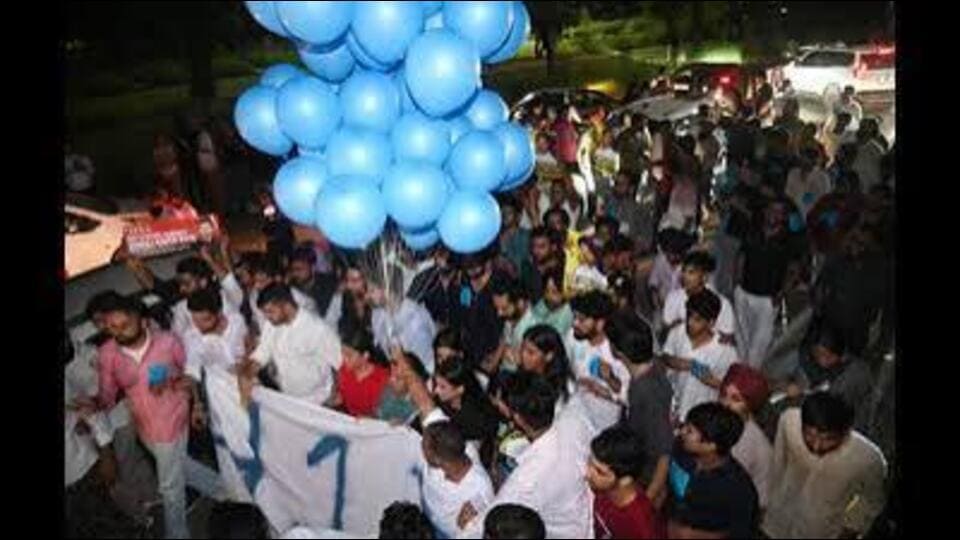
Student organisations have been posting photos and videos of their parties on social media. The parties began as early as August 14, when the Independent Student Front (ISF) of GGDSD College, Sector 32, organised one at a Sector 26 club, with a Punjabi singer making a special appearance. The organisation held another party on August 20 for BA and BVoc students at a club in Mohali’s Phase 9, with Punjabi singer Laddi Chhajla performing.
The Sanatan Dharam Campus Union (SDCU) hosted two parties at a club in Sector 26, one on August 21 and another on August 29. The Indian National Student Organisation (INSO) organised a freshers’ party for students of DAV College, Sector 10, on August 24 and another for PGGC-11 students at a club in Sector 10, Panchkula, on August 26.
SOI, ABVP and HIMSU organised a party for DAV College students at a club in Sector 5, Panchkula, on Saturday. For the first time, a party was also organised for students of the girls’ college in Sector 11, which otherwise sees little electioneering activity.
Efforts were made to contact Ekam Deep Brar of ISF, Abhiraj of SDCU and Harshdeep Singh of SOI, all of whom are contesting for the presidential post, besides Muskan Kumari of INSO, who is contesting for the post of general secretary, but they did not respond. Arjun Saini of INSO in DAV College, Sector 10, said freshers’ parties were not part of the campaign. “College authorities do not organise freshers’ parties, so we organise them for first-year students to encourage them to come to college. Students contribute to the party. Only soft drinks and snacks are served,” he said.
A student leader, seeking anonymity, said, “Parties are essential to winning elections. If you don’t give freebies, nobody is going to vote for you.”
A club manager, wishing not to be named, said a party costs a minimum of ₹1 lakh, with expenses going up to ₹3 lakh. At freshers’ parties, the number of students ranges from 300 to 1,000. The per-person charge ranges from ₹350-400 to ₹800.
Kanupriya, former and, to date, the only female president of the Panjab University Campus Student Council from Students for Society, said two factors played an important role in her party’s win: years of grassroots work and campaigning against “curfews” in the women’s hostel. “We were active throughout the year, engaging in poetry evenings and discussion groups and campaigning based on our political understanding, not just during election time. That paid off, and we strongly condemned money and muscle power. When organisations do not have progressive alternatives, providing freebies is one of the shortcuts they use to approach students,” she said.
Political science professor Ashutosh Kumar of Panjab University expressed concern over the increasing expenditure on student council elections. “This is a challenge to a level playing field, as students with money get leverage over others. Political parties have been providing freebies and creating ways of subverting the rules. The same goes for student organisations,” he said.
Prof Kumar highlighted that although the Lyngdoh guidelines recommend spending only ₹5,000 on student council election campaigning, the limit is not practical. “Guidelines need to be updated. Even if the ₹5,000 limit gets revised, the amount actually being spent during electioneering is much higher. The high spending makes it arduous for independent candidates to contest elections,” he added.


