
 E-Paper



Chandigarh: Protests right of citizens but authorities duty-bound to act when it threats peace, says high court
The court’s observation came in a public interest litigation filed by a Chandigarh resident and lawyer, Vivek Singla, who had sought court’s intervention against Qaumi Insaaf Morcha’s call to march

 Prefer HTon Google


The Punjab and Haryana high court (HC) on Friday said that in a democracy, citizens have a fundamental right to assemble and express their views through peaceful protest. However, where a protest ceases to be peaceful, turns violent, or poses a threat to public safety, the competent authorities are duty-bound to take appropriate preventive and remedial measures in accordance with law to ensure the maintenance of public peace, order, and security, it added.
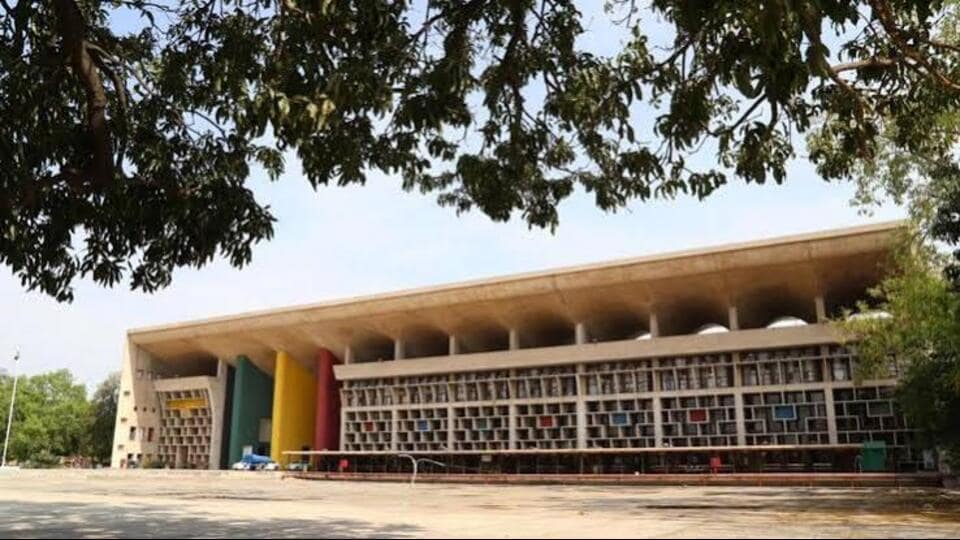
The court’s observation came in a public interest litigation (PIL) filed by a Chandigarh resident and lawyer, Vivek Singla, who had sought court’s intervention against Qaumi Insaaf Morcha’s call to march towards governor’s house on Independence Day.
“We hope and trust that the states of Punjab and Haryana, as well as the Union Territory of Chandigarh, shall act with due sensitivity and responsibility and ensure that no untoward incident is permitted to occur. We further expect that all necessary preventive and remedial measures, as warranted in law, shall be taken for the protection of the life, liberty, and security of the public at large in accordance with law,” the bench of justice Ashwani Kumar Mishra and justice Rohit Kapoor observed while seeking status reports on August 20.
The petitioner had told the court that such protests often lead to grave law-and-order situations in which the public at large is made to suffer for no fault on its part. He had demanded that authorities prevent unauthorised assemblies and blockades, regulate protests at sensitive locations, maintain open transit and emergency corridors, and take lawful action against violent or non-compliant protesters. “...the right to assemble cannot supersede the wider public’s right to safety, life, and free passage on public thoroughfares. Consequently, the PIL prays for explicit judicial directions to protest organizers, unions, and groups to strictly refrain from holding demonstrations without prior administrative clearance, to completely abstain from violence, vandalism, or forceful road blockades,” it said.
During the hearing, Chandigarh administration and Punjab had assured the court that the authorities concerned are aware of the threat perception and adequate deployment of police personnel would be made to check any untoward incident.


