
 E-Paper



Chandigarh’s air quality turns worse than night after Diwali
The 24-hour average AQI on Thursday (November 3) was higher than October 25, the night after Diwali, at all three Continuous Ambient Air Quality Monitoring Stations (CAAQMS) in Chandigarh


With farm fires in Punjab hitting new highs daily and favourable weather conditions subsiding, Chandigarh’s air quality index (AQI) has turned even worse than that recorded on the night after Diwali.
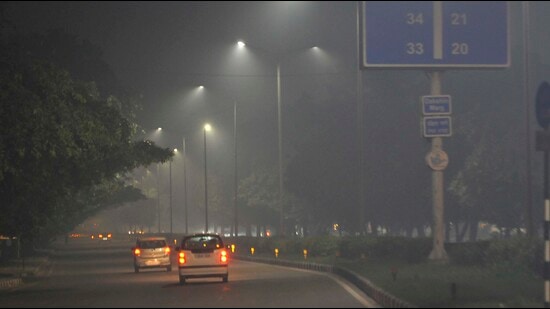
The 24-hour average AQI on Thursday (November 3) was higher than October 25, the night after Diwali, at all three Continuous Ambient Air Quality Monitoring Stations (CAAQMS) in the city.
At 285, the average AQI at the CAAQMS in Sector 53 on Thursday was highest, followed by 215 at the Sector-22 CAAQMS and 123 at the Sector-25 CAAQMS — first two falling in “poor” category and third in “moderate”.
In comparison, on Diwali night (October 24), the average AQI in Sector 53 was 119, in Sector 22 it was 130 and in Sector 25 it was 114, all three in “moderate” category. Because of windy weather, the air quality had also improved by the next morning.
But as people continued to burst crackers on October 25, the 24-hour average at midnight shot up to 206 (poor) in Sector 53 and 170 (moderate) in Sector 22, though it was 93 (satisfactory) in Sector 25.
An AQI between 200 and 300, can cause breathing discomfort to most people on prolonged exposure. When it’s between 100 and 200, it can cause discomfort to people with lung and heart diseases. An AQI between 50 and 100 can also cause minor breathing discomfort to sensitive people.
Speaking about this, UT environment director Debendra Dalai said, “The AQI started worsening around two days back, primarily due to stubble burning in the region. Temperature inversion and emissions from vehicles are other factors. But if farm fires are not controlled, the air quality will drop further with the decrease in temperature.”
The official added that the Chandigarh Pollution Control Committee (CPCC) was monitoring the air quality and an action plan, if needed, was also in place. “If the average AQI rises over 400, we may also declare holidays in schools and may close down shops during the day,” he said.


