
 E-Paper



Coming soon, a survey for tree health in Chandigarh
Chandigarh municipal corporation joins hands with Dehradun-based Forest Research Institute for tree enumeration at a cost of ₹23 lakh

 Prefer HTon Google


In an effort to avoid tree-felling accidents and mishaps in the city, the Chandigarh municipal corporation (MC), along with Dehradun-based Forest Research Institute (FRI), will start a survey for tree enumeration and health status in the city from September.
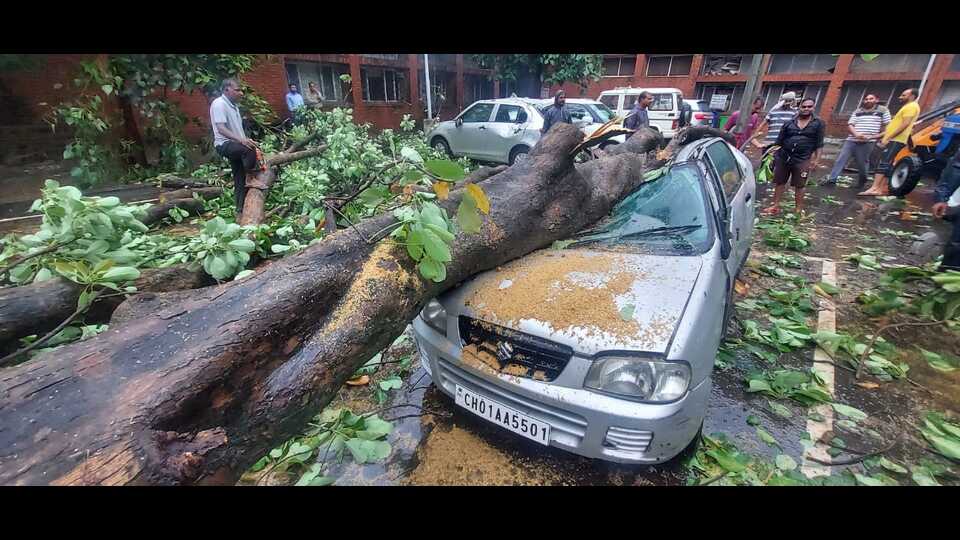
The government institute will conduct enumeration of standing trees in MC’s jurisdiction, evaluate their health and tree hollowness status at a cost of ₹23.33 lakh.
In 2017, the civic body’s horticulture department had conducted the first tree census in the city, but they had no scientific methodology for counting trees and assessing their condition. A total of 1.65 lakh trees were logged in the census and as many as 262 were found to be dangerous and 1,029 dead or dry.
Why is survey needed
Chandigarh has a total forest cover of 22.88 square km and the tree cover is estimated at 15 square km, which is 33% of the geographical area of the Union territory.
With aging, the vigour of trees may decline, making them susceptible to attacks by pathogens and insect pests. Many diseases, such as heart rots and root rots, make the trees vulnerable to wind throw. The trees may get uprooted or the trunk breaks in the hollow region becoming a threat to life and property. Thus, physiological examination of the trees as well as soil analysis is required to identify biotic and abiotic factors contributing to decline in tree health and factors for various problems.
“The experts from FRI will conduct the assessment of standing trees and submit a report along with recommendations to the civic body. The institute will complete their survey in a year. The civic body will nominate a nodal officer to facilitate the institute in conducting the survey smoothly,” said MC commissioner Anindita Mitra.
The commissioner added that tree enumeration will be conducted after visiting each site and observations will be made for insect pests, such as sapsuckers, defoliators, borers, and terminates infesting trees followed by sample collection, insect identification and recommendations for their management.
The institute will then investigate individual trees for signs and symptoms of diseases, after conducting sample collection, laboratory isolation and identification of pathogens.
“To check the nutrient deficiency symptoms from the leaves of the trees, the institute will not only observe visual symptoms but detailed study will be conducted after taking leaf samples. As far as soil components are concerned, the institute will collect soil samples from required depths, and soil fertility status will be obtained after analysing various parameters, such as soil organic carbon, nitrogen, phosphorus, potassium and other micronutrients,” Mitra added.
At last, the institute will determine ultrasonic velocity along multiple transverse directions of the tree trunk to study hollowness. Based on the ultrasonic velocity, central hollowness of the tree trunk will be estimated. Only potential hazardous trees will be tested for this purpose, at an extra cost of ₹400 per tree.
On July 8, 2022, a heritage peepal tree had collapsed at Carmel Convent School, Sector 9, killing a 16-year-old student and injuring 19 others. In addition, there have been numerous instances of vehicles and other property damages as a result of tree collapse.


