
 E-Paper



Conference chronicling Kurukshetra’s history kicks off
During the inaugural session, Gita Scholar Swami Gyananand underlined Kurukshetra as the sacred land where the Mahabharata was fought and where Lord Krishna delivered the Gita’s teachings

 Prefer HTon Google


A three-day international conference titled “Kurukshetra: Through the ages” commenced at Kurukshetra University (KU) on Wednesday, organised in collaboration with the Indian Council of Historical Research (ICHR), Shrimad Bhagavad Gita Study Centre, Swadeshi Research Institute, Geo Gita and Vision Kurukshetra.
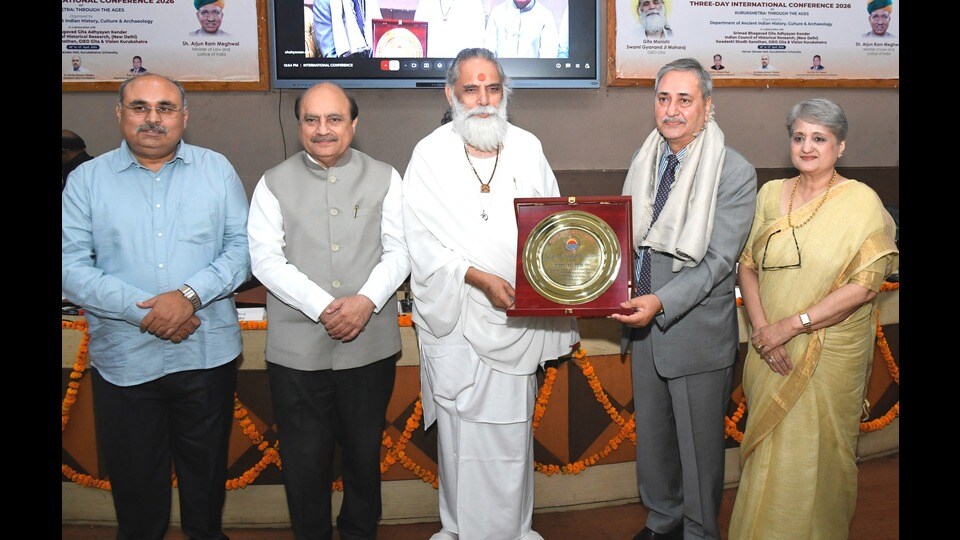
During the inaugural session, Gita Scholar Swami Gyananand underlined Kurukshetra as the sacred land where the Mahabharata was fought and where Lord Krishna delivered the Gita’s teachings and said the region has yet to receive the global recognition it deserves as a major spiritual and tourist destination, asserting that its significance as a pilgrimage site is comparable to the Char Dham.
In his address, KU vice chancellor, Som Nath Sachdeva said the Bhagavad Gita offers solutions to every dilemma of human life and provides guidance on duty, morality and self-realisation.
He said universities must go beyond technical training to nurture socially aware and culturally rooted individuals, adding that conferences like this provide an important platform to present Kurukshetra’s multidimensional heritage at the global level.
Padma Shri awardee historian and chairman of the ICHR, Raghvendra Tanwar, described Kurukshetra as more than a geographical entity, calling it a living symbol of faith, history and struggle shaped by social, economic and geographical forces.
Citing accounts of Chinese traveller Xuanzang and references from the time of Emperor Harshavardhana, he also traced its transformation through colonial administrative changes after 1803 and its role in refugee rehabilitation during Partition.


