
 E-Paper



Wildbuzz: Battle for Panipat plant
The flora of the hot and dusty plains received cursory attention, but that changed when curiosity came knocking at the door a decade back in the guise of an inquisitive teacher of botany

 Prefer HTon Google


It was a common enough shrub spotted in some villages around Panipat, and generally speaking, in the lowlands and foothills of India, Pakistan and southeastern Afghanistan. The scientific community had not studied this humble shrub carefully. The roots of the neglect lay in the fact that classical botanists preferred to study plants of charming mountains and salubrious climes. The flora of the hot and dusty plains received cursory attention. All that changed when curiosity came knocking at the door of this shrub a decade back in the guise of an inquisitive teacher of botany at the local IB College, Nidhan Singh, in whose heart were the stirrings of empathy and a natural affinity for the neglected flora of his native place.
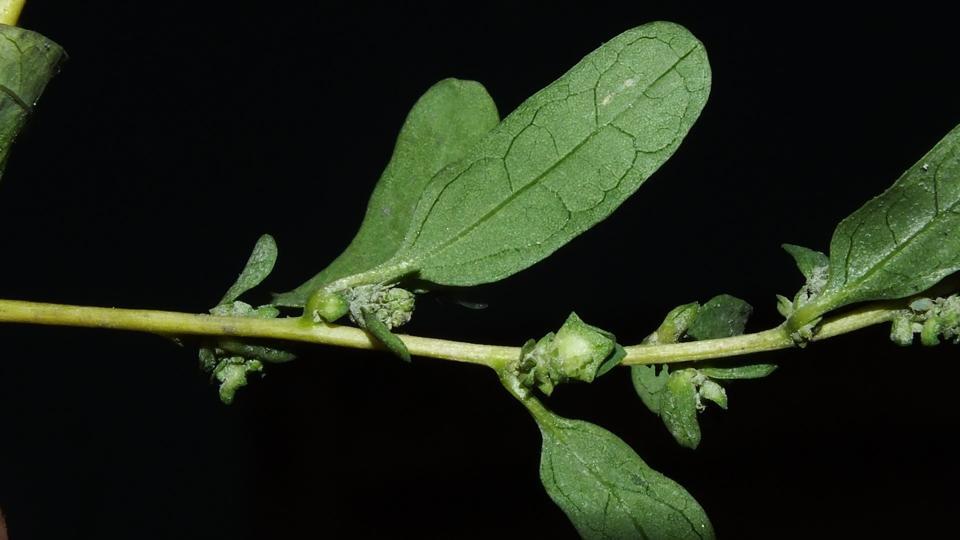
“It was a kind of love or curiosity at first sight. There was something different about this Panipat shrub. It was a perennial one whereas other shrub species of the Atriplex genus would appear in the monsoons and disappear. I consulted my peer group and examined Atriplex specimens curated at national botanical collections. This particular shrub was either clubbed with another species of Atriplex genus, i.e. A. crassifolia, or just left hanging in the air as one of the Atriplex species. But I was not satisfied, the shrub’s visible differences from other Atriplex species kept nagging my mind. I finally consulted Dr. Alexander Sukhorukov from Moscow State University (MSU), regarded as a world authority on Chenopodiaceae and Amaranthaceae clades. Dr. Sukhorukov was intrigued enough and he visited Panipat in November 2022. We examined this shrub in the field followed by herbarium studies and molecular analysis under his guidance. My hunch was proven correct,” associate professor Nidhan Singh told this writer.
The shrub was indeed a species new to science and as befitting its exclusive identity recently got its own nameplate: Atriplex pseudotatarica Sukhorukov & Nidhan Singh. The discovery was certified by the research paper’s acceptance in the peer-reviewed botanical journal, PhytoKeys, under the title, “A new species of Atriplex (Amaranthaceae) from the Indian subcontinent”, and authored by Sukhorukov, Singh, Maria Kushunina (MSU), Maxim A. Zaika (MSU) and Alexander N. Sennikov (University of Helsinki).
What is remarkable is that more than being a taxonomist or a field botanist, Singh is essentially a teacher. But he possessed an attribute critical to the furtherance of knowledge — a scientific temper — that relies on curiosity, dissenting views and intellectual courage to persist against received mainstream/peer wisdom.
Amazing crow of the Sukhna
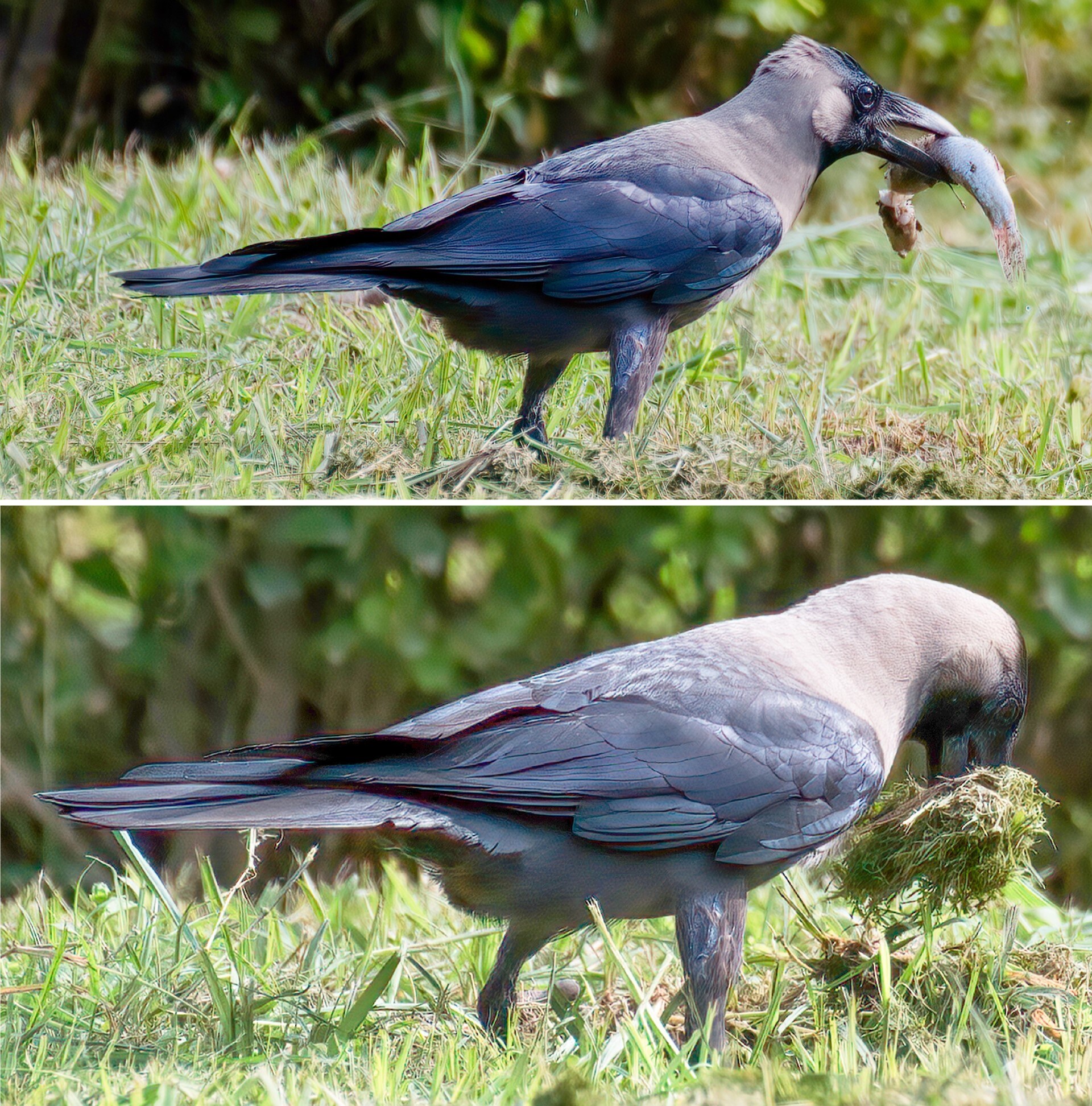
The House crow is a fabled avian on account of its intelligence, equally well-regarded in science for that attribute as well serving as a useful scavenger in human-littered landscapes. If keen naturalists seek to observe crow behaviour in spots more hospitable than stinking garbage dumps there is no better habitat than the entrancing environs of the Sukhna lake. Here, crows breed on the mesmerising colonnade of Kachnar trees, dispose of human food remnants and make the most of dead, vulnerable fish.
Wildlife photographer Parveen Nain harbours a sharp eye for the crow-fish interaction. Earlier, his photograph of a crow eating a strange-looking fish on the banks of the Sukhna emphatically confirmed the existence of the alien Amazonian Sailfin catfish in the Sukhna (having been dumped surreptitiously by aquarium owners in the lake) and was published in these columns.
Last week, Nain caught the clever crow in another amazing act. Not amazing for a crow, but for us humans as we are not so cognisant of their time-tested behaviours. This crow had picked a dead fish and when none of his/her comrade seemed to be keeping a watch (except the roving Nain eye!), the bird inserted the fish into a cleft in the lake’s lawns and then covered the hoarded stuff with grass tufts! The crow, as is known to avian scientists, was storing food for later use. When needed, crows accurately locate the spot where they had cached food earlier.
Other creatures such as squirrels, jays and magpies also cache food to secure it from others and to use it later, such as impending adverse weather.
vjswild2@gmail.com


