
 E-Paper



Death is not the enemy of life, but a part of it
Spice of Life: Unlike the modern perception of death that makes it a fearful enemy of life, festivals like Halloween remind us that there is a continuum between life and death


November has been the month of lights and celebration; the receded pandemic has enabled us to cherish some festivity this year. While Diwali was the showstopper, there were some flickers of Halloween to be seen in the streets around my place. To my surprise, the children who were excited about the burning of Ravana in Ramlila, took equal interest in Halloween celebrations as well. They had masked-up to appear scary, waited to be dark outside to go from home to home with baskets full of chocolates/candies hailing Happy Halloween!
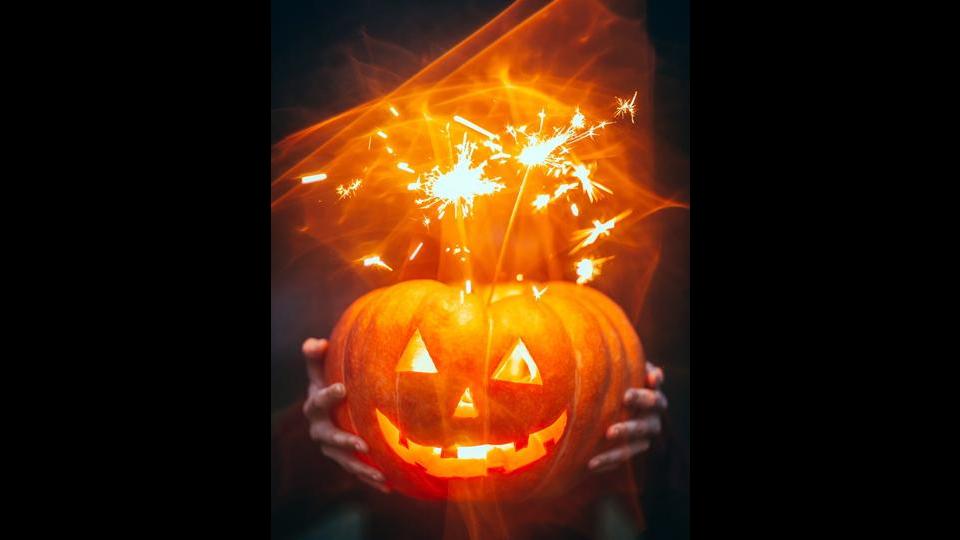
I wondered, what makes this generation ‘Z’ and ‘alpha’ so excited about Halloween? Curiously, I asked and a bunch of them replied in chorus, “Bhooton ka din hai, isliye hum bhoot bane hain (It’s the day of ghosts/spirits, therefore we are decked up as ghosts).” But they had no idea about whose spirits they were imitating and what was the celebration for! On asking further about whether they are scared of spirits/ghosts, I got some blended responses, wherein a few of them admitted that they were scared, and therefore visiting only the closest neighbours; others pretended to be bold enough, saying, “Darne ki kya baat hai (There is nothing to be afraid of).” My modest attempt to explain to them that it is the day to honour our dead ancestors went in vain because all their focus was in the exchange of candies and they were absolutely disinterested in any free gyan. After the candy business, they wanted to rush home, perhaps, subconsciously fearing that the bhoot might actually turn up!
Nevertheless, this celebration made me introspect that inadvertently these children are contributing in integrating death with life. Halloween celebrations originated from Samhain, the New Year festival of the ancient Celts of Ireland, who celebrated passing into another world through a hell-cave that was believed to be inhabited by Celtic devils and fairies. On the eve of October 31, Samhain was observed, believing that the invisible wall between the living world and the otherworld disappears and devils enter through the cave, marking the beginning of the pastoral new year.
In later years, in the Christian tradition, particularly in Mexico, Halloween celebrations got associated with All Spirits’ Day and All Saints’ Day, marked to greet their deceased loved ones believing that they temporarily return to the world of living. The day is celebrated by visiting and decorating the graves, dressing like spirits, taking out musical processions, baking bread with human bones carved on it and eating skull-shaped sugar candies and many such things. It is like our own ‘pitrupaksha’ when we fondly remember our ancestors by feeding the Brahmins, cows and crows.
Unlike the modern perception of death that makes it a fearful enemy of life, these festivals remind us that there is a continuum between life and death. The increasing interest of our children in celebrating Halloween is an opportunity for our generation to make death socialisation an integral part of their upbringing and creating a death positive environment at home. Integrating death in life as a normal event will make Halloween celebration much more meaningful than just bhooton ka din (a day of ghosts). veenat333@gmail.com
The writer is an assistant professor of sociology at Post-Graduate Government College for Girls, Chandigarh


