
 E-Paper



Eye on assembly elections, Punjab govt slashes power tariff by ₹3 per unit
The decision that came into effect from Monday itself was taken in a cabinet meeting chaired by chief minister Charanjit Singh Channi. It will be applicable for the consumers having an installed load capacity up to 7 kilowatt (kW).


In a populist move ahead of the 2022 assembly elections, the Punjab government on Monday announced to slash power tariff by ₹3 per unit for domestic consumers.
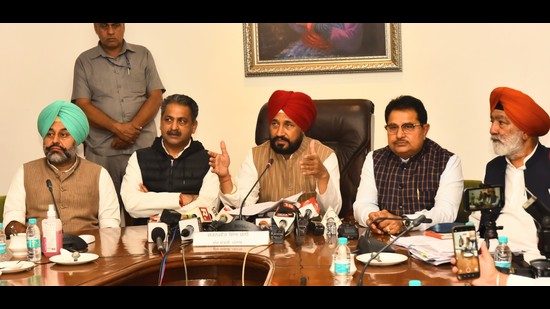
The decision that came into effect from Monday itself was taken in a cabinet meeting chaired by chief minister Charanjit Singh Channi. It will be applicable for the consumers having an installed load capacity up to 7 kilowatt (kW).
The reduction in power tariffs was one of the 18-point agenda that the Congress high command had given for implementation to the state government ahead of the state polls when Amarinder Singh was the chief minister.
Addressing a press conference after the cabinet meeting, Channi said it was a “big Diwali gift” for people of Punjab. Nearly 69 lakh (95%) of a total of 72 lakh domestic consumers will benefit from the move that will put an additional burden of ₹3,316 crore per year on the state exchequer, he said.
Citing a survey conducted by the government, the CM said people wanted quality and cheap power. With this decision, the tariffs for the domestic category have become cheapest in the country, he claimed. “People of Punjab do not want anything free. They want quality power at cheaper rates,” he said while quoting the survey.
Channi said for up to 100 units of consumption (up to 2 kW), the power tariff will drop to ₹1.19 per unit from ₹4.19 per unit and for 101-300 units, the tariff will be ₹4.01 and for above 300 units, the power rate will be ₹5.76 per unit. Similarly, power rates for more than 2 kW and up to 7 kW will also come down. Taking about the AAP government in Delhi, Channi said its power subsidy is ₹2,220 crore per year as against ₹14,000 crore in Punjab.
His government was procuring power at a cheaper rate and would pass on the benefit to consumers, the CM said.
Monday’s announcement takes the total subsidy burden on the state exchequer to ₹13,974 crore, including ₹10,628 crore free electricity to 14 lakh agriculture tubewells, scheduled caste and backward class (SC/BC) consumers, and industrial units.
Channi clarified that the existing free power facility for consumers with the load up to 1 kW to SC, OBC, BPL categories will continue. About residential consumers with load capacity over 7 kilowatts, he said that their number was “very small” and are from the creamy layer and hence needed no benefit.
After Channi took charge as CM, the state government has already waived pending default bills of consumers having connected load of less than 2 KW. Also, the government was also considering shifting to monthly billing cycle instead of the existing 2 months so that the higher rates are not charged with increase in consumption, he added.
(With agency inputs)


