
 E-Paper



Guest column | Of seat belts, air bags and faulty road designs
Most Indian motorists believe that the seat belt and air bag work in conjunction. Not True. They work independently. Another myth is that if the seat belts are not fastened, the air bags will not deploy. Again, not true.


The tragic death of two high-profile individuals – former Tata Group chairperson Cyrus Mistry and KPMG’s Global Strategy Group director Jehangir Pandole – in a road mishap has propelled seat belts and air bags into the spotlight. Road mishaps in India kill around 1,50,000 people a year – the highest in the world.
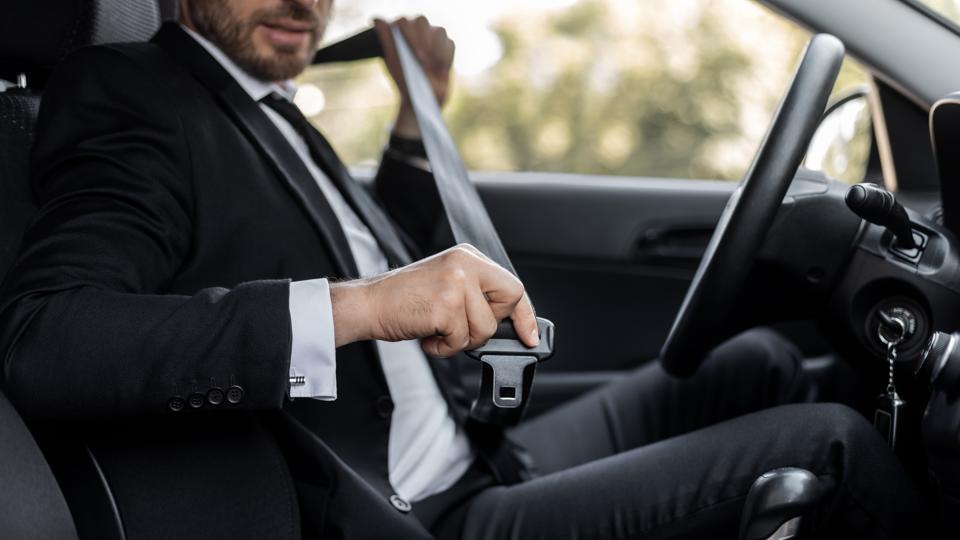
Both seat belts and air bags are fitments in cars to ensure the safety of the occupants. While both are designed to serve the same purpose, but in functioning, they are poles apart.
The seat belt, which is neatly tucked into the B-Pillar, is a passive safety device, which holds one securely in the seat throughout the journey. If one pulls it out with a jerk, it locks. One has to release it, and repeat the procedure to bring it out fully. This is what happens during a crash. The body is thrown against the seat belt, which will lock it, and prevent the individual from being bashed into the dashboard, windscreen glass or steering wheel.
The three-point seat belt was introduced in automobiles by Volvo in 1959. There was nothing new about it. It was a simple matter of transfer of technology from fighter planes– where pilots had to resort to inverted flying , barrel rolls, loops and more – to automobiles.
Years later, along came the air bag. A large bag hidden behind the dash board, the steering wheel or roof. To mark its location SRS (supplemental restraint system) is embossed on the dash board. It works in tandem with the seat belt. In case of a crash, the air bags pop out and form a protective cocoon around the occupants.
How does this happen? Sensors, strategically placed in the front-end of the car, as soon as they detect a crash and send an electronic signal to a canister, containing sodium azide. This starts a chemical reaction – nitrogen gas is produced which inflates the air bag in .03 seconds, faster than the blink of an eye.
Misinformed motorists
Most Indian motorists believe that the seat belt and air bag work in conjunction. Not True. They work independently. Another myth is that if the seat belts are not fastened, the air bags will not deploy. Again, not true.
Air bags function when the sensor says so. And why should seat belts not be fastened? It is against the Motor Vehicle Rules. Many people have told me that if you have air bags in the car, seat belts are not necessary. Again, a false notion.
Could Mistry and Pandole have been under this impression? After all, they were not wearing seat belts and were in the rear seat. Two highly intelligent and widely travelled gentlemen ignored basic safety rules, and paid a very heavy price for it.
Research has shown that a child hitting a dashboard in a crash at 45 kmph can be compared to a child falling from the third floor of a house on to a hard ground littered with sharp objects.
The blame game
To arrive at the truth of what happened, the blame game is on. First, fingers were pointed at the driver, who was said to be driving way too fast. A reliable source who drives on the road regularly says road conditions do not allow speeding. Reports also say the driver overtook from the left. But, this is quite normal on Indian roads. Trucks and buses hog the right hand or fast lane at crawling speeds. Consequently, cars are forced to overtake from the left. It is quite safe to execute this illegal manoeuvre because the trucks do not leave the fast lane.
So what went wrong that fateful day? It was the road design. National Highways keep increasing the lanes from two to four to six lanes. So, traffic increases as do speeds. NH-48 is a victim of this malaise.
The car, a Mercedes Benz GLC SUV, was heading to Mumbai. At Charoti village they had to cross a flyover. This is a three-lane highway. Then the car had to cross a bridge over the Surya River. Here the road narrows to two lanes. This results in a bottleneck.
The bridge, which the British built, is over a hundred years old. To provide relief to the commuters a bridge service road has been built along the original bridge. Of course, this is not sign-posted. At this point, seeing the bridge and the service road, the driver must have hesitated, which road to take, confusion reigned, she tried to change lanes, too late, smashed into the road divider. No other vehicle was involved.
So it narrows down to driver’s error, ably assisted by poor road design. Most important, it absolves all other agencies of any wrong doing. A sobering thought.
(The writer is a Chandigarh-based freelance contributor)


