
 E-Paper



Guest column | Twinning: Once a budget hack, now a fashionable fad
In contemporary wedding festivities, the practice of twinning, that is, donning matching attire has gained considerable popularity. Whether it’s fathers and sons, mothers and daughters, husbands and wives, siblings, or even the bride and groom themselves, the trend has become a ubiquitous and cherished expression of celebration.


As I prepared to depart for Vadodara, my sister-in-law made a charming request for a colourful lehenga-choli for her daughter. With Navratras approaching, locating the perfect ensemble for a six-year-old became a delightful quest in the vibrant markets of Gujarat, teeming with attire tailored for spirited dandiya nights. What initially seemed a simple errand took an amusing turn when my sister-in-law sent a text, suggesting I procure a matching lehenga for her as well. The request evolved into an exciting task, as she envisioned a mother-daughter twinning moment during the festive season, adding an extra layer of joy to our upcoming celebrations.
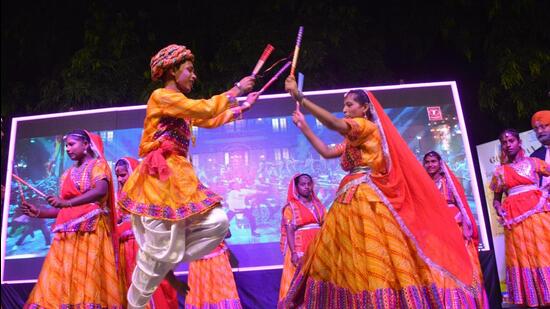
In contemporary wedding festivities, the practice of twinning, that is, donning matching attire has gained considerable popularity. Whether it’s fathers and sons, mothers and daughters, husbands and wives, siblings, or even the bride and groom themselves, the trend has become a ubiquitous and cherished expression of celebration. The shared elegance of matching outfits not only adds a touch of unity to the occasion but also symbolises the harmonious bonds within the family. From coordinated ensembles for parents and children to the synchronised attire of spouses and siblings, twinning has evolved into a delightful fashion statement.
Nevertheless, the trend triggers a flood of anecdotes from my mother, reminiscing about a bygone era when parents would invest in an entire roll of quality fabric. From that single ‘thaan’, an array of suits, frocks, and shirts for all the siblings would be tailored, creating a harmonious visual ensemble. These meticulously crafted outfits not only served as a distinctive family marker during social gatherings but also presented a practical and economical solution. In such tales of yore, shared fabrics not only adorned each family member with a unique unity but also eased the financial burden, presenting a frugal approach of resourcefulness along with a shared sense of style within the confines of a single textile roll.
As per our predecessors, the family as a whole looked forward to such occasions, which usually involved close family weddings or festivals such as Diwali, when the ‘thaan’ would be bought and brought home solely at the discretion of the family patriarch. It would then be presented to the matriarch or the trusted family tailor. There, amid the hum of anticipation, the tailor expertly measured each sibling. His observations became a commentary on growth— the little girl now standing taller, the young boy metamorphosing into a man, prompting the transition from half-pants to trousers.
Come the awaited day, the family would proudly parade in matching attire, epitomising a living tableau of familial growth and continuity. While the visual harmony exuded a sense of collective identity, it was not without its dissenters. Some of the younger members harboured a certain disdain for the tradition, their sulking demeanour a silent protest against the obligatory uniformity. In contrast to today’s children who often wield more influence over their wardrobe choices and culinary preferences, unfortunately, those of yesteryear had limited autonomy.
So while the denizens today choose twinning as the means to emphasise diversity, individual expression, and commercialisation, the act was evidently marked by a more traditional, economic, and ritualistic approach in the era gone by. However, the core idea of twinning remains a celebration of togetherness, family bonding and generational continuity.
sonrok15@gmail.com
(The writer is an associate professor at SD College, Ambala Cantt)


