
 E-Paper



HC’s landmark tree felling ban: A judicial masterstroke for greening Punjab, Haryana
With forest cover at a perilously low 3.67% in Punjab and 3.63% in Haryana, the HC’s intervention is timely, reaffirming the constitutional balance between development and environmental protection

 Prefer HTon Google


The Punjab and Haryana high court has shown remarkable judicial leadership with its recent interim order imposing a comprehensive ban on tree felling across Punjab. This timely intervention, arising from public interest litigations highlighting rampant violations, tackles a shared crisis in both states under the court’s jurisdiction.
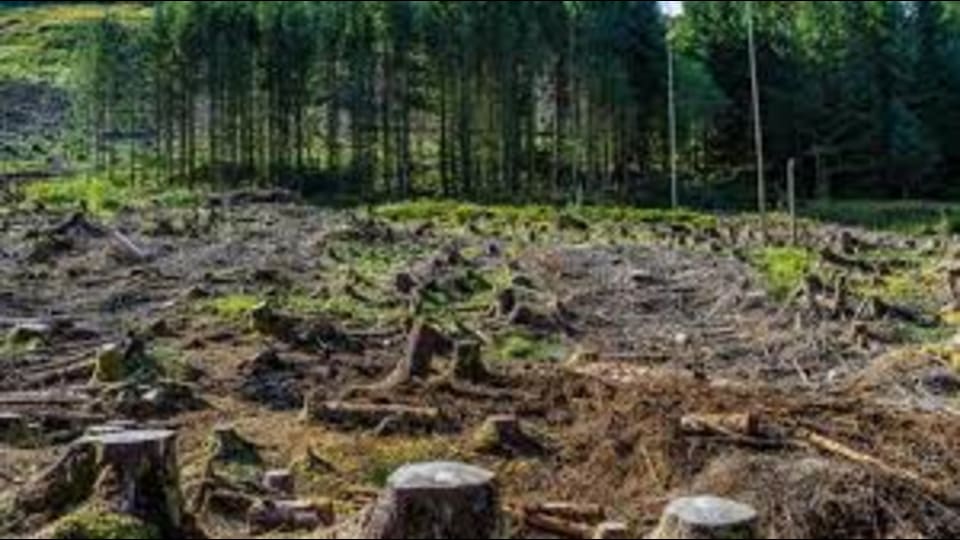
With forest cover in Punjab at around 3.67% and Haryana at approximately 3.63% of their geographical areas as per the latest assessments, this ruling protects against further ecological harm. It exemplifies balancing development with preservation and may prompt suo motu measures in Punjab and Haryana for sustainable growth in these vital agrarian regions.
Environmental impact of shrinking green cover
Punjab and Haryana face severe consequences from declining greenery: Deteriorating air quality from stubble burning and industries, frequent dust storms, soil erosion and heightened climate vulnerabilities.
Our cultural heritage offers profound guidance — Guru Nanak Dev Ji’s verse “Pavan Guru Pani Pita Mata Dharat Mahat” calls for revering air as guru, water as father and earth as great mother, with trees essential to this balance. Equally compelling are the Bishnoi community’s 29 commandments laid down by Guru Jambheshwar Ji. The 19th commandment explicitly states: “Amar rukhda neehna” or “Do not cut green trees” – a direct injunction to protect living trees for environmental preservation. This principle, along with others promoting compassion for all life, is immortalised in the Bishnois’ historic 1730 sacrifice, where 363 villagers gave their lives to save khejri trees.
Science, policy reinforce traditional teachings
Science supports these timeless teachings: India’s National Forest Policy targets 33% cover for sustainability and global commitments. Experts recommend 30% for clean air and health benefits — one mature tree filters pollution vastly more than smaller ones and supplies oxygen for four people daily.
Environmentalists advocate 40% to prevent biodiversity collapse, with urban canopies at 30% minimum. Comparisons highlight the shortfall. Nearby states like Madhya Pradesh (largest forest area, 25%), Chhattisgarh, Kerala (high in parts), and northeastern Arunachal Pradesh and Meghalaya thrive with protected forests. Globally, Japan (68%), Finland (73%), and Bhutan (over 70%, carbon-negative) integrate high forest cover with modern progress.
Development cannot stop, greening must get smarter
The HC’s order — mandating permissions and afforestation reports — is praiseworthy but needs proactive, development-compatible steps. Infrastructure, roads, industries and housing must advance to drive national growth. The solution: Smart greening using underutilised spaces — rooftops, medians, vacant lots, institutional grounds, and pond edges — without hindering projects.
Haryana’s revival of village ponds (chappads) under Amrit Sarovar demonstrates this — rehabilitating thousands has boosted groundwater, biodiversity, and wastewater recycling. Tree planting around ponds enhances ecosystems while aiding agriculture.
Actionable, enforceable solutions from global models, extended with innovative mechanisms
* Require one tree per household member in building approvals, using Miyawaki method for dense, fast-growing native forests in compact spaces like boundaries or rooftops.
* Mandate planting in institutions (schools, colleges, courts, police stations) based on occupancy (e.g., one per 10 people), creating biodiversity zones in unused areas.
* Adopt Singapore’s 3-30-300 rule (three trees visible from homes, 30% neighborhood canopy, parks within 300 meters) for urban integration.
* Follow Japan’s 10-20% green coverage in developments, prioritizing rooftop greening and relocation.
* Emulate UAE (Dubai)’s 25% native species in landscaped areas, ensuring greenery alongside rapid growth.
* Leverage marginal spaces—road medians, canal banks, railway corridors—for positive contributions.
Apply the “polluter pays” principle: Where projects unavoidably require tree removal and on-site compensatory planting is insufficient, developers must fund carbon credits. These credits can compensate farmers or landowners who grow additional trees, turning environmental responsibility into economic opportunity.
Agroforestry as scalable solution for farmers
Incentivise agroforestry on field ridges: Farmers practising intensive cultivation can plant trees along north-south bunds without losing prime land for remunerative crops. Properly incentivised through subsidies or carbon credit payments, this could add millions of trees across Punjab and Haryana’s vast farmlands.
Since such environmental responsibilities remain largely voluntary rather than mandatory, the judiciary—building on this landmark order—can take the lead in structuring enforceable frameworks. Courts could direct guidelines for carbon credit mechanisms, ridge plantations, and compensatory afforestation, safeguarding future generations from looming environmental disasters like severe air pollution, water scarcity, and climate extremes.
With ongoing afforestation drives, enforce these via building codes, monitoring, and incentives for survival and economic progress.
Towards resilient and sustainable future
The HC’s decision lays the foundation for sustainable development in Punjab and Haryana. Embracing these culturally rooted, scientifically backed, internationally proven suggestions—including the Bishnoi 19th commandment’s spirit and innovative polluter-pays models—will restore ecology without impeding advancement. New projects can fuel prosperity amid replenished groundwater, purified air, and honoured earth. This invites expanded judicial and policy action, potentially via public interest avenues, for a resilient future.
HC can mandate annual “Green Audits” for districts, tracking compliance via satellite imagery and citizen apps. Youth-led “Tree Guardians” programs in educational institutions can deepen ownership among the youths for tree protection. These measures shall ensure accountability and foster community involvement for lasting impact.
(The writer is an agri entrepreneur and environmental activist. Views expressed are personal)


