
 E-Paper



HT Readers’ Take | Act before you are left high & dry
Tricity residents feel that water conservation should be a way of life rather than an annual exercise lasting a few months. They say each one of us has a role to play – from changing every day habits that lead to water wastage, to joining hands to bring a sea of change, we must leave no stone unturned to conserve every drop of water

 Prefer HTon Google


Defaulters should face temporary disconnection of water supply
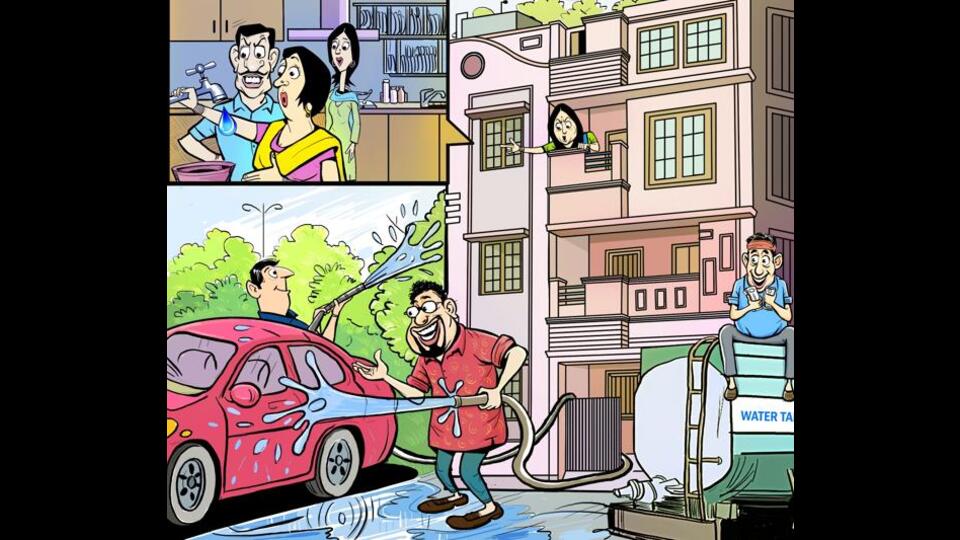
Any water wastage is criminal. Citizens need to be made aware about water shortages in peak summers, and the cost and effort that go into supplying potable drinking to all households. Any laxity to check wastage of the precious commodity calls for strict action. Instead of issuing challans, defaulters should face temporary disconnection of water supply for a day or two. People ought to understand that when you waste water, you deny someone their right to the life-giving precious commodity.
DS Banati, Mohali
Ban events that lead to water wastage
On one hand, some people are struggling to quench their thirst, and on the other, some are wasting water. To save water for the future generation, civic body should take responsibility to minimise water wastage by employing strict rules, putting a ban on events where water is wasted, and finding the root cause of leakage. Challan drive started by the tricity authorities should be exercised in an efficient manner to resolve the problem of water shortage and to punish the violators.
Harkanwar Kaur, Chandigarh
Challans are like water off duck’s back
Despite the fact that water is scarce and a necessity for survival, people have not learnt to conserve it or use it judiciously. Challaning people for misuse of water in peak summers is no remedy as they will get back to their old ways once the drive ends. Long-term behavioural changes are required. Area councillors must take the initiative to hold awareness drives and promote activities that conserve water. The administration must look at ways to recycle and reuse water.
Capt Amar Jeet, Kharar
Sensitise public to bring a sea of change
As with any public interest issue, the support of the general public is necessary in taking effective measures towards water conservation. Mere challaning during summers won’t serve any purpose. Raising awareness is not the same as telling people what to do. It is explaining the issues and providing knowledge so that people can make their own, informed decisions. There are two different areas that activities to raise awareness should cover. One is the more general public awareness, which involves wide-spread acknowledgement and understanding of water wastage issues. The other one is self-awareness, which means understanding the relation between personal water use, and natural and societal impacts.
Vineet Gandhi, Chandigarh
Change mindset, don’t let water go down the drain
Apart from stopping overflowing overhead tanks, plugging the leaking taps and pipes, and not watering lawns and washing cars in the mornings, we must bring a change in our every habits. By keeping the taps open while using toothbrush or shaving, we are letting water go down the drain. Even in flushing cisterns, about five litres of water is casually wasted to flush in one go. Since such water wastage is done in the privacy of homes, people cannot be penalised for such actions; it can only be prevented with a change in our mindset .
SC Luthra, Chandigarh
Population rise had led to increased water usage
With population rise, tricity’s demand for water has also increased. The overuse of groundwater and incorrect preservation of surface water has added to the problems. By using water in judicious ways, we will not only reduce our water bills, but also make the future generations safer. We must all do our bit, be it plugging the leaking taps, reusing filter discharged water for watering plants and cleaning utensils. Water is a limited resource.
Monika Chathli, via email
Provide tertiary treated water
There is no second opinion that consumption of water by northern sectors in Chandigarh is seven times higher than in southern sectors. The northern sectors have big houses with big lawns, that require a large amount of water. Unfortunately, Chandigarh MC has failed miserably to provide tertiary treated water as per demand. The quality of recycled water supplied is so bad, that it emits foul and pungent smell. The MC has not even been able to install water meters in a good number of households, due to which their water usage goes unchecked. The water lines are very old resulting in loss to large quantity of water due to leakage. It has been observed that in government hospitals, schools and other public buildings, leakage from taps goes unattended.
Kidar Nath Sharma, via email
Explore rainwater harvesting techniques
Everyone knows that drinking water shortage has become a norm during peak summer. A drive against water wastage is not enough. Groundwater levels have been going down for a long time. Future generations will face a shortage if we don’t act soon. The authorities should motivate residents’ welfare associations and public regarding the use of potable water and need to recycle it. Also, explore options for rainwater harvesting. These can be done at roundabouts, parks, public buildings and even residential units.
Sumesh Kumar Badhwar, Mohali
Water conservation should be a way of life
Three-fourth of our earth’s surface is covered with water, still availability of drinking water is depleting day by day. Tricity authorities impose a ban on water wastage every year during summers but it should be a year-long initiative. Water conservation should be a way of life, rather than a compulsion. Rainwater harvesting must be adopted in all housing societies. For washing cars and irrigating lawns, treated water should be made available at a low cost.
Sqn Ldr Manjit Singh Johar (retd), Chandigarh
Penalties will deter people from wasting water
The decision of imposing penalty on water wastage is a welcome step as it will deter others from doing the same. In future, wars will be fought on water rights. Without water, we cannot think of any form of life. The administration should take matters into own hands to plug water leakages across the city. Innovative methods for conserving water such as rainwater harvesting, grey water cycling etc has to be started on a large scale. Water level in many parts of Punjab has gone down drastically affecting agriculture. Unless we take corrective measures, it won’t be too long before we see our green fields turning into deserts.
Anil Kumar Yadav, Chandigarh
Civil society needs to join hands
Civil society can shape the nature and dynamics of water resource management, and give impetus to governance processes that affect the nature of water management. Water wastage takes place during peak summers and there are many ways by which the civil society can help cope with shortage of water. Small steps such as taking only as much as you need, washing cars once in three days, checking for dripping taps can help. Rainwater harvesting is another way of conserving water.
Ishita Nara, via email
Joint efforts of all stakeholders
Water wastage can be stopped through combined efforts of all stakeholders. MC should plug in the leakages and check unmetered connections at the earliest. Random checks should be carried out by MC to ensure that water consumers are billed appropriately. Set up an award system wherein the RWA with the maximum recycled water connections should be facilitated.
Rajeev Kumar, Chandigarh
Penalties, a must to check defaulters
It would not be wrong to say that if there is a third world war, it will for water. Let’s not wait for that day and rather keep a check on our own activities and help society so that the survival of all becomes possible. When people in general don’t pay attention to conserving this necessity of life, it becomes the responsibility of the administration to take it seriously and penalise the defaulters.
Anju Mohan, Panchkula
Check water leakages
Conserving water and controlling its wastage is the need of the hour. Water leakages must be checked regularly. At the same time, if water supply is made regular, people will come out of the habit of storing it, hoarding it and get over the feeling of insecurity of water shortage. On the contrary, when there is no scarcity of water, the attitude towards the situation will change.
Garv Bhupesh, Panchkula
Check violations by govt & MC officials
Imposing a fine on residents who are caught wasting water is justified but the administration should check water leakage from broken pipes and taps along roadsides that comes under MC. Washing of vehicles at government official’s residence is a common practice that needs to be controlled. Residents should use tertiary water for irrigating the lawns.
Abhilasha Gupta, Mohali
Water treatment plant in new constructions
Challaning a person or business entity for misuse of water is a good step. People should reduce wastage in their households. Like solar panels, the authorities should also give boost to installation of water treatment plant in new constructions so that water, after treatment, can be stored and reuse and directly transferred to the groundwater.
Avinash Goyal, via email
Implementation of challan drive needs to be better
Challan drive during peak summers could have been a great deterrent to wastage of water, had it been done desirably. Unfortunately, neither the residents nor the authorities are sincere towards this effort. Instead of conserving natural resources for appropriate usage, residents waste it with impunity.
MPS Chadha, Mohali
Incentivise water conservation
Challan will not suffice in stopping water wastage. Each resident will have to take this social responsibility and stop wasting water. RWAs must have plumbers to fix leaks and these associations can also play a major role in creating awareness about reducing water usage. They can also give incentives to the house which has the least water bill in each sector.
Saikrit Gulati, Chandigarh
Civil society can play proactive role
Come summer and the incessant rumbling of ‘save water’ gets shriller by the day. Students take out processions to drive home the point. While residents cry hoarse over the rundown state of supply of water to meet their daily needs, tricity authorities have come up with a ‘chalan’ drive to tame the compulsive violators. Amid this annual exercise, the shortage of water continues. The authorities concerned, instead of indulging in sheer tokenism, need to go the hard way to plug the leakages to streamline the supply of water to residents. Civil society has a proactive role to play in making water conservation a way of life, thus setting an example for others to emulate.
Ramesh K Dhiman, Chandigarh
Drive unproductive
Water conservation must be a year-long exercise instead of a drive initiated during peak summers. Just penalising residents for washing cars or irrigating laws will not help, neither is it desirable. Deputing staff for this exercise is unproductive, and the exercise, will only lead to wastage of time, money, fuel (national wastage), and paper for printing of bill books etc.
GS Bedi, via email
Use water judiciously
Like in every aspect of our times, here too we should be more holistic in our approach to water conservation. Challans are necessary for heavy users and repeat offenders but if the government tries incentives like cashback offers for using water below certain units, mentioning names in the newspaper or UT web portal as water warriors etc for people who do their best to save water, that would leave a more visible impact. Punjab has a serious water problem and we need to talk about it a lot more. A small example of using water efficiently is to reuse RO water runoff for swabbing floors and/or washing clothes rather than letting it drain away.
Shilpi Bajwa Bath
Need a task force for water conservation in tricity
Challans for water wastage no doubt plays a role in reprimanding residents against water wastage. Tricity residents still waste a lot of water at their homes and offices. There is an immediate need to create awareness among tricity residents. RWAs of tricity can play an active role in water conservation programmes throughout the year. The tricity administration should deploy special task teams to plug water leakage. Rainwater harvesting technique can help the tricity. There is need of coordination from residents and administration to save water.
Sunny Dhaliwal, Chandigarh
Tertiary water connections for cleaning
Water wastage is rampant not just in household but also on roads, streets and markets. Nobody thinks about the importance of water until they fall short of it. Separate pipelines should be laid for tertiary connections so that these can be used for irrigating lawns, washing purposes etc.
Subhash Chugh, via email
Joint responsibility
The civic body should issue phone numbers where residents can complain of water wastage. It is common to see water taps being left running at public places. Saving water is a joint responsibility.
Opinder Kaur Sekhon Chandigarh
Rope in NGOs, RWAs
First of all, authorities must ensure that leakage from pipes are pluggled. It is a known fact that more than 10% to 15% water is being wasted from leakage which goes unnoticed. At the same time, public must be educated to save water and must follows dos/don’ts on how to save water. NGOs, RWAs & school authorities can play major role to this end. Challan drive during summer is not enough to conserve water.
Col.TBS Bedi.(Retd), Mohali
Harsher punishments needed
Those who indulge in washing the cars with pipe and watering their lawns can easily pay for the challan. The only way is disconnect their water supply for three days for first offence and then for a whole week if they repeat.
Chander Vij, via email
READER OF THE WEEK
Explore large-scale water conservation methods
It’s an annual feature to start challaning residents for water wastage during summers, however, it is not a long-term solution. In tricity, a bulk of water goes towards maintaining its green spaces. Advanced technology such as drip and sprinkle irrigation, and the use of treated water has not been fully adopted here. Mandatory use of such measures by way of motivation and liberal financial support can go a long way.
Deepak Kumar, Panchkula
EXPERT TAKE
24/7 water supply project
One of the main focus areas of the city’s 24/7 water supply project is bring down water wastage. The drive initiated during summers helps us check water wastage to a large extent.
NP Sharma, chief engineer, Chandigarh municipal corporation
Save every drop
People must take care not to waste water, especially during peak summer. Small acts such as ensuring that no tap is leaking, cars are not washed using hosepipes can go a long way. People value of every drop of water and save it.
NK Payal, XEN, Panchkula
Rainwater harvesting
Water scarcity is not just a local issue, but a global one. As responsible residents, we must do our bit for water conservation. Rainwater harvesting is by far, the quickest solution, to increase the availability of water in areas that have inadequate resources. As far as leakages are concerned, we are trying to plug them.
Harkiran Singh, superintending engineer, Mohali MC
Check wastage in northern sectors
RWAs should be given powers to penalise residents who waste water. MC should ensure there is no wastage in parks, greenbelts etc, besides putting an end to water wastage in northern sectors where potable water is used for irrigating lawns, washing vehicles (cars) and cleaning the premises.
Professor Harminder Pal Singh, dept of environment studies, Panjab University
Role of RWAs
RWAs can play a big role in checking the wastage of water during summer months. During my morning walk, I personally keep a check to ensure that people in the area use buckets to wash their cars. For gardens, sprinklers can be used as they use less water than pipes.
Colonel Gursewak Singh (retd), president, Modern Housing Complex RWA


