
 E-Paper



Interview| Ready to fight till last breath, ball in Centre’s court: Sonam Wangchuk
Fresh off 170 days in detention, activist Sonam Wangchuk, the face of Ladakh’s agitation, tells HT that while the leadership remains flexible, the Union home minister’s recent refusal to upgrade the dialogue has deepened the trust deficit.

 Prefer HTon Google


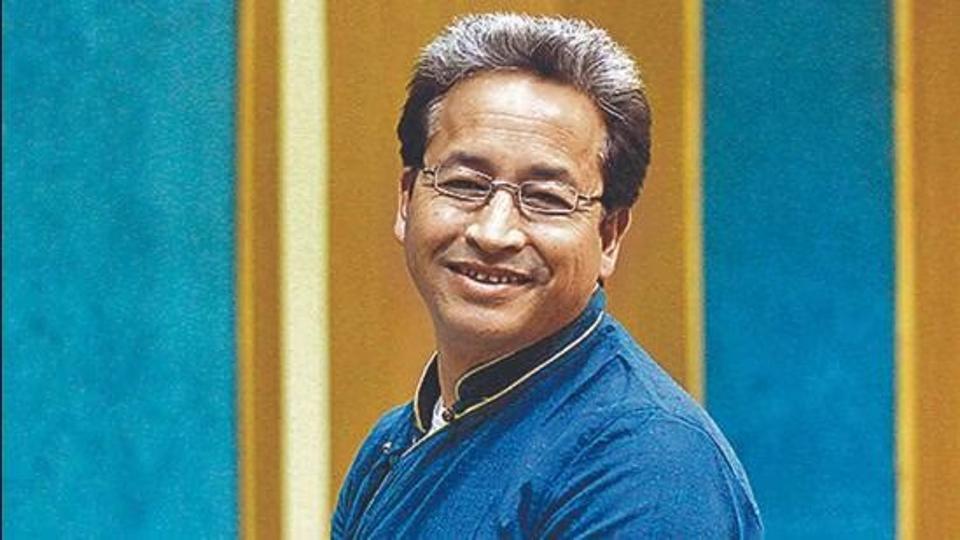
Three days after Union home minister Amit Shah’s visit to Ladakh to celebrate Buddha Purnima, activist Sonam Wangchuk remains starkly unimpressed. Wangchuk, who was released from Jodhpur prison on March 14 after being detained under the National Security Act (NSA), has emerged as the moral compass of a movement demanding statehood and Sixth Schedule safeguards. In this exclusive interview, he reflects on the “chilly” reception Shah received, the flawed logic behind the creation of five new districts, and why the May 22 subcommittee meeting is a make-or-break moment for the region. Edited excerpts:
During his visit, the home minister turned down two relatively simple proposals: Convening a high-powered committee (HPC) meeting in Leh and converting the May 22 subcommittee meeting into an HPC session. Given this, are you still hopeful for the May 22 talks?
I’ve been intentionally avoiding political commentary since Buddha Jayanti (on May 1) because I did not want to conflate the spiritual significance of the day with the politics of the Centre. In fact, three days before his arrival, I urged the people of Ladakh to accord the home minister a warm welcome. It would have been the most appropriate gesture if he had taken the initiative to hold a high-powered committee meeting while being present here.
There should have been an announcement regarding those arrested, injured, or killed during the September 24, 2025, firing—specifically, the revocation of meaningless charges against those still held. Just as the National Security Act was revoked unconditionally against me, the same should have been extended to them.
However, nothing of the sort happened. The result was visible the moment he landed. Except for a few party workers dancing for the cameras, there was almost no public reception. The contrast between the reception for the holy relics on April 29 and the home minister on April 30 was a message in itself. The people of Ladakh conveyed their sentiment, hoping the Centre would take measures to thaw tensions and build trust. Unfortunately, he remained silent on our core concerns and even turned down simple proposals for a higher-level dialogue.
The low turnout at Jivetsal in Leh during Buddha Purnima was noticeable. Was that a deliberate boycott?
It was the smallest crowd I’ve ever seen in the history of Jivetsal. Usually, when His Holiness the Dalai Lama preaches there, we see gatherings of over 40,000. This time, despite the presence of holy relics, the crowd was barely 10,000 to 12,000—and roughly 6,000 of those were students asked to come in casual clothes or soldiers in civil attire. The people were sending a signal. The Centre needs to be sensitive to these signals. They still have time to make something significant out of the May 22 meet, but the window is closing.
Did the Ladakh leadership feel disillusioned after these proposals were rejected?
Yes, deeply disillusioned. When even humble and minor appeals are ignored, it brings into question the sincerity of the trust-building mentioned in the letter revoking my NSA detention. I want to give the Centre the benefit of the doubt, but many locals believe the revocation was a tactical move to escape a pending Supreme Court judgment in my case. Our faith in the government’s word is diminishing with every such gesture.
In his speech, the home minister invoked Lord Buddha’s middle path. Former minister Chering Dorjay Lakrook has mentioned give and take. Is the leadership mellowing its stand on Statehood and the Sixth Schedule?
Ladakh’s leaders have always been mellow and flexible. We understand that negotiations require a win-win solution. However, a middle path cannot mean a win-lose scenario where the Centre wins every point and Ladakh loses everything. What is non-negotiable is mutual acceptance. If they try to bring us down to something insignificant, there will be no acceptance from the people.
Do statehood and the Sixth Schedule remain the core agenda?
Absolutely. If the Centre has issues with these specific frameworks, we have asked: What is your counter-offer? If not this, then what? But that counter-offer hasn’t come yet. If it does, we are open to discussion.
Following the September 24 violence, 83 people remain in custody. You’ve called this a mockery.
It is absurd. They release the chief provocateur—the supposed leader of the gang—unconditionally, yet they continue to pursue cases against ordinary citizens who were simply walking the streets or trying to stop the violence. If the revocation of my NSA was truly about building trust, that trust should pervade all incidents and all people. To release the most dangerous person and prosecute the least dangerous is a joke that undermines the government’s credibility.
How do you view the recent announcement of five new districts?
It is a totally misplaced remedy. Only Zanskar had been making this demand for decades; perhaps Drass had a case, too. But for others, it wasn’t even a demand. In fact, some areas are concerned it will be more inconvenient.
This decision adds an ₹850 crore burden on the exchequer to create administrative units that weren’t asked for. Ironically, the Centre often argues that Ladakh doesn’t have the revenue to run a state, yet they add unnecessary expenditure here. It’s like offering headache medicine to someone suffering from a heart ache.
The BJP has faced criticism for a U-turn on the Sixth Schedule. How do you respond to its current stance?
The BJP promised the Sixth Schedule in its manifestos twice—in 2019 and 2020. In 2020, it was their number-one agenda item. That wasn’t a mistake; it was a deliberate pledge recorded in the minutes of statutory bodies, such as the National Commission for Scheduled Tribes. They succeeded in forming a Hill Council government and getting an MP elected on the back of that promise. The people delivered the votes; the BJP did not keep the promise.
What is the way forward if the May 22 meeting is inconclusive?
I was hopeful until the home minister came to Leh and refused to relent. Now, that hope is diminishing daily. We anticipate a long struggle. The ball is in the Centre’s court. This visit was a golden opportunity to resolve the impasse, and they missed it. No matter how long it takes, we are ready till our last breath.
Constitutional tug-of-war
*Sixth Schedule: Under Article 244, this provides for Autonomous District Councils (ADCs) with the power to make laws on land, water, agriculture, and social customs.
*Since 2019, 97% of Ladakh’s population—which is tribal—fears demographic change and environmental degradation from unregulated mining and industrial projects.
*The Centre argues that Ladakh’s strategic borders with China and Pakistan necessitate direct federal control, fearing that local legislative powers might complicate national security interests.
*The 2025-26 budget for Ladakh has seen an increase to ₹6,000 crore, but activists argue that financial outlays cannot replace political representation and constitutional identity.


