
 E-Paper



Jammu and Kashmir takes up students’ entrance exam centres concerns with NTA
An unexpected surge in the number of applicants for the CUET from Jammu and Kashmir and Jharkhand this year had left the NTA scrambling to arrange enough centres


After outcry over the National Testing Agency (NTA) allotting Common University Entrance Test (CUET) centres for undergraduate students outside union territory (UT), Jammu and Kashmir administration on Thursday said that they have taken up the issue with the agency.
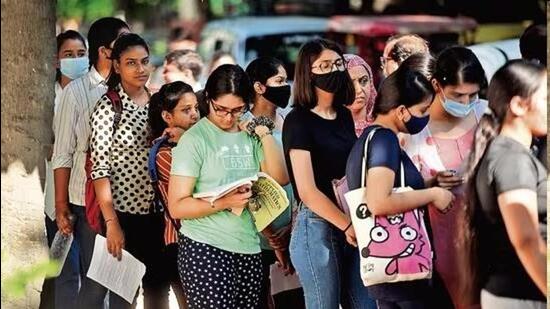
Special secretary higher education Ravi Shankar told HT that the department was aware of the issue, adding, “We are aware of it and are working it out. The issue is being taken up with the concerned agency through director colleges.”
Jammu and Kashmir had opted for CUET this year for admission in various undergraduate courses in the UT. However, thousands of students and parents are in distress after their centres have been allotted in Punjab and Haryana. The exams are scheduled to start from May 21.
Director colleges Yasmeen Ashai said the NTA has designated two centres in the UT – one in Jammu and another in Srinagar. She said there are many students whose centres have been put in Punjab, Haryana and other states.
“We don’t have a list of those students as the agency did not share the details, but we talked to the director NTA and are also shooting a letter formally to the agency,” Ashai said.
She said the director NTA sighted the greater number of students appearing in the test – around 14 lakh across the country. “I said that it is not possible for our students to travel long distances for the test. One of our students sent me her admit slip showing Gantoor in AP as an exam centre. Some students have been asked to appear in Haryana and Punjab,” she said.
“The NTA director has assured of some action particularly for female students but we urged relief for all the students,” Ashai said.
Students, meanwhile, on Wednesday protested the decision, saying they had opted for centres in Srinagar and nearby districts, but have been allotted far off centres.
Leaders from major political parties have also demanded centres in the Valley and in Jammu, with National Conference president Farooq Abdullah saying he is going to take the issue up with the education ministry.
“The students belong to poor families and can’t afford to travel outside. Their centres should be in Jammu or Srinagar,” he said.
Communist Party of India (Marxist) leader MY Tarigami, meanwhile, said poor students lack wherewithal to pay for the travel expenses and appealed to lieutenant governor (KG) Manoj Sinha to intervene. Apni Party president Altaf Bukhari said the unfair allocation has caused anxiety to the students.
“Imagine a student who barely can manage his fare for Srinagar from far off villages, and his/her centre has been designated out of J&K; would he/she be able to make it over there to write one’s paper,” Azad Hussain, a student, said.
Jammu and Kashmir students Association has also written to the Union education minister Dharmendra Pradhan and LG Manoj Sinha to intervene.
“The students were allocated centres outside the UT. This has caused significant inconvenience and disappointment for these ambitious students who now face the added burden of travelling long distances to take the test,” the association’s national convenor Nasir Khuehami said.
An unexpected surge in the number of applicants for the undergraduate chapter of the Common University Entrance Test (CUET) from Jammu & Kashmir and Jharkhand this year has left the National Testing Agency (NTA) scrambling to arrange enough centres in these states, forcing it to extend the last date for the exams till June 6 across the country.
The exam was earlier scheduled between May 21 and May 31.
According to NTA officials aware of the matter, nearly 1.5 million students have applied for the national common entrance test this year, as against around 990,000 students last year.
The officials said 87,309 students from J&K have applied for the exam this year, more than six times the last year’s count of 13,021.


