
 E-Paper



J&K students association: Kashmiri students being harassed, PM Modi must intervene
Public reassurance from the PM would strengthen national unity and ensure that Kashmiri students continue contributing meaningfully to India’s development and prosperity

 Prefer HTon Google


The J&K students have alleged that after the arrest of doctors in “white collar terror module” case, the Faridabad police have questioned over 2,000 Kashmiri students living on rent in the city to find out if they have any links with the recently busted module.
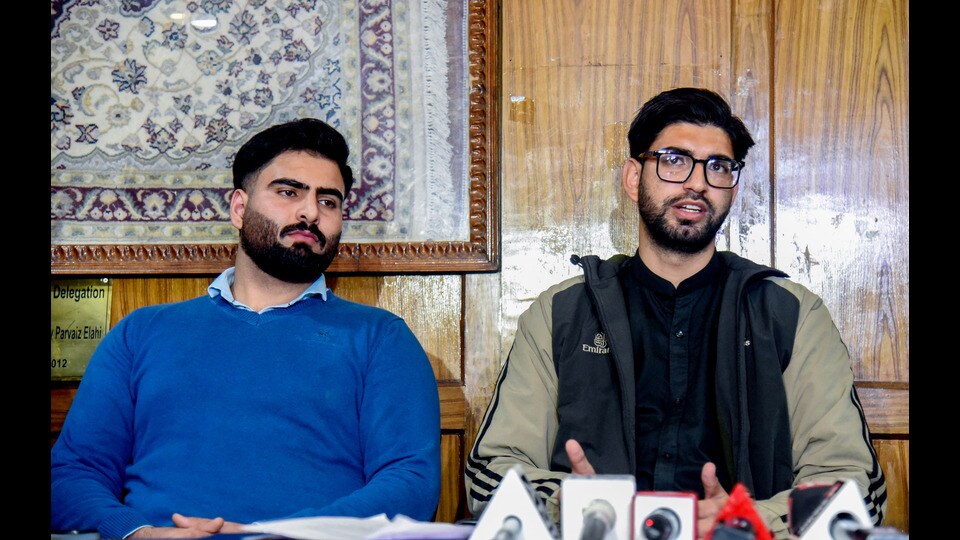
J&K students association in a statement alleged a “collective suspicion” of Kashmiri students and have sought Prime Minister’s intervention and alleged that Kashmiri students across several northern states are facing profiling, eviction, and intimidation in the aftermath of the Red Fort blast in Delhi.
Association’s national convener Nasir Khueham said that a clear public reassurance from the PM would strengthen national unity and ensure that Kashmiri students continue contributing meaningfully to India’s development and prosperity. “A message of equality and reassurance can pave the way for a more inclusive and harmonious India; an India where every Kashmiri feels protected, valued, and integral to the nation’s collective future.”
“A particular community is being targeted after the attack. Kashmiri students are being harassed in universities and residential localities in Uttar Pradesh, Haryana, Rajasthan and Delhi. Kashmiri students believe in India’s democracy and mainstream values. They reject terrorism in all forms. Yet, they are being profiled and vilified by authorities and local residents. Many landlords have asked Kashmiri tenants to vacate their rooms, forcing several students to return home out of fear,” Khuehami said, adding that in the aftermath of the blast, fear and anxiety among these students have grown significantly. “Reports of profiling, harassment, aggressive questioning, and sweeping verification drives, even in institutions unrelated to the case have deeply unsettled them. Many have left campuses. He said alone 2,000 students living in Faridabad on rent or hostels have been questioned.
Expressing deep sorrow over the loss of innocent lives in the Delhi blast, Khuehami said it has shaken the entire nation.. “Our heartfelt condolences go to the bereaved families and our thoughts are with all those who have suffered. Their pain is our pain; their grief is the nation’s grief,” he said, adding that the shock of the tragedy has reverberated across every home in Jammu & Kashmir as well.
He said the association is fully willing to cooperate with authorities to ensure the perpetrators are brought to justice. “Anyone involved in this heinous act directly or indirectly is neither a friend of Kashmir nor of any religious community. Terror has no religion, no region, and no identity. Those who believe such actions gain legitimacy in or around Kashmir are deeply mistaken. Kashmiris want peace, dignity, and harmony, within India and across South Asia.”
He said that every Kashmiri is an Indian, unconditionally and strongly opposed the harassment, profiling, intimidation, hate, prejudice, and bigotry that many Kashmiri students have faced since the blast. “Kashmiri students contribute to India through universities, hospitals, laboratories, technology centres, public institutions, start-ups, and numerous professional fields. They deserve safety, dignity, and reassurance that their identity will not be criminalised.”
Khuehami said that while law-enforcement agencies must be allowed to investigate freely and thoroughly, innocent Kashmiris must not be made to bear the burden of suspicion. “Collective blame does not strengthen national security; unity, trust, fairness, and justice do. We have full faith in our national institutions and their integrity. Investigations must proceed with balance, sensitivity, and impartiality.”
Khuehami also said that in the aftermath of the blast, fear and anxiety among Kashmiri students have grown significantly. “Reports of profiling, harassment, aggressive questioning and sweeping verification drives, even in institutions unrelated to the case have deeply unsettled them. Many have left campuses.”
He warned that such collective suspicion is unjust and dangerous. “A society that normalizes the othering of its minorities walks a perilous path. Alienation may remain silent for long, but when it surfaces, it harms the entire nation. Communal profiling strengthens neither national security nor national unity.”


