
 E-Paper



Guest column: Juvenile rapists should be treated as adults
Juveniles are often engaged by adult criminals for crimes of passion, terrorism, drug smuggling, robbery and rape under the promise of juvenile justice


On November 16, the Supreme Court overturned a high court verdict on the juvenility of a Kathua gang-rape murder case accused, directing him to face trial as an adult.
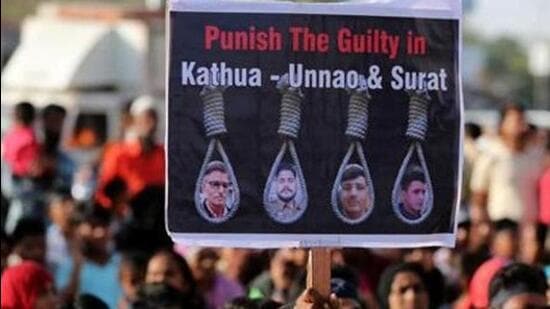
Deprecating the rising rate of juvenile delinquency, the Supreme Court considered whether an epigenetic clock technique for age determination and the Juvenile Justice Act, 2015 (JJ Act) have subserved the object of reformation of juveniles.Brutal and heinous crimes by juveniles escaping adult punishment emboldens them.
Juveniles are often engaged by adult criminals for crimes of passion, terrorism, drug smuggling, robbery and rape under the promise of juvenile justice. Isn’t the JJ Act being abused if a juvenile uses a rocket propelled grenade for a terrorist attack? Supreme Court judgement requires urgent introspection by the Parliament before an army of juvenile criminals is recruited. Juvenile criminals are pardoned the dance of death, but the law makes them immune from punishment. Was the criminal intention any less? Ought not juveniles be castrated for rape? Then, why the reprieve. For sympathy? Is the label of a juvenile, a licence or permit in law to commit heinous offences willingly, with promise of assured pardon in their pockets. Does the age of juveniles need to be revisited and pegged to 16. Why not?
Juvenile Justice Act, 1986 prescribes the age of a juvenile at 16 years. However, after India ratified the UN Convention on Rights of the Child in 1992, the UN Convention Juvenile Justice Act, 1986, was amended in 2000, to prescribe 18 years as the age of juveniles. Consequently, under the Juvenile Justice Act, 2000, “a juvenile in conflict with law” meant a juvenile, who has committed an offence and who has not completed age of 18 on the date of commission of an offence.
Injustice to relief in law
In 2012, the gang rape case in Delhi, brought the public outrage to the streets. The Supreme Court in 2014 declined to read down the JJ Act, and refused to interfere with age of an accused juvenile who had been found guilty of heinous offences. Legitimacy, not certainty was dictum of law. Justice, to logic of law was done, but injustice was done to relief in law.
Government in its wisdom amended JJ Act, which was rechristened as JJA, 2015 . It empowered Juvenile Justice Board (JJB) to decide whether a juvenile aged between 16 to 18 years ought to be treated in a Children’s Court for heinous offences. Now, even if so tried, juveniles cannot be sentenced to death or life imprisonment. Juveniles can be apprehended, not arrested. If detained, the juvenile shall be released on bail. Gravity, seriousness and role in crime cannot be a ground to decline bail. Is JJB comprising of a fledgling judicial magistrate and two social workers equipped with acumen, wisdom and experience, attributed to a full-fledged criminal court empowered under the Code Of Criminal Procedure (CrPC) to conduct such an assessment. Delegating powers of a criminal trial through pseudo preliminary assessments, is like castrating law. Juveniles win hands down.
Review of precedents of different courts, indicates a trend that JJ Act, 2015, is interpreted as the true letter of law, with no margin in legislation for social realities and practical considerations on the role of juvenile offenders in involvement of “heinous offences” such as murder, gang rape, drug smuggling and organised crime.
JJ Act, 2015 contemplates total separation of juveniles from mainstream offenders. JJ Act, 2015 is a special act made by Parliament containing non-obstante clauses that have overriding effect. So much so, Section 37 of the Narcotic Drugs and Psychotropic Substances Act, 1985 (NDPS) barring bail to NDPS offenders, pales into insignificance in front of Section 12 of JJ Act, 2015, in which bail to juveniles, and not confinement, is the rule. Sad, but true. A special place for the juvenile is reserved for bail, not detention is de-hors (other than) the very spirit and mandate of the Narcotic Drugs and Psychotropic Substances (NDPS) Act.
Adult time for adult crime
We need to think afresh as the UN Convention permits a child to be below age of 18 years, unless the law applicable to the child, majority is attained earlier. Why not have a legislation with judicial discretion to competent courts to decide age of majority and punish with same peg measures with which adult criminals are tried and punished. Adult time for adult crime. Giving them aprons of juveniles is unfair and unjust. Law should not be a cloak for juvenile criminals.
With the advent of technology, glamour of crime and susceptibility to the vices creeping society, iron hands of law are needed for reform. Courts will interpret as legislature ordains. Courts cannot legislate. Parliament must come to rescue. Age of juveniles has to be revisited. It is time that law took a call. UN convention is not a deterrent. It has to be read down. With increasing avenues of glorified crime, juvenile offenders need to be checked, not treated or rehabilitated. Viruses ought not to infect society more. Kathua case is an eye opener. Only if we amend JJ Act, 2015, to change age of juvenile committing “heinous offences”, can perspectives change. Benefit of reform for juveniles ought not to be extended any more to offenders claiming to be juveniles who enjoy crime but refuse to suffer its penalties. Till then, law is in slumber.
(The author is a Chandigarh-based lawyer)


