
 E-Paper



Kufri: NGT seeks report on plan to convert horse dung into manure
The divisional forest officer of Theog has been directed to file a report within eight weeks and the matter will be listed before the National Green Tribunal on April 22.


The National Green Tribunal (NGT) has sought a detailed report from the Himachal forest department on the proposal of composting the horse dung and its usage as manure in forest nurseries. The NGT sought so on February 13 during an ongoing hearing in connection with a complaint.
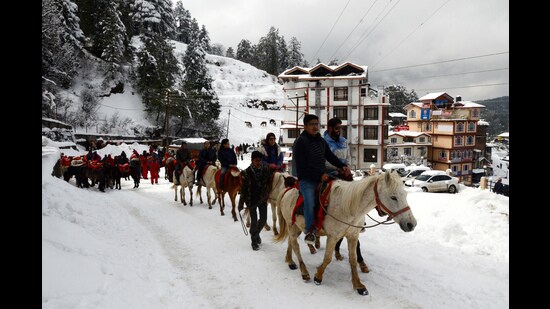
On February 10, Theog divisional forest officer (DFO) had stated in a report before the NGT that taking cognisance of the growing menace of horse dung pollution in Shimla’s Kufri, the department had sought guidance from Patanjali Organic Research Institute (PORI), Haridwar. The NGT was told that PORI had suggested two options — composting the horse dung and disposal by briquetting the horse dung. Based on their suggestion and considering the cost-effectiveness of the method, it has been decided to repurpose the horse dung as manure in forest nurseries.
The complaint was filed with the NGT in 2023 in which the complainant highlighted the issue of plying of a large number of horses in Kufri, creating “environmental hazards and resulting in pollution of various kinds. Horse riding is one of the major draws of Kufri.
Assistance was sought from the PORI, Haridwar, which had also helped Uttarakhand manage a similar problem in Gauri Kund (Sonprayag) area. The team of forest officials visited PORI to study the process to convert horse dung into organic manure.
The process would involve storage of horse dung in pits and thereafter carriage of dried dung to nurseries for vermi-composting. The department has assessed the quantity of horse dung accumulated from February to December 2024.
There is a continuous annual demand for manure from the nurseries. The availability of horse dung as a free raw material around the year would certainly help lowering the cost of raising plants, the report mentioned.
The NGT found that no detailed plan for composting has been placed on record which would take into account the total quantity of generation of horse dung, its collection point, feasibility of its transportation to the pits where composting is to be done, the manner of transportation and the transportation cost, land availability for composting pit, design of composting pit and also the time which will be taken for composting and the extent and number of composting pits which are required considering the horse dung generated per day and the number of days which will be taken for compositing and also the manner of disposal of compost, the entities who will be using/buying the compost, their requirement and if the entire compost will be utilised and the overall fixed as well as working cost of the project.
“It has been candidly admitted that no cost analysis has been done. Therefore, we find that the cheaper option can’t be ascertained unless the cost analysis is done and detailed plans for both the options are examined, by taking into account not only the short term cost, but the cost benefit analysis in the long run,” observed NGT while directing the Theog DFO to file a fresh report “clearly disclosing the carrying capacity of Kufri in reference to the horses and tourists”.
The DFO has been directed to file report within eight weeks and the matter will be listed before the NGT on April 22.
Number of horses to be reduced
While complying with the earlier NGT directives regarding the reduction of horses, the forest department in the new report has requested the NGT to allow only one horse per application of the total 386 applications to ply over the Kufri-Mahasu trail on a rotational basis. This was after the department had conducted a census of horses plying on the Kufri-Mahasu trail.


