
 E-Paper



Ludhiana: Rising mercury sends power demand soaring, villages bear brunt of outages
Villages falling under the Khanna and Lalton power circles have emerged among the worst affected, with residents reporting outages lasting two to three hours at a stretch, especially during peak afternoon and evening hours

 Prefer HTon Google


As an unrelenting heatwave tightens its grip over Punjab, surging electricity demand has plunged several rural and suburban pockets of Ludhiana into prolonged power outages, exposing the mounting strain on the state’s power infrastructure and leaving residents grappling with sleepless nights, disrupted water supply and erratic voltage fluctuations.
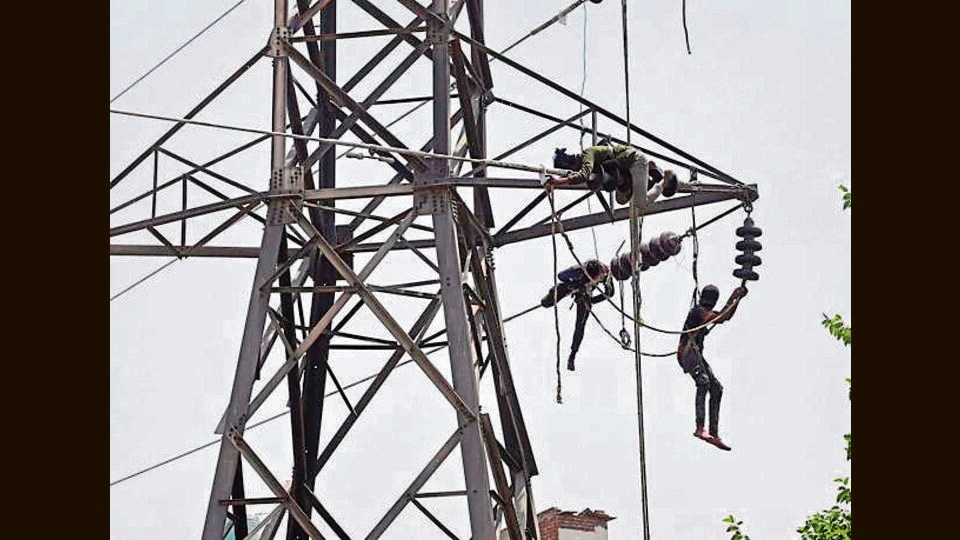
With temperatures soaring steadily over the past several days, electricity consumption in Ludhiana has witnessed a sharp spike, driven largely by the extensive use of air conditioners, coolers and other cooling appliances.
The Punjab State Power Corporation Limited (PSPCL), struggling to bridge the widening gap between demand and supply, has intensified load-management measures across the district, particularly in rural belts.
Villages falling under the Khanna and Lalton power circles have emerged among the worst affected, with residents reporting outages lasting two to three hours at a stretch, especially during peak afternoon and evening hours. While urban areas are also witnessing intermittent load regulation, residents said the frequency and duration of cuts in villages and suburban areas have been significantly higher.
The latest spell of outages comes amid persistent power disruptions witnessed over the past month, as escalating summer demand, infrastructure stress and generation-related constraints continue to weigh heavily on the distribution network.
According to power department officials, Punjab’s electricity demand recently crossed the 10,000 MW mark in a day, compelling the department to undertake rotational load-shedding measures in several districts, including Ludhiana, to maintain grid stability.
Residents from villages around Khanna, Lalton, Adda Dakha and adjoining suburban belts said the prolonged outages were severely affecting day-to-day life amid the oppressive heat. “Electricity goes off repeatedly in the evening and sometimes for hours during the night. In this heat, it becomes impossible to sleep, and even the water supply gets affected because motors cannot run,” said Gurpreet Singh, a resident of a village near Lalton.
Harjeet Kaur, a resident of the Khanna suburban belt, said elderly persons and children were bearing the brunt of the outages.
“The power cuts are becoming unbearable. Even inverters discharge because the outages are too long and too frequent,” she said.
Rakesh Kumar, a resident of Adda Dakha, said recurring voltage fluctuations and abrupt supply interruptions were also damaging household appliances.
“There is no fixed schedule. Sometimes electricity goes off for two hours in the afternoon and then again late at night,” he said.
PSPCL chief engineer (central zone) Jagdev Singh Hans said the department was making sustained efforts to streamline supply despite unprecedented load pressure triggered by the prolonged heatwave. “Power demand has increased significantly due to continuous heatwave conditions and higher usage of cooling appliances. Necessary load-management measures are being implemented to maintain grid stability and ensure balanced supply across urban and rural areas. Our teams are working round the clock to minimise disruptions and attend to faults on priority,” Hans said.
Officials said rural feeders were witnessing higher stress owing to rising domestic consumption and increasing agricultural demand ahead of the paddy season. They added that recent storm-related damage to power infrastructure in certain parts of the district had further hampered restoration efforts in some areas. Residents, however, maintained that the situation had deteriorated sharply over the past week as temperatures continued to rise, with many demanding a fixed outage schedule and faster fault-resolution mechanisms to ease public distress during the ongoing heatwave.


