
 E-Paper



Ludhiana’s air quality nears ‘very poor’ amid raging farm fires
With over 50 cases of stubble burning reported in the past 72 hours alone, Ludhiana’s air quality index (AQI) is fast-approaching the 300 mark, raising significant health concerns, particularly for vulnerable populations


The recent surge in stubble burning incidents in Ludhiana has cast a gloomy shadow over the district, pushing it into one of the most severely polluted areas in Punjab.
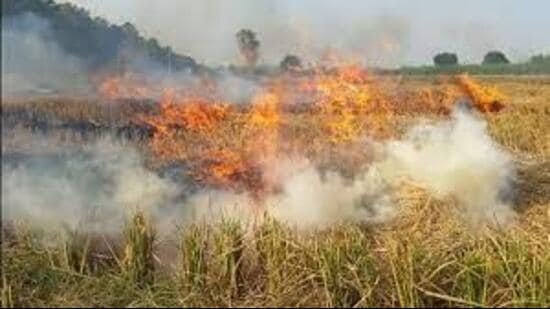
With over 50 cases of stubble burning reported in the past 72 hours alone, Ludhiana’s air quality index (AQI) is fast-approaching the 300 mark, raising significant health concerns, particularly for vulnerable populations.
Ludhiana has so far reported 167 cases of stubble burning, with a staggering 70% of the total count occurring in the last five days. Starting from October 24, Ludhiana has witnessed a concerning spike with 115 cases in the past five days, including two cases on October 28, 31 on October 27, 24 on October 26, 16 on October 25, and 42 cases on October 24, according to data compiled by the Punjab Remote Sensing Centre.
The air quality has seen a sharp deterioration with the maximum AQI nearing 300 over the past five days. Data from the Central Pollution Control Board reveals Ludhiana recorded a maximum AQI of 200 on October 28, 274 on October 27, 297 — the worst of the week — on October 26, 194 on October 25, and 136 on October 24.
Addressing the issue, assistant environmental engineer at the Punjab Pollution Control Board (PPCB) Deepak Chadha explained, “Apart from stubble burning, several factors contribute to the poor AQI levels, including industrial and vehicular emissions, and improper dust management during sweeping, all of which deteriorate air quality.”
Speaking about managing pollution levels in the district, he said, “The PPCB has undertaken various initiatives. For instance, the brick kilns, which previously used gravity settling chambers, have been converted to Induced Draft technology, designed by the Punjab State Council of Science and Technology.”
“This technology is far more effective in controlling particulate matter. On an individual level, people should refrain from burning any kind of waste, and farmers should avoid stubble burning to collectively reduce pollution levels,” Chadha added.


