
 E-Paper



Modi a cult figure of Indian politics, says political scientist Vinay Sitapati
The Modi phenomenon is result of a 100-year-old project nurtured by the RSS and Jan Sangh, the forebear of BJP, says Vinay Sitapati, during a discussion on his recent book, Jugalbandi: The BJP Before Modi

 Prefer HTon Google


Ever wondered what is the super-glue holding the BJP together? Ashoka University associate professor political science and legal studies Vinay Sitapati says it is the top leadership’s jugalbandi, and RSS’s emphasis on teamwork and coordination.
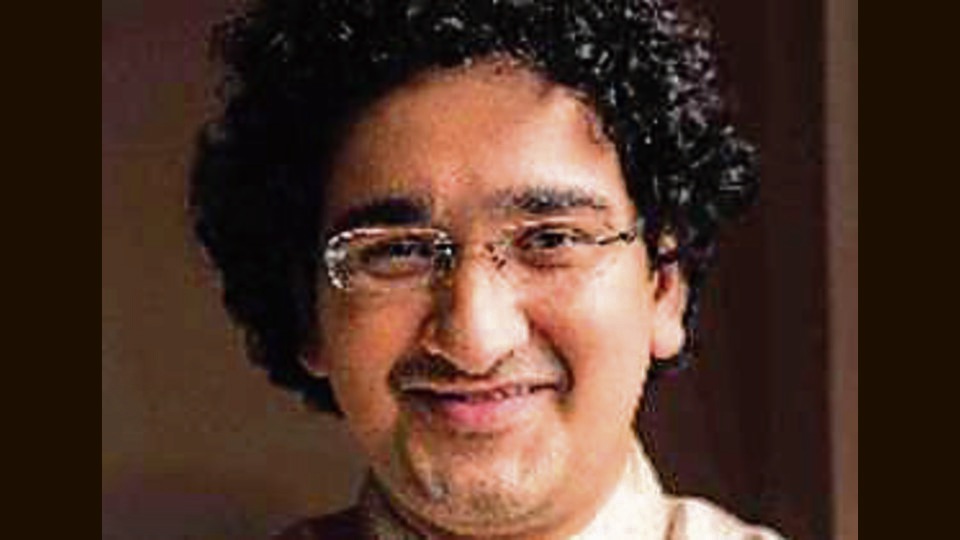
“The Modi phenomenon is result of a 100-year-old project nurtured by the RSS and Jan Sangh, the forebear of BJP,” said Sitapati, while in conversation with Hindustan Times executive editor Ramesh Vinayak on his book “Jugalbandi: The BJP Before Modi” at Vibrant Networking Forum’s Fabulous Confabulations, which was held in association with Ashoka University on Saturday.
“Prime Minister Narendra Modi’s rise is due to the contribution of his predecessors, Pandit Deendayal Upadhyaya, Shyama Prasad Mukherjee, Lal Krishna Advani and Atal Bihari Vajpayee,” he said.
“We have seen the BJP is an ideologically cohesive family that rarely splits. The BJP does resort politics, but it never suffers. This begs the question, what is holding them together? The RSS? If so, how? If one studies an RSS shakha, half the time volunteers are busy with physical exercise, which teaches them to work together,” said Sitapati, adding, “Secondly, there are ideological lessons, where they are told tales from history where the Hindus lost out because there were traitors among them and because of infighting. The takeaway is they must learn from their ancestors’ mistakes and not split.”
On the jugalbandis driving the party, he says, “Jugalbandi is not just a symphony, but a symphony between different people, who are equal. If you sing the same tune, it’s a duet. There is something embedded in Hindu nationalism that they always need a jodi. After all, it is both a movement and a political party. It needs somebody who can speak in Parliament and also someone who can organise the cadre. First, it was Mukherjee who was the public face who could argue against Nehru, while Upadhyaya was the back-room organiser. Then came, Vajpayee, a great orator, and the role of organiser of Hindu nationalism fell to Advani. Now, Amit Shah takes care of the cadre and Modi, the Parliament.”
On Modi’s meteoric rise, Sitapati said, “Modi owes his cult status in Hindutva politics and nationalism to the fact that he toed the line of the RSS on core ideological issues, be it the uniform civil code or Article 370. He may be a cult figure, but at the end of the day, he is a pracharak.”
Prominent among those present in the well-attended function were Pranav Gupta, a trustee of Ashoka University and Vivek Atray of Vibrant Networking Forum, and high court lawyer Ranjit Malhotra.


